

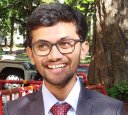
 Mohammed Muqeeth
· 7 previous affiliations
- Doctoral Student · Since 2024
- Université de MontréalSince 2024
- PhD student · Since 2024
- Research Engineer · 2024
- Research Assistant · 2021–2024
- Master's degree, Computer Science · 2021–2023
- Researcher · 2023–2024
- Indian Institute of Technology Delhi2020–2021
- Researcher · 2020–2021
- Bachelor of Technology - BTech, Electrical and Electronics Engineering · 2016–2020
Research Overview
Mohammed Muqeeth focuses on parameter-efficient transfer learning, mixture-of-experts architectures, and model merging. His early work investigated the optimization challenges of conditional computation and the efficiency of sparse fine-tuning methods. More recently, his research addresses how to dynamically route inputs among specialized expert models to achieve zero-shot generalization without the computational overhead of massive centralized networks.
Research Trajectory
Muqeeth’s early research explored the trade-offs between computational efficiency and model performance in large-scale machine learning. In 2022, he contributed to Few-Shot Parameter-Efficient Fine-Tuning is Better and Cheaper than In-Context Learning, which demonstrated that parameter-efficient fine-tuning (PEFT) could outperform massive models relying on in-context learning while drastically reducing inference costs. Concurrently, his first-author research investigated the structural priors of sparsely-activated networks. In Models with Conditional Computation Learn Suboptimal Solutions, he analyzed why models with learned routing often underperform their densely-activated counterparts. He hypothesized that the gradient estimation techniques used for non-differentiable discrete routing decisions were a primary bottleneck, engaging deeply with the research direction of Differentiable Routing for Sparse and Dynamic Neural Networks.
Moving into 2023, Muqeeth sought to resolve these optimization challenges by rethinking how expert networks are combined. In his first-author paper Soft Merging of Experts with Adaptive Routing, he introduced SMEAR, an approach that bypassed discrete routing decisions by softly merging expert weights. This work contributed to the broader area of Continuous Routing for Stable Mixture of Experts. During this period, he also participated as a co-author in developing infrastructure for collaborative machine learning. The resulting system, Git-Theta: A Git Extension for Collaborative Development of Machine Learning Models, provided a version control extension that tracked changes at the parameter-group level, facilitating communication-efficient updates and automatic model merging. This infrastructure work supported the growing research theme of Model Merging in the Parameter Space.
In 2024, Muqeeth’s focus shifted toward leveraging specialized, independently trained models for new tasks. As first author of Learning to Route Among Specialized Experts for Zero-Shot Generalization, he developed PHATGOOSE, a method for routing at the token level across specialized language model adapters. By training simple gates for individual experts, this approach enabled zero-shot generalization on unseen tasks without the need for expensive centralized multitask training, advancing the field of Parameter Space Expert Merging for Efficient Inference.
Current Directions
The most recent papers in the evidence indicate a sustained focus on "MoErging"—a paradigm that bridges static model merging and dynamic Mixture-of-Experts (MoE) architectures. Muqeeth recently co-authored A Survey on Model MoErging: Recycling and Routing Among Specialized Experts for Collaborative Learning, which formalizes the design space for recycling independently trained expert models (such as LoRA adapters) and combining them on-the-fly.
His current work investigates how to effectively design routers that select the appropriate experts for specific inputs, touching upon themes such as Load Balancing for Sparse Mixture of Experts and Weight Space Arithmetic for Merging Specialized Models. This trajectory points toward a broader goal of enabling decentralized, collaborative AI development, where specialized models can be dynamically aggregated to improve generalization without proportional increases in computational cost.
Profile updated
Loading new papers…
Other researchers whose papers cluster into the same research directions — a proxy for overlapping technical interests and shared intellectual neighborhoods.
See something wrong? Report a mistake