

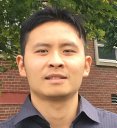
 Derek Tam
· 4 previous affiliations
- University of TorontoSince 2023
- PhD student · Since 2023
- PhD student · 2020–2023
- Intern · 2022
- University of Massachusetts Amherst2018–2020
- MS student · 2018–2020
Research Overview
Derek Tam focuses on natural language processing, parameter-efficient fine-tuning, and model merging. His trajectory spans early work in representation learning and few-shot learning to recent methodologies for combining specialized neural networks into unified multitask models. His current research investigates the mechanics of model merging and the resolution of parameter interference without requiring additional training data.
Research Trajectory
Early in his research career, Tam explored representation learning for string similarity. In 2019, he developed STANCE, a neural model utilizing the area of Optimal Transport for Semantic Alignment and Representation Learning to flexibly align character-level representations. This approach, detailed in Optimal Transport-based Alignment of Learned Character Representations for String Similarity, treated string alignment as a transportation problem to detect aliases even when tokens were permuted or noisy.
By 2021, his focus expanded to few-shot learning and robust generalization. He investigated methods to align downstream tasks with pretraining objectives, leading to Improving and Simplifying Pattern Exploiting Training. Concurrently, he began exploring speech translation, specifically contributing to the direction of Representing Speech Timing as Discrete Text Tokens. He introduced implicit and explicit modeling approaches for isochrony-aware translation in Prosody-Aware Neural Machine Translation for Dubbing, aiming to generate translations suitable for automatic dubbing by matching source and target speech durations.
In 2022, Tam's work on efficient adaptation deepened. He rigorously compared adaptation paradigms, demonstrating the computational and performance advantages of parameter-efficient fine-tuning over in-context learning in Few-Shot Parameter-Efficient Fine-Tuning is Better and Cheaper than In-Context Learning. He also extended multimodal capabilities with Simple Weakly-Supervised Image Captioning via CLIP's Multimodal Embeddings, leveraging joint embedding spaces to train captioning models using only text. He further refined his speech translation work that year with Isochrony-Aware Neural Machine Translation for Automatic Dubbing.
The following year marked a significant expansion into large language model evaluation and the emerging field of model merging. He contributed to the area of Pointwise Mutual Information for Language Model Evaluation through Evaluating the Factual Consistency of Large Language Models Through News Summarization. He also participated in large-scale collaborative efforts to quantify model capabilities, such as the BIG-bench initiative in Beyond the Imitation Game: Quantifying and extrapolating the capabilities of language models, which touches on the broader direction of Understanding Emergence in Large Language Models. Additionally, he surveyed limited-data learning techniques in An Empirical Survey of Data Augmentation for Limited Data Learning in NLP. Crucially, 2023 saw a major shift toward combining specialized models. He co-developed a framework for the research direction of Weight Space Arithmetic for Merging Specialized Models, introducing techniques to resolve redundant updates and sign disagreements in TIES-Merging: Resolving Interference When Merging Models.
The most recent phase of his trajectory centers almost entirely on the mechanics and evaluation of model merging. He established rigorous benchmarks for this domain in Realistic Evaluation of Model Merging for Compositional Generalization, revealing how merging multiple models improves generalization to unseen tasks. He further explored the efficiency of repurposing existing models in LLM Merging: Building LLMs Efficiently through Merging. Advancing the mathematical foundations of this process, he framed merging as a linear optimization problem in Merging by Matching Models in Task Parameter Subspaces. His work also investigated scalable parameter importance estimation, participating in the development of techniques to recycle squared gradient accumulators in Fishers for Free? Approximating the Fisher Information Matrix by Recycling the Squared Gradient Accumulator. Most recently, he contributed to Merging Adapted Models via Data-Free Covariance Estimation, which introduced a method to estimate activation covariances directly from weight differences, enabling principled, data-free model merging.
Current Directions
The most recent papers in the evidence address the theoretical and practical challenges of merging specialized large language models into unified multitask systems. Recent work investigates how to perform these merges without relying on additional training data, utilizing techniques like data-free covariance estimation and task parameter subspace matching to resolve parameter interference. Another active area involves efficiently approximating the Fisher Information Matrix to measure parameter importance during the merging process, reducing the computational overhead of combining massive neural networks while preserving their specialized capabilities.
Profile updated
| Paper | Venue | Year |
|---|---|---|
| Resolving Interference When Merging ModelsGitHubprateeky2806/ | Unknown | 2023 |
Loading new papers…
Other researchers whose papers cluster into the same research directions — a proxy for overlapping technical interests and shared intellectual neighborhoods.
See something wrong? Report a mistake