

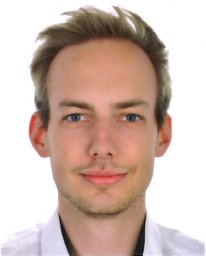
 Mirco Theile
· 7 previous affiliations
- Technical University of MunichSince 2015
- Postdoc · Since 2024
- Postdoctoral Researcher · 2018–2024
- Master of Science - MS, Electrical and Computer Engineering · 2015–2018
- European Space AgencySince 2025
- Research Fellow in Spacecraft Simulation · Since 2025
- University of California, Berkeley2022–2024
- Visiting Researcher · 2022–2024
- Researcher · 2022–2024
- Visiting Scholar · 2017–2018
- Student Employee · 2017
- TU Dortmund University2012–2015
- Undergrad student · 2012–2015
Research Overview
Mirco Theile focuses on deep reinforcement learning, autonomous navigation, and multi-agent systems, with an emphasis on deploying safe and scalable control policies for unmanned aerial vehicles. His trajectory spans from early work in hardware-in-the-loop emulation and trajectory estimation to advanced reinforcement learning frameworks that handle power constraints and continuous action spaces. Recently, his research addresses constrained reinforcement learning and representation learning for vision-based control.
Research Trajectory
Theile’s early research established a foundation in the practical deployment and testing of avionics for unmanned aerial vehicles (UAVs). In 2018, he developed uavEE: A Modular, Power-Aware Emulation Environment for Rapid Prototyping and Testing of UAVs, a real-time hardware-in-the-loop emulation system built with ROS. By interfacing directly with embedded flight hardware, the modular environment allowed for the integration of diverse test scenarios while significantly reducing the costs and time associated with physical test flights. Building on this focus on safe and reliable UAV operations, he subsequently introduced Trajectory Estimation for Geo-Fencing Applications on Small-Size Fixed-Wing UAVs (2019). This work proposed the Beta-Trajectory algorithm to enforce curvature constraints bounded by the aircraft's maximum roll-rate, ensuring fixed-wing drones remain safely within designated geo-fenced regions.
Transitioning toward learning-based control, Theile began exploring how deep reinforcement learning (DRL) could address complex planning problems under strict physical constraints. In UAV Coverage Path Planning under Varying Power Constraints using Deep Reinforcement Learning (2020), he applied end-to-end RL to generate coverage trajectories that dynamically adapt to the limited and variable battery life of small UAVs. The system was designed to handle random start positions and multiple landing options while navigating around no-fly zones. Concurrently, he contributed to research on the timing and scheduling of complex embedded systems, collaborating on Latency-Aware Generation of Single-Rate DAGs from Multi-Rate Task Sets. This work modeled multi-rate sensing and actuation tasks—driven by the increasing complexity of heterogeneous sensors—as directed acyclic graphs to derive strict age and reaction timing bounds.
By 2021, his focus expanded to multi-agent systems and the challenge of scaling learning algorithms across distributed teams of robots. With collaborators, he developed Multi-UAV Path Planning for Wireless Data Harvesting With Deep Reinforcement Learning, a multi-agent reinforcement learning (MARL) approach for cooperative, non-communicating teams of UAVs. The method adapts to profound changes in mission parameters—such as varying numbers of agents and IoT devices—without requiring expensive policy retraining. This work contributed to the research direction of Egocentric Representations for Generalizable Spatial Learning and the area of Emergent Spatial Partitioning in Decentralized Multi-Agent Systems. To further improve the scalability of these models in large environments, he introduced UAV Path Planning using Global and Local Map Information with Deep Reinforcement Learning. By providing the agent with both a compressed global overview and a high-resolution local crop of its surroundings, this architecture accelerated training and generalized across distinct mission types, advancing the broader area of Multi Scale Spatial Representations for Autonomous Navigation and work in State Space Reduction in Reinforcement Learning. Addressing the communication bottlenecks inherent in such decentralized teams, he also proposed Multi-Agent Belief Sharing through Autonomous Hierarchical Multi-Level Clustering, a decentralized method for maintaining stable communication hierarchies among highly mobile agents that frequently take off and land for recharging.
As his DRL models grew more sophisticated, Theile addressed the practical challenges of deploying learned policies on physical hardware. He collaborated on Cloud-Edge Training Architecture for Sim-to-Real Deep Reinforcement Learning (2022), which sought to mitigate the reality gap between simulated training environments and real-world dynamics. This interest in safe and reliable deployment culminated in a novel framework for constrained reinforcement learning. In Learning to Generate All Feasible Actions (2023), he introduced "action mapping," a method that trains a feasibility policy via distribution matching to generate the complete set of safe actions for a given state, rather than a single optimal action. He recently extended this framework in Action Mapping for Reinforcement Learning in Continuous Environments with Constraints (2025), decoupling feasibility modeling from policy optimization to significantly improve sample efficiency in continuous action spaces. Alongside this work in constrained RL, he has also participated in research optimizing neural network architectures for vision-based control, contributing to Impoola: The Power of Average Pooling for Image-based Deep Reinforcement Learning (2025), which demonstrated that replacing flattened feature maps with global average pooling in Impala-CNNs yields notable performance gains.
Current Directions
The most recent papers in the evidence indicate a dual focus on safe reinforcement learning and architectural efficiency for deep RL. A primary ongoing effort involves refining the "Action Mapping" framework to handle continuous, constrained environments, allowing RL agents to operate safely within complex cyber-physical systems even when feasibility models are imperfect. Concurrently, recent collaborative work investigates parameter-efficient network designs for image-based reinforcement learning, exploring how structural modifications like global average pooling can improve the performance of scaled image encoders in challenging control tasks.
Profile updated
Loading new papers…
Other researchers whose papers cluster into the same research directions — a proxy for overlapping technical interests and shared intellectual neighborhoods.
See something wrong? Report a mistake