

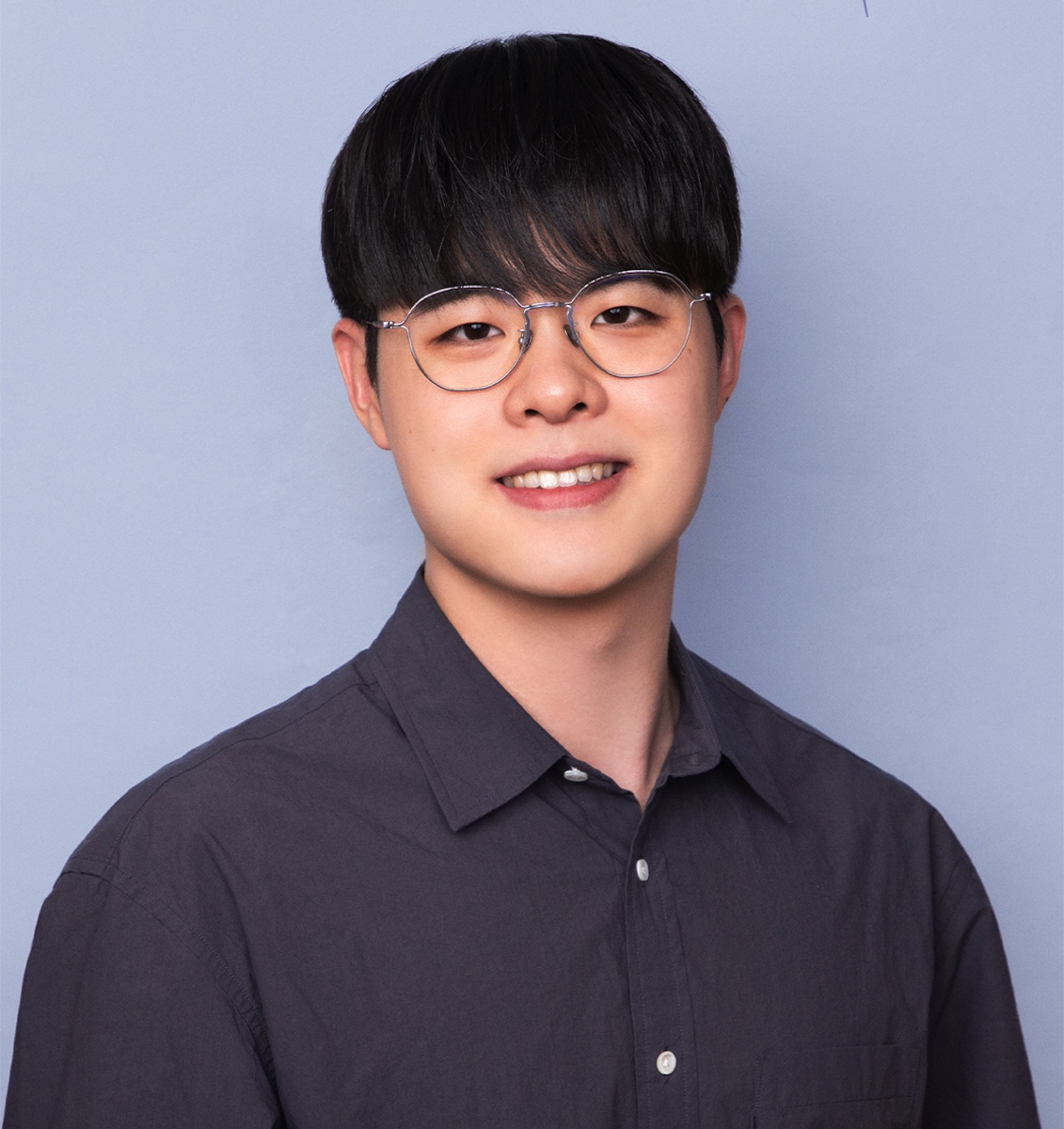
 Minki Kang
· 4 previous affiliations
Research Overview
Minki Kang focuses on the development of efficient and scalable language model agents, knowledge-augmented reasoning, and adaptive text-to-speech synthesis. His earlier work explored dynamic memory allocation and domain adaptation for neural architectures, while his current research emphasizes test-time compute scaling, agent distillation, and context optimization for small language models operating under limited compute constraints.
Research Trajectory
Early research explored how neural architectures manage information over time. Contributions to the area of Dynamic Memory Allocation for Scalable Neural Architectures included participation in the development of the Episodic Memory Reader: Learning What to Remember for Question Answering from Streaming Data (2019). This system utilized a reinforcement learning agent to sequentially read input contexts into an external memory, replacing less important entries to maintain question-answering accuracy on large streaming datasets, advancing the broader research direction of Learned Memory Policies for Long-Horizon Agents.
Building on reinforcement learning applications for natural language processing, subsequent work addressed domain adaptation. The Neural Mask Generator: Learning to Generate Adaptive Word Maskings for Language Model Adaptation (2020) introduced an actor-critic framework to automatically generate task-adaptive text masking policies, improving self-supervised pre-training for specific target tasks. This focus on adapting models to specialized domains continued with KALA: Knowledge-Augmented Language Model Adaptation (2022), which integrated external knowledge structures into the adaptation process.
The integration of structured knowledge into language models became a central theme in 2023. To address the tendency of pre-trained models to hallucinate or omit factual details in conversation, Knowledge-Consistent Dialogue Generation with Language Models and Knowledge Graphs (2023) proposed a subgraph retrieval-augmented generation approach, ensuring that models actively utilize relevant knowledge graph components before generating responses. Recognizing the computational burden of deploying massive models for such knowledge-intensive tasks, parallel research investigated model compression. Knowledge-Augmented Reasoning Distillation for Small Language Models in Knowledge-Intensive Tasks (2023) addressed the capacity limitations of smaller architectures by distilling the reasoning capabilities of large language models into more efficient, task-specific counterparts.
Alongside his research in natural language processing, Kang has maintained a distinct research thread in speech synthesis, particularly during his time as a research scientist at AITRICS and KRAFTON. This work focuses on zero-shot voice cloning and emotional control. Grad-StyleSpeech: Any-Speaker Adaptive Text-to-Speech Synthesis with Diffusion Models (2023) leveraged a diffusion model paired with a hierarchical style encoder to replicate target speaker characteristics from only a few seconds of reference audio. Expanding this to emotional expressivity, ZET-Speech: Zero-shot adaptive Emotion-controllable Text-to-Speech Synthesis with Diffusion and Style-based Models (2023) introduced domain adversarial learning to synthesize emotional speech for unseen speakers using neutral audio segments. This contributed to broader research areas such as Universal Features for Cross-Linguistic Speech Emotion Recognition and the direction of Decoupling Speaker Identity and Emotion in Synthetic Speech. To improve the robustness of these systems against poor-quality reference audio, Stable-TTS: Stable Speaker-Adaptive Text-to-Speech Synthesis via Prosody Prompting (2024) utilized high-quality prior samples to guide prosody and regularize fine-tuning, preventing the model from replicating background noise.
Returning to the internal mechanics of language models, Latent Paraphrasing: Perturbation on Layers Improves Knowledge Injection in Language Models (2024) introduced a method to improve how models internalize new facts. By injecting semantic noise directly into the model's internal layers, the approach simulated the effects of massive data augmentation without the associated computational costs, advancing work in the area of Bidirectional Logical Generalization in Large Language Models.
Most recently, the focus has shifted toward equipping small language models with agentic capabilities and scaling their inference-time compute. Distilling LLM Agent into Small Models with Retrieval and Code Tools (2025) demonstrated that the reasoning ceiling of compact models can be overcome by offloading complex tasks to external tools. This paradigm was formalized further in T1: Tool-integrated Verification for Test-time Compute Scaling in Small Language Models (2026), which enabled models under one billion parameters to master test-time compute scaling by utilizing tools like Python interpreters during the verification phase. Finally, addressing the memory constraints of long-horizon tasks, ACON: Optimizing Context Compression for Long-horizon LLM Agents (2026) developed a method to compress context using natural language guidelines, significantly reducing token usage while preserving reasoning performance.
Continuing to expand on test-time scaling and agent efficiency in 2026, Kang led work on Mid-Harness: Scaling Actions Between Model and Harness for Terminal Agents (2026), allocating test-time compute at the model-harness interface to sample and verify candidate actions before execution. Kang also collaborated on An Empirical Study of the Geometry and Latent-Space Composition of Hypernetwork-Generated LoRAs (2026), analyzing the spectral properties of hypernetwork adapters and proposing latent-space merging to combine adapters under a fixed rank budget. Further collaborative efforts explored broader agent optimization and compression: Evolution Fine-Tuning: Learning to Discover Across 371 Optimization Tasks (2026) introduced a mid-training framework converting evolutionary search trajectories into supervision for cross-task discovery, while SKIM: Pruning Large Language Model Agents via Selective Knowledge Informed Masking (2026) developed category-aware pruning and distillation tailored for agents operating under structured generation constraints.
Current Directions
The most recent work in the evidence focuses on the intersection of agentic reasoning, tool use, and inference-time compute scaling for small language models. A primary research theme involves overcoming the inherent capacity limitations of compact architectures by integrating external tools—such as code interpreters and retrieval systems—directly into the model's reasoning and verification processes. This allows smaller models to handle complex, long-horizon tasks that typically require massive parameter counts. Additionally, recent efforts address the memory and computational bottlenecks associated with long-context agentic workflows. By developing optimized context compression techniques and distilling these capabilities into smaller models, the current research agenda aims to make sophisticated, long-horizon language model agents more efficient, scalable, and viable for deployment under strict compute and data constraints.
Profile updated
Loading new papers…
Other researchers whose papers cluster into the same research directions — a proxy for overlapping technical interests and shared intellectual neighborhoods.
See something wrong? Report a mistake