

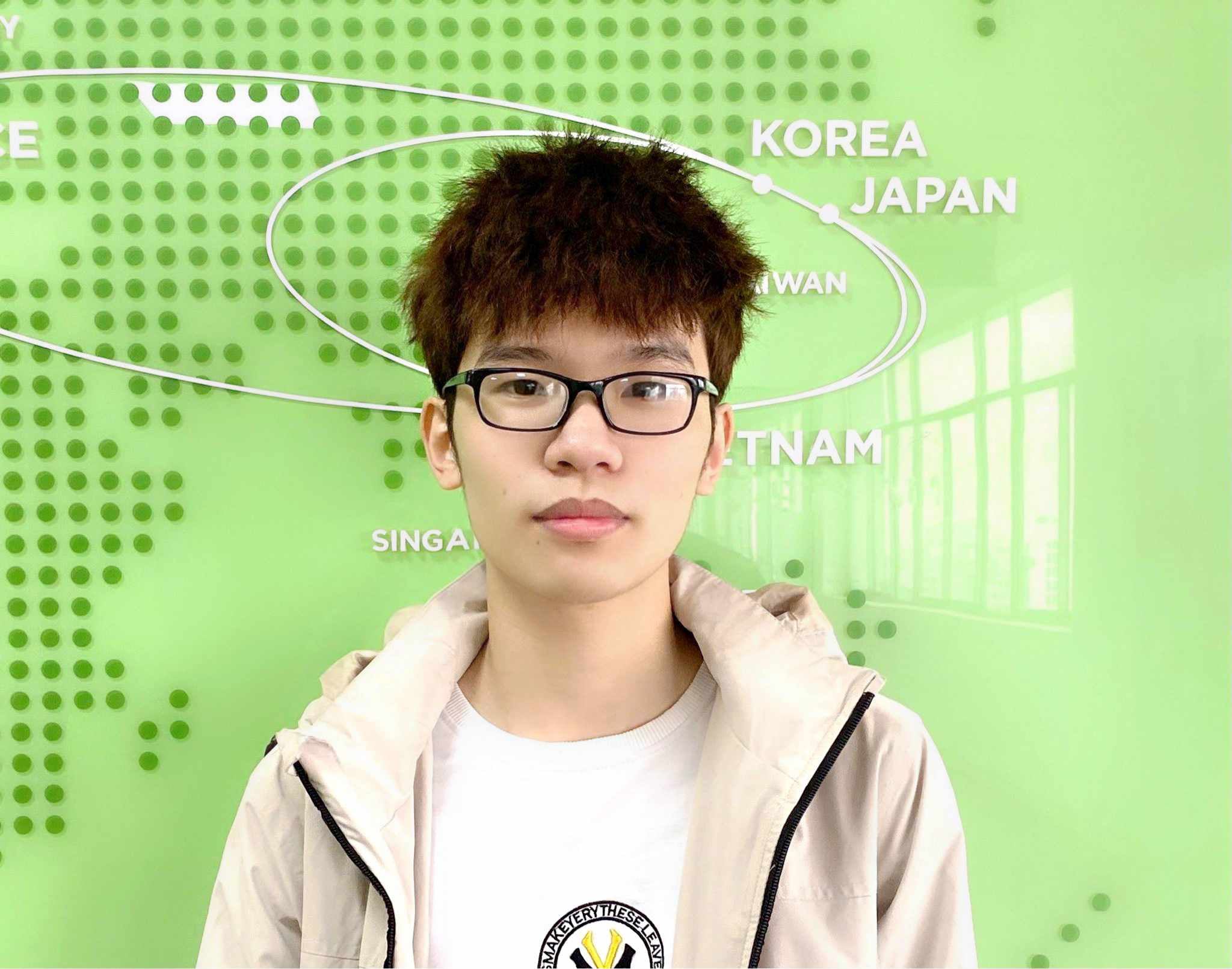
 Minh Le
· 4 previous affiliations
- Qualcomm (United States)Since 2025
- A.I. Resident · Since 2025
- Qualcomm AI ResearchCurrent
- Current
- VinAI Research2024–2025
- Research Resident · 2024–2025
- Undergrad student · 2020–2024
Research Overview
Minh Le focuses on parameter-efficient fine-tuning, continual learning, and the theoretical intersections between attention mechanisms and Mixture of Experts architectures. His trajectory spans from leveraging hierarchical taxonomies for mitigating catastrophic forgetting to developing highly sample-efficient adaptation methods for vision and language models. His most recent work investigates sparse expert routing to optimize prompt-based continual learning systems.
Research Trajectory
Minh Le’s research initially centered on mitigating catastrophic forgetting in models exposed to sequential data streams. In 2024, he contributed to the area of LLM-Generated Hierarchical Taxonomies for Structured Machine Learning by participating in the development of Taxonomy-based Continual Learning (TCL). Detailed in Leveraging Hierarchical Taxonomies in Prompt-based Continual Learning, this approach utilized Large Language Models to organize data into hierarchical trees. By applying Optimal Transport to measure class similarity, the model was guided to focus its attention on distinguishing between closely related classes, thereby preserving previously learned representations.
He subsequently led research establishing a theoretical foundation for prompt-based continual learning by connecting Vision Transformer (ViT) architectures to expert networks. In Mixture of Experts Meets Prompt-Based Continual Learning, Le revealed that self-attention layers in ViTs function as implicit Mixture of Experts (MoE) architectures. This insight, which advanced the research direction of Transformers as Implicit Mixture of Experts, led to the introduction of Non-linear Residual Gates (NoRGa). This gating mechanism improved the statistical efficiency of learning prompts without increasing parameter overhead, touching upon the broader area of Accelerating Implicit Bias toward Maximum Margin and work in Principled Design of Neural Network Activation Functions.
In 2025, Le expanded this theoretical framework to analyze the statistical mechanics of other parameter-efficient fine-tuning (PEFT) methods. In Revisiting Prefix-tuning: Statistical Benefits of Reparameterization among Prompts, he investigated the common "reparameterization trick" used in prefix-tuning, where a neural network generates prompt vectors rather than optimizing them directly. The research proved that this technique creates a shared structure between key and value vectors that acts as a parameter-sharing mechanism within an MoE framework, significantly boosting sample efficiency across both vision and language tasks.
Collaborating on related adaptation strategies, he contributed to theoretical evaluations of zero-initialized attention mechanisms, such as those used in LLaMA-Adapter. The paper On Zero-Initialized Attention: Optimal Prompt and Gating Factor Estimation provided a rigorous foundation demonstrating that zero-initialization is a specialized form of an MoE model. The work showed that zero-initialization is exponentially more sample-efficient than random initialization and that replacing linear prompts with non-linear multi-layer perceptrons (MLPs) enhances performance on large language model benchmarks while maintaining stability. Alongside this, he participated in work advancing the broader area of Low-Rank Weight Decomposition for Efficient Model Adaptation with RepLoRA: Reparameterizing Low-rank Adaptation via the Perspective of Mixture of Experts. This research reparameterized Low-Rank Adaptation (LoRA) matrices through lightweight MLPs, formally linking LoRA to MoE models and proving that this shift reduces the data requirement for accurate estimation from an exponential to a polynomial scale.
By 2026, Le's focus returned to optimizing visual prompts and continual learning systems through sparsity and input-conditioning. In Revisit Visual Prompt Tuning: The Expressiveness of Prompt Experts, he introduced Visual Adaptive Prompt Tuning (VAPT), which transforms static prompt tokens into adaptive experts that respond dynamically to the input image. By viewing attention heads as implicit MoE models, Le demonstrated that input-dependent prompts drastically improve data efficiency, achieving high accuracy on fine-grained classification tasks with only a fraction of the standard training data.
Building on these insights into sparsity and routing, he introduced the SMoPE (Sparse Mixture of Prompt Experts) framework in One-Prompt Strikes Back: Sparse Mixture of Experts for Prompt-based Continual Learning. Contributing to the research direction of Sequence Level Routing for Efficient Mixture of Experts, this work structured a single shared prompt as a sparse MoE. The framework successfully reconciled the trade-off between efficiency and performance in continual learning, reducing computational overhead while maintaining high accuracy compared to traditional task-specific prompting methods.
Current Directions
The most recent papers in the evidence address the intersection of parameter-efficient fine-tuning and sparse routing mechanisms. Recent work investigates how dynamic, input-conditioned prompts can replace static tokens in vision-language models to drastically improve sample efficiency and expressiveness. Additionally, ongoing research explores how structuring shared prompts as sparse Mixture of Experts can resolve the trade-offs between computational overhead and model accuracy in continual learning environments. A unifying theme across these recent directions is the mathematical formalization of adaptation techniques—such as LoRA, prefix-tuning, and visual prompt tuning—as implicit expert networks, enabling models to achieve robust performance with significantly reduced data and parameter requirements.
Profile updated
Loading new papers…
Other researchers whose papers cluster into the same research directions — a proxy for overlapping technical interests and shared intellectual neighborhoods.
See something wrong? Report a mistake