

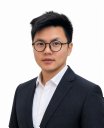
 Mingyue Cheng
· 1 previous affiliation
- Associate Researcher · Since 2023
- PhD student · 2017–2023
Research Overview
Mingyue Cheng focuses on structured data analysis, time series foundation models, and large language model-based reasoning agents. His early work concentrated on optimizing recommender systems through sequential modeling and collaborative filtering techniques. More recently, his research has shifted toward developing agentic frameworks and generative models for complex tabular and temporal data, emphasizing autonomous reasoning and cross-domain transferability.
Research Trajectory
Cheng’s early research concentrated on optimizing recommender systems, particularly addressing challenges in collaborative filtering and sequential user behavior. He introduced the Alpha-Beta Sampling strategy in Alpha-Beta Sampling for Pairwise Ranking in One-Class Collaborative Filtering to improve pairwise ranking by emphasizing specific training examples based on preference scores. Building on this, he explored the ambiguity of unobserved feedback, proposing a framework that utilizes soft targets rather than standard one-hot encodings in Learning Recommender Systems with Implicit Feedback via Soft Target Enhancement. His focus then expanded to sequential recommendation, where he developed contrastive pre-training methods to learn transferable user representations in Learning Transferable User Representations with Sequential Behaviors via Contrastive Pre-training. To further optimize these systems, he investigated automated architecture search in Towards Automatic Discovering of Deep Hybrid Network Architecture for Sequential Recommendation. This body of work aligns with the broader research direction of End-to-End Modality-Based Recommender Systems.
Around 2023, Cheng's focus shifted significantly toward the area of Foundation Models for Heterogeneous Time Series. Recognizing the limitations of sparse point-wise inputs in self-supervised learning, he developed a transformer-based paradigm using decoupled masked autoencoders in TimeMAE: Self-Supervised Representations of Time Series with Decoupled Masked Autoencoders. He continued to refine time series classification by capturing multi-scale dependencies with FormerTime: Hierarchical Multi-Scale Representations for Multivariate Time Series Classification and later with a deep hierarchical convolutional architecture in ConvTimeNet: A Deep Hierarchical Fully Convolutional Model for Multivariate Time Series Analysis.
A major theme in Cheng's subsequent work is leveraging language models for continuous signal data, contributing to the research direction of Discrete Tokenization for Continuous Signal Modeling. He addressed the challenge of domain shift in time series by proposing cross-domain self-supervised learning frameworks that utilize pre-trained language models, detailed in Learning Transferable Time Series Classifier with Cross-Domain Pre-training from Language Model and its related work Cross-Domain Pre-training with Language Models for Transferable Time Series Representations. This intersection of modalities was further explored in InstrucTime: Advancing Time Series Classification with Multimodal Language Modeling. Concurrently, he provided a comprehensive overview of retrieval mechanisms and generative models in A Survey on Knowledge-Oriented Retrieval-Augmented Generation.
Expanding into generative approaches, Cheng explored flow matching to capture the stochastic nature of real-world signals. In TimeFlow: Towards Stochastic-Aware and Efficient Time Series Generation via Flow Matching Modeling, he reformulated flow matching using stochastic differential equations, advancing the area of Disentangling Trend and Seasonality in Time Series Networks. These advanced sequence modeling techniques were also applied to clinical domains; for instance, he participated in developing a dynamic forecasting framework for predicting intraoperative hypotension in A Hybrid Multi-Factor Network with Dynamic Sequence Modeling for Early Warning of Intraoperative Hypotension.
By 2026, Cheng's trajectory evolved to encompass autonomous agents and experience-conditioned reasoning. He contributed to the development of TableMind++: An Uncertainty-Aware Programmatic Agent for Tool-Augmented Table Reasoning, an agent designed to execute code and self-correct uncertainty when analyzing complex tabular data. In the forecasting domain, he helped introduce a hierarchical memory architecture that treats forecasting as an experience-conditioned task in MemCast: Memory-Driven Time Series Forecasting with Experience-Conditioned Reasoning. Most recently, he bridged semantic reasoning and probabilistic modeling in CoGenCast: A Coupled Autoregressive–Flow Generative Framework for Time Series Forecasting, which reconfigures pre-trained language models into a forecasting-native architecture.
Current Directions
Cheng’s most recent work investigates the intersection of large language models, autonomous agents, and complex structured data. A primary focus is the development of agentic frameworks capable of tool-augmented reasoning, particularly for large-scale tabular data where models must detect uncertainty and self-correct during execution. In parallel, his research addresses advanced time series forecasting by treating prediction as an experience-conditioned reasoning task. This involves building hierarchical memory architectures and coupling autoregressive semantic reasoning with probabilistic flow-matching models. Through these approaches, current efforts aim to improve the robustness, transferability, and generative efficiency of foundation models operating on non-stationary temporal and tabular signals.
Profile updated
Loading new papers…
Other researchers whose papers cluster into the same research directions — a proxy for overlapping technical interests and shared intellectual neighborhoods.
See something wrong? Report a mistake