

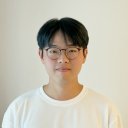
 Minchul Shin
· 7 previous affiliations
- KaggleSince 2019
- Competitions Master · Since 2019
- Meta (United States)Since 2022
- Computer Vision Engineer · Since 2022
- kakaobrain2021–2022
- Research Scientist · 2021–2022
- Kakao Brain (South Korea)2021–2022
- Research Scientist · 2021–2022
- NAVER Cloud (South Korea)2017–2021
- Software Engineer · 2017–2021
- Naver (South Korea)2017–2021
- Software Engineer · 2017–2021
- Master's degree, Mechanical Engineering · 2015–2017
- Bachelor's degree, Mechanical Engineering · 2010–2015
Research Overview
Minchul Shin focuses on computer vision, multimodal representation learning, and large-scale image retrieval. His early work addressed facial analysis and robust feature extraction, evolving into sophisticated architectures for text-guided visual search and video understanding. Most recently, he investigates robust fine-tuning techniques and the alignment of joint embedding spaces for vision-language models.
Research Trajectory
His early research began with applications in robotics and foundational computer vision. In 2015, he developed techniques for precise motor speed estimation using modified kinematic Kalman filters in Implementation of extended Kalman filter with PI control and modeling effect reduction for precise motor speed estimation in disturbance. Transitioning to visual recognition, he evaluated convolutional neural network architectures and preprocessing methodologies for facial expression analysis in Baseline CNN structure analysis for facial expression recognition. This work on facial analysis expanded into Face image-based age and gender estimation with consideration of ethnic difference, which proposed an age and gender estimation system designed to mitigate ethnic bias by incorporating an initial ethnicity-classification stage.
By 2019, while affiliated with NAVER, his focus shifted toward large-scale visual search and specialized retrieval systems. He systematically evaluated pre- and post-processing techniques for image retrieval in A Benchmark on Tricks for Large-scale Image Retrieval, demonstrating significant performance gains through optimized data cleaning and spatial reranking, contributing to the broader area of Filtering Noise Through Local Density Estimation. Concurrently, he investigated the domain of fashion image retrieval. He introduced FLAM, a method for decoupling attribute manipulation from representation learning, in Semi-supervised Feature-Level Attribute Manipulation for Fashion Image Retrieval. He also collaborated on Study on Fashion Image Retrieval Methods for Efficient Fashion Visual Search., which addressed the challenges of shape deformation and domain inconsistency in fashion visual search, aligning with research in the direction of Shared Representations for Multi-Task Learning.
To address the challenge of label sparsity in visual attribute prediction, he proposed a multi-teacher-single-student approach for semi-supervised learning in Semi-supervised Learning with a Teacher-Student Network for Generalized Attribute Prediction. This period also marked a deep engagement with multimodal architectures, specifically text-guided image retrieval. He developed the Residual Text Image Composer (RTIC), a novel architecture that treats image-text composition as a residual learning problem. This framework was first detailed in Fashion-IQ 2020 Challenge 2nd Place Team's Solution, which utilized the research direction of Bayesian Optimization for Automated Weight Learning for ensemble strategies and advanced the area of Modeling Semantic Deltas for Image Editing and Retrieval. The theoretical underpinnings of RTIC were further expanded in RTIC: Residual Learning for Text and Image Composition using Graph Convolutional Network, which introduced a joint training technique based on graph convolutional networks to better encode the differences between source and target images conditioned on text.
In 2021, his work on multimodal systems extended to video-and-language understanding. He led the development of a winning submission for the ICCV 2021 VALUE Challenge in Winning the ICCV'2021 VALUE Challenge: Task-aware Ensemble and Transfer Learning with Visual Concepts, integrating fine-grained visual concepts and task-specific ensembles, a contribution to the broader field of Unsupervised Model Selection through Semantic Consensus. Continuing with video analysis, he collaborated on Boundary-aware Pre-training for Video Scene Segmentation, which explored self-supervised learning for video scene segmentation by utilizing pseudo-boundaries from continuous sub-sequences.
More recently, his research has encompassed efficient neural architectures and the robustness of vision-language models. He oversaw the development of M-LSD, an ultra-lightweight model for mobile line segment detection, in Towards Light-Weight and Real-Time Line Segment Detection, achieving real-time performance on mobile devices through novel augmentation schemes. He also participated in the design of a multi-scale transformer for human-object interaction detection in MSTR: Multi-Scale Transformer for End-to-End Human-Object Interaction Detection, which utilized deformable attention modules to handle extreme scale variations. In 2023, he contributed to Geodesic Multi-Modal Mixup for Robust Fine-Tuning, which introduced a technique to synthesize hard negative samples along a hypersphere. This work directly addresses the research direction of The Modality Gap in Joint Embedding Spaces, improving the alignment, uniformity, and out-of-distribution robustness of models like CLIP.
Current Directions
The most recent papers in the evidence indicate a focus on optimizing and aligning complex visual and multimodal architectures. This includes developing ultra-lightweight models for real-time, on-device geometric vision tasks, such as line segment detection. Additionally, recent work investigates the robustness of large-scale vision-language models. By exploring synthetic hard negative generation and manifold-aware interpolation, this research aims to bridge the modality gap in joint embedding spaces, ultimately improving model calibration and retrieval performance in out-of-distribution scenarios.
Profile updated
| Paper | Venue | Year |
|---|---|---|
| Geodesic Multi-Modal Mixup for Robust Fine-TuningGitHubchangdaeoh/ | NeurIPS | 2023 |
Loading new papers…
Other researchers whose papers cluster into the same research directions — a proxy for overlapping technical interests and shared intellectual neighborhoods.
See something wrong? Report a mistake