

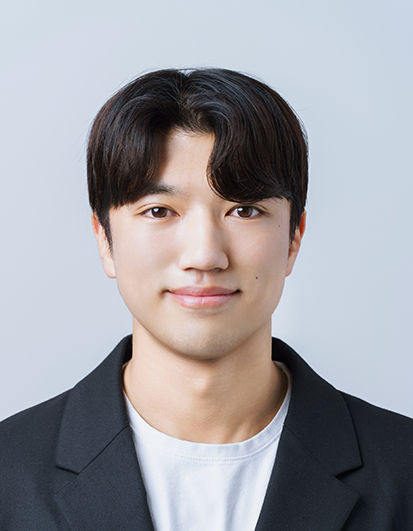
 Hoyoon Byun
1 previous affiliation
- University of Seoul2022–2024
- MS student · 2022–2024
Research Overview
Hoyoon Byun focuses on the architecture, efficiency, and robustness of large-scale machine learning models, spanning graph neural networks, foundation models, and causal reasoning. His trajectory traces a shift from graph representation learning to out-of-distribution generalization and the structural optimization of large language models. Currently, he investigates scalable architectures and causal mechanisms to improve model stability and inference efficiency.
Research Trajectory
His early work addressed the scalability and expressivity of graph neural networks. In 2022, he introduced Graph Perceiver IO: A General Architecture for Graph Structured Data, adapting the Perceiver IO architecture to handle graph-structured data. By integrating random walk positional encodings with a smoothed output query design, this work advanced the research direction of Random Walk Structural Encodings for Graph Expressivity. Furthermore, it successfully contributed to the broader goal of Decoupling Graph Algorithm Complexity from Edge Counts by maintaining linear complexity on dense graphs.
Subsequently, his focus expanded to the robustness and practical deployment of foundation models. In 2023, he collaborated on Geodesic Multi-Modal Mixup for Robust Fine-Tuning, which investigated embedding transferability and the area of The Modality Gap in Joint Embedding Spaces within pre-trained models like CLIP. He also explored domain-specific applications, developing a dataset and framework for combining audio and text models in Exploring the Potential of Foundation Models as Reliable AI Contact Centers.
A significant theme in his mid-trajectory work is out-of-distribution (OOD) detection and generalization. He co-developed MixDiff, detailed in Perturb-and-Compare Approach for Detecting Out-of-Distribution Samples in Constrained Access Environments, to detect OOD samples when model parameters or activations are inaccessible to end users via remote APIs. He further contributed to CED: Comparing Embedding Differences for Detecting Out-of-Distribution and Hallucinated Text, a training-free method addressing the challenge of distinguishing near-distribution semantic shifts in pre-trained models where in-distribution and OOD samples originate from the same domain.
In 2025, his research deepened into causal reasoning and model scaling. He introduced CCL: Causal-aware In-context Learning for Out-of-Distribution Generalization, a method that selects demonstrations based on shared causal logic rather than surface-level similarity, significantly improving how Large Language Models (LLMs) generalize to OOD data. He also collaborated on LBC: Language-Based-Classifier for Out-Of-Variable Generalization, a framework leveraging semantic knowledge and prompt engineering to solve the out-of-variable problem in tabular data. Concurrently, his work in metric learning produced GFML: Gravity function for metric learning, an agile, model-agnostic method effective for recommender systems and image classification.
Addressing the efficiency of large language models, he developed MIDUS: Memory-Infused Depth Up-Scaling, a strategy that replaces heavy feed-forward networks with efficient, head-wise memory layers. This work advanced the direction of Function Preserving Neural Network Expansion and the area of Bridging the Gap Between Sparse Algorithms and Dense Hardware, while also contributing to Head-Wise Specialization for KV Cache Compression.
In 2026, his focus on LLM architecture and causal mechanisms continued. He introduced Bounded Hyperbolic Tangent: A Stable and Efficient Alternative to Pre-Layer Normalization in Large Language Models, a drop-in replacement for Pre-LN that prevents activation variance explosion in deep networks, improving both stability and generation throughput. He also proposed RRD: Routing-and-Residual Distillation for Efficient MoE Recovery in Large Language Models, a teacher-guided framework for dense-to-Mixture-of-Experts (MoE) conversion that addresses the recovery gap caused by practical top-K routing. Finally, he collaborated on Dissecting Causal Mechanism Shifts via FANS: Function And Noise Separation, a framework leveraging Causal Normalizing Flows to distinguish between shifts in underlying functional relationships and exogenous noise in complex, non-linear systems.
Current Directions
The most recent papers in the evidence address the architectural stability and inference efficiency of large language models, alongside the analysis of causal mechanisms. Recent work investigates novel normalization techniques, such as Bounded Hyperbolic Tangent, to mitigate activation variance explosion in deep networks and improve generation throughput. Additionally, he explores efficient dense-to-MoE conversion through routing-and-residual distillation frameworks to better recover the original dense computation. His ongoing collaborative efforts also focus on dissecting causal mechanism shifts, utilizing causal normalizing flows to separate functional changes from exogenous noise in complex systems.
Profile updated
Loading new papers…
Other researchers whose papers cluster into the same research directions — a proxy for overlapping technical interests and shared intellectual neighborhoods.
See something wrong? Report a mistake