

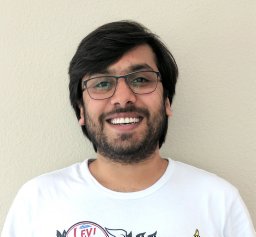
 Milind Shyani
· 5 previous affiliations
- Microsoft (United States)Since 2025
- Researcher · 2025–2026
- Microsoft AISince 2025
- Member of Technical Staff · Since 2025
- Amazon (United States)2021–2025
- Applied Scientist · 2021–2025
- PhD student · 2021
- Master’s Degree, Physics · 2016
Research Overview
Milind Shyani focuses on theoretical high-energy physics and privacy-preserving machine learning. His early trajectory explores conformal field theories, quantum thermalization, and holographic dualities, establishing mathematical frameworks for complex quantum systems. Recently, his focus has expanded to applied computer science, addressing differential privacy in data repositories and secure fact-checking systems for electronic health records.
Research Trajectory
The early phase of Milind Shyani's research focused on classical and quantum mechanics in multi-dimensional spaces. In 2011, he developed a theoretical framework for particle motion in multi-dimensional lattices, detailed in Normal Mode Expansion of Damped Coupled Oscillators in 3 dimensions. This work extended the physics of one-dimensional oscillator chains into two and three dimensions by accounting for energy loss and external driving forces, contributing to the broader area of Quantized Perturbations and Curvature in Bounded Universes.
Moving into high-energy theoretical physics, his research began to heavily emphasize conformal field theories (CFTs) and holographic dualities. He established necessary and sufficient conditions for large $N$ conformal field theories to exhibit a universal free energy and an extended range of validity for the higher-dimensional Cardy formula in Universality of sparse d > 2 conformal field theory at large N. By constructing and analyzing symmetric product orbifold theories, this work demonstrated the tight constraints required for any CFT dual to Einstein gravity, advancing work in the research direction of Finite N Corrections in Holographic and Many Body Systems. Continuing this focus on large $N$ CFTs, he introduced a novel mathematical approach in Lorentzian inversion and anomalous dimensions in Mellin space. This formulation simplified the calculation of operator product expansion (OPE) coefficients and anomalous dimensions for double-trace primaries.
In 2023, his theoretical physics work expanded to encompass quantum thermalization, non-Fermi liquids, and black hole microstates. He introduced the "Renyi transform" as a mathematical tool to analytically continue replica correlators in quantum field theory in Analyticity of replica correlators and modular ETH. This method revealed deep connections between the transform's discontinuity and the off-diagonal elements of the Eigenstate Thermalization Hypothesis (ETH), offering a new way to probe thermalization in quantum systems. Concurrently, he collaborated on Holographic non-Fermi liquids at large d, which investigated complex states of matter using a holographic approach in high-dimensional spacetime. By taking a large-dimensional limit, the research demonstrated that fermion self-energy exhibits a locally critical form, bridging condensed matter theory and high-energy physics. He also directed research into the holographic principle and black hole interiors with Escaping the interiors of pure boundary-state black holes. By introducing specific double trace deformations in the dual quantum field theory, this work showed how signals could theoretically escape certain black hole microstates, rendering the interior traversable and contributing to the area of Holographic Entanglement Entropy and the Page Curve.
Around this time, his trajectory underwent a distinct shift toward applied computer science, specifically focusing on privacy-preserving machine learning and data security. He contributed to the development of a non-interactive method for privately joining datasets across organizations in Creating a Public Repository for Joining Private Data. By adding differential privacy noise to a hashed sketch of sensitive data, this approach allows organizations to publish datasets to a public repository for machine learning applications without exposing individual identities. This research intersects with several active research directions, including High-Cardinality Label Differential Privacy, Differential Privacy for Continual Release and Data Streams, and Flatness Aware Optimization for Robustness to Noisy Labels.
Building on these privacy frameworks, he participated in the design of secure systems for healthcare data. In DOSSIER: Fact Checking in Electronic Health Records while Preserving Patient Privacy, he collaborated on a novel system that verifies claims made about electronic health records without exposing private patient data to large language models. By combining natural language-to-SQL translation with biomedical knowledge graphs, the system aims to improve operational efficiency and patient care while maintaining strict data confidentiality.
Current Directions
The most recent papers in the evidence indicate a focus on privacy-preserving machine learning and the secure application of artificial intelligence in sensitive domains. Recent work investigates methods for maintaining differential privacy when querying or joining large-scale datasets, ensuring that individual identities remain protected during collaborative model training. Additionally, this focus extends to the healthcare sector, where current research addresses the challenge of utilizing large language models for fact-checking electronic health records. By leveraging natural language translation and biomedical knowledge graphs, these recent efforts aim to build systems that enhance clinical reasoning and operational efficiency without compromising patient privacy.
Profile updated
| Title | Venue | Year |
|---|---|---|
| Filtered Semantic Search via Vector Arithmetic | Openreview | 2025 |
| DOSSIER: Fact Checking in Electronic Health Records while Preserving Patient Privacy | Machine Learning for Healthcare | 2024 |
| Creating a Public Repository for Joining Private Data | NeurIPS | 2023 |
| An Arxiv Paper Recommender | Openreview | 2023 |
| Analyticity of replica correlators and modular ETH | Journal of High Energy Physics | 2020 |
| Lorentzian inversion and anomalous dimensions in Mellin space | Journal of High Energy Physics | 2020 |
| Holographic non-Fermi liquids at large d | Journal of High Energy Physics | 2020 |
| Escaping the interiors of pure boundary-state black holes | Journal of High Energy Physics | 2018 |
| Universality of sparse d > 2 conformal field theory at large N | Uva-dare | 2017 |
| Normal Mode Expansion of Damped Coupled Oscillators in 3 dimensions | arXiv | 2011 |
Loading new papers…
Other researchers whose papers cluster into the same research directions — a proxy for overlapping technical interests and shared intellectual neighborhoods.
See something wrong? Report a mistake