

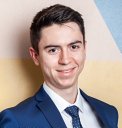
 Maxence Gélard
· 2 previous affiliations
- InstaDeepCurrent
- Current
- CentraleSupélecSince 2024
- PhD student · Since 2024
Research Overview
Maxence Gélard focuses on the application of foundation models to genomics and multi-omics representation learning. His work spans the development of nucleotide-level segmentation models for DNA sequences and bimodal architectures that integrate transcriptomic and epigenetic data. Recently, he has concentrated on joint representation learning to bridge distinct biological modalities for cancer research.
Research Trajectory
In 2024, Gélard contributed to research advancing the application of large language models to biological sequences. Working with a collaborative team, he participated in the development of SegmentNT: annotating the genome at single-nucleotide resolution with DNA foundation models, a segmentation model built upon the Nucleotide Transformer architecture. This work addressed the challenge of generating granular, nucleotide-level predictions across various genomic and regulatory elements. By processing DNA sequences up to 30 kilobases in length, the model was designed to predict 14 different classes of genomic elements simultaneously. This contribution intersects with several broader research areas, including the direction of Modeling Long Range Dependencies in Genomic Sequences and the area of Universal Grammar of Biological Sequences. The methodology also touched upon the research direction of Dynamically Weighting Hard Examples to Mitigate Class Imbalance to handle class imbalances in genomic annotations, while contributing to the broader area of Cross-Species Generalization for Genomic Sequence Modeling and the field of Harmonizing Fragmented Biological Data.
Building on his experience with genomic foundation models, Gélard subsequently shifted toward multi-omics integration. He introduced Bimodal masked language modeling for bulk RNA-seq and DNA methylation representation learning, presenting MOJO (Multi-Omics JOint representation learning). This bimodal foundation model was designed to bridge the gap between transcriptomics (RNA-seq) and epigenetics (DNA methylation), particularly in the context of cancer research. By leveraging masked language modeling techniques across distinct biological modalities, this work advances the research direction of Preserving High Dimensional Signals Beyond Feature Selection, allowing for more robust joint representations of complex biological data without prematurely discarding high-dimensional features.
Current Directions
The most recent papers in the evidence indicate a focus on multi-omics integration and bimodal representation learning. Gélard's current work investigates how foundation models can be adapted to process and align distinct biological modalities, such as RNA sequencing and DNA methylation data. This involves developing architectures that can learn joint representations across high-dimensional biological signals, with downstream applications in complex disease modeling and cancer research.
Profile updated
Loading new papers…
Other researchers whose papers cluster into the same research directions — a proxy for overlapping technical interests and shared intellectual neighborhoods.
See something wrong? Report a mistake