


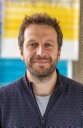
Research Overview
Stefan Laurent focuses on the intersection of computational biology, population genetics, and deep learning, with a specific emphasis on the development and application of foundation models for biological sequences. His work spans the transition from classical statistical inference of evolutionary history to the modern use of large-scale transformer architectures for genomic annotation and multimodal biological data integration. Currently, Laurent is involved in advancing the capabilities of DNA foundation models to provide high-resolution insights into genomic structure and function, as well as developing conversational agents designed to interpret complex biological data across the central dogma of molecular biology.
Research Trajectory
The trajectory of Laurent’s research reflects a significant shift in the methodologies used to interpret genetic information. His early work was grounded in the field of population genetics, where he utilized statistical frameworks to reconstruct the evolutionary and demographic histories of natural populations. This phase of his career was characterized by the use of genealogical information contained within genetic variation profiles to model complex biological processes such as colonization, migration, and adaptation. By applying these models to species like Drosophila melanogaster and wild tomato varieties, Laurent sought to quantify the timing and geographical routes of species expansion, providing a rigorous statistical basis for understanding how historical events shape contemporary genetic diversity.
Following this period of focus on evolutionary inference, Laurent’s research moved toward the application of deep learning and foundation models in genomics. This transition aligns with the broader "Cambrian explosion" of biological AI, where models trained on vast repositories of sequencing data began to outperform traditional statistical methods in predictive tasks. His recent contributions are situated within the development of the Nucleotide Transformer (NT) ecosystem. This work represents a move away from species-specific demographic modeling toward the creation of generalized architectures capable of processing and annotating diverse genomic sequences across the tree of life.
In this contemporary phase, Laurent has participated in efforts to bridge the gaps between different biological modalities. While early genomic models often treated DNA, RNA, and proteins as isolated data types, his recent collaborative work emphasizes the flow of information defined by the central dogma. This involves the development of transfer learning techniques and multimodal agents that can synthesize information across these distinct but biologically linked layers, moving toward a more holistic computational representation of cellular processes.
Current Directions
Laurent’s current research directions are primarily focused on three areas: high-resolution genomic segmentation, multimodal biological foundation models, and the development of specialized AI interfaces for biological research.
A central theme in his recent work is the refinement of DNA foundation models to achieve single-nucleotide resolution in genomic annotation. Traditional methods for identifying regulatory elements, genes, and other functional sequences often struggle with granularity or require extensive task-specific fine-tuning. Laurent has contributed to the development of models that treat the genome as a sequence to be segmented, much like an image in computer vision. These models, such as SegmentNT, are designed to simultaneously predict multiple classes of genomic elements across long sequences, demonstrating a high degree of generalization across different species.
Another significant area of focus is the integration of disparate biological foundation models. Recognizing that DNA, RNA, and proteins are fundamentally interconnected, Laurent’s work explores how information learned by a model in one domain (e.g., DNA sequences) can be transferred or combined with models in another domain (e.g., protein folding). This multimodal approach aims to create a unified computational framework that reflects the biological reality of information transfer within the cell.
Finally, Laurent is involved in the development of conversational agents tailored for the biological sciences. These agents, such as ChatNT, represent an effort to make complex foundation models more accessible and functional for researchers. By integrating the predictive power of sequence-based foundation models with the reasoning capabilities of large language models (LLMs), this work seeks to create tools that can assist in a wide range of tasks, from sequence analysis to the interpretation of experimental results, thereby facilitating a more intuitive interaction between scientists and biological data.
Representative Work
Laurent’s early contributions to population genetics are exemplified by his work on Statistical inference of complex demographic models in Drosophila melanogaster and two wild tomato species. This research focused on using genetic variation to describe the colonization processes of natural populations. A primary component of this work involved analyzing the migration of D. melanogaster from Africa to Southeast Asia, testing hypotheses regarding whether morphological differentiation in Asian populations resulted from an early colonization event that predated the species' expansion into Europe. This work established a foundation in using computational tools to resolve complex historical biological questions through the lens of genetic data.
In the realm of modern biological AI, Laurent contributed to the development of SegmentNT: annotating the genome at single-nucleotide resolution with DNA foundation models. This research addresses the limitations of previous DNA foundation models by introducing a segmentation approach capable of predicting 14 different classes of genomic and regulatory elements simultaneously. By processing sequences up to 30kb in length, the model provides granular, nucleotide-level predictions that are essential for practical applications in genomics. This work, also detailed in Annotating the genome at single-nucleotide resolution with DNA foundation models, demonstrates state-of-the-art performance in identifying genes and regulatory regions across diverse species, from animals to plants.
Laurent also participated in the development of Multi-modal Transfer Learning between Biological Foundation Models. This project sought to overcome the isolation of existing models for DNA, RNA, and proteins. By applying transfer learning techniques, the research demonstrated how information can be shared between models like the Nucleotide Transformer and protein-focused models like ESM-2. This work is a critical step toward creating AI systems that respect the "central dogma" of biology, allowing for a more integrated understanding of how genetic information manifests as functional proteins.
Further extending the utility of these models, Laurent was part of the team that developed ChatNT: A Multimodal Conversational Agent for DNA, RNA and Protein Tasks. This research addresses the challenge of making high-performance biological foundation models more adaptable to specific applications without requiring extensive fine-tuning for every new task. ChatNT combines the strengths of biological sequence models with conversational AI, creating a multimodal agent capable of comprehending and reasoning about biological sequences. This work aims to empower researchers by providing a tool that can assist in complex biological tasks through a natural language interface, bridging the gap between raw sequence data and actionable scientific insights.
Profile updated
| Paper | Venue | Year |
|---|---|---|
| ChatNT: A Multimodal Conversational Agent for DNA, RNA and Protein Tasks🤗Hugging FaceInstaDeepAI/ | Bioarxiv | 2024 |
Loading new papers…
Other researchers whose papers cluster into the same research directions — a proxy for overlapping technical interests and shared intellectual neighborhoods.
See something wrong? Report a mistake