

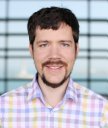
 Matthias Müller
· 3 previous affiliations
- Apple (United States)Since 2023
- Researcher · Since 2023
- Intel (Israel)2019–2023
- Researcher · 2019–2023
- Graduate Student · 2014–2019
Research Overview
Matthias Müller focuses on autonomous navigation, sim-to-real transfer, and computer vision for robotic systems. His early work established benchmarks for object tracking and advanced imitation learning for autonomous driving and aerial vehicles. More recently, his research investigates contact-rich manipulation, deep graph neural networks for 3D scene understanding, and the integration of generative AI into visual perception.
Research Trajectory
Müller’s early research addressed the challenges of tracking and autonomous navigation, particularly for unmanned aerial vehicles (UAVs). In 2016, he contributed to the development of A Benchmark and Simulator for UAV Tracking, providing tools for evaluating aerial tracking algorithms in simulated environments. Expanding on autonomous navigation, he introduced End-to-end Driving via Conditional Imitation Learning in 2017. This work demonstrated how to map raw sensory input directly to steering commands while conditioning the policy on high-level navigational directives. Recognizing the data bottleneck in visual tracking, he subsequently led the creation of TrackingNet: A Large-Scale Dataset and Benchmark for Object Tracking in the Wild, which provided millions of dense bounding box annotations to facilitate the training of deep learning-based trackers across diverse contexts.
Moving into 2019 and 2020, his focus expanded to improving the robustness and accessibility of robot learning. He developed OIL: Observational Imitation Learning, a hybrid framework that evaluates and selects maneuvers from an ensemble of imperfect teachers. This approach advanced the research direction of Decoupling Perception and Control for Robust Robot Learning and contributed to the broader area of Breaking the Imitation Learning Performance Ceiling, allowing agents to surpass human experts in simulated UAV racing. To address the vulnerability of autonomous systems to environmental variations, he presented SADA: Semantic Adversarial Diagnostic Attacks for Autonomous Applications, reframing adversarial attacks to generate semantic perturbations that test agent robustness. Concurrently, he sought to democratize robotics hardware with OpenBot: Turning Smartphones into Robots, a platform that leverages the compute and sensors of standard Android smartphones to control low-cost, 3D-printed vehicle bodies. This project also intersected with the research area of Dynamics Randomization for Robust Robotic Control.
By 2023, his work increasingly addressed the sim-to-real gap in contact-rich manipulation tasks. He guided research on Contact-Rich Object Insertion: Lessons for Zero-Shot Policy Transfer, which investigated methods to make simulation training more realistic for tasks like inserting a plate into a narrow slot. This was complemented by Zero-Shot Transfer of Haptics-Based Object Insertion Policies, demonstrating that contact-exploiting manipulation policies trained in simulation could be deployed on physical robots without real-world fine-tuning. Alongside his robotics research, he advanced graph neural network architectures with DeepGCNs: Making GCNs Go as Deep as CNNs. By adapting residual and dense connections to the graph domain, this work enabled the training of networks with over 100 layers, significantly impacting the research direction of Expanding Receptive Fields for 3D Scene Understanding.
In 2024 and 2025, his trajectory incorporated generative AI and advanced visual perception. He introduced L-MAGIC: Language Model Assisted Generation of Images with Coherence, a framework utilizing large language models to guide diffusion models in generating coherent 360-degree panoramas from single perspective images. He also participated in the development of RoMeO: Robust Metric Visual Odometry, addressing the classic challenge of scale ambiguity in monocular video streams. Returning to high-speed aerial robotics, he collaborated on Reaching the Limit in Autonomous Racing: Optimal Control versus Reinforcement Learning, which highlighted the robustness advantages of reinforcement learning over traditional optimal control in real-world environments. Most recently, he contributed to Evp: Enhanced visual perception using inverse multi-attentive feature refinement and regularized image-text alignment. This work leverages pre-trained diffusion models for tasks like single-image depth estimation, advancing research areas such as Repurposing Pretrained Diffusion Models for Visual Perception and Monocular Depth Estimation as a Discrete Classification Task.
Current Directions
The most recent papers in the evidence indicate a strong focus on integrating generative artificial intelligence with robust visual perception and control. Current work investigates how pre-trained diffusion models and large language models can be repurposed to solve complex spatial tasks, such as generating coherent panoramic scenes and performing dense depth estimation from single images. Alongside these generative approaches, ongoing research continues to address fundamental challenges in autonomous robotics, particularly the sim-to-real transfer of control policies. This includes evaluating the limits of reinforcement learning against traditional optimal control in high-speed, uncertain environments like autonomous drone racing, ensuring that agents can reliably map visual and haptic feedback to robust physical actions.
Profile updated
| Paper | Venue | Year |
|---|---|---|
| Learning High-Speed Flight in the WildGitHubuzh-rpg/ | arXiv | 2021 |
Loading new papers…
Other researchers whose papers cluster into the same research directions — a proxy for overlapping technical interests and shared intellectual neighborhoods.
See something wrong? Report a mistake