

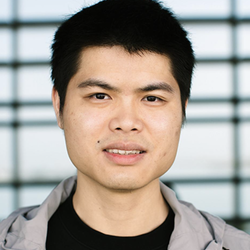
 Guohao Li
· 9 previous affiliations
- CAMEL-AI.orgSince 2023
- Founder · Since 2023
- Eigent.AiSince 2024
- Researcher · Since 2024
- Eigent AISince 2025
- Founder · Since 2025
- Postdoctoral Researcher · 2024
- Kumo.AI2022–2023
- Researcher · 2022–2023
- PhD student · 2018–2022
- Doctor of Philosophy - PhD, Computer Science
- ETH Zurich2021
- Visiting Researcher · 2021
- ShanghaiTech University2015–2018
- MS student · 2015–2018
- Harbin Institute of Technology2011–2015
- Undergrad student · 2011–2015
2 other authors named Guohao Li: Guohao Li (Baidu (China) · 1 paper), Guohao Li (0 papers)
Research Overview
Guohao Li focuses on autonomous agents, graph machine learning, and embodied artificial intelligence. His early work addressed the architectural limitations of deep graph neural networks and imitation learning for robotic control. More recently, his research centers on the design, simulation, and evaluation of multi-agent systems driven by large language and vision-language models.
Research Trajectory
During his doctoral studies, Li's research initially addressed fundamental challenges in graph representation learning and robotic control. A major focus was overcoming the vanishing gradient problem in non-Euclidean data structures. He introduced DeepGCNs: Can GCNs Go As Deep As CNNs?, which adapted concepts from convolutional neural networks to reliably train deeper graph convolutional networks. In parallel, he explored autonomous navigation and imitation learning for high-speed drone navigation. His work on Learning a Controller Fusion Network by Online Trajectory Filtering for Vision-Based UAV Racing contributed to the research direction of Imitation Learning from Suboptimal Demonstrations. This research, alongside OIL: Observational Imitation Learning, advanced methods in the broader area of Decoupled Perception and Control for Robot Learning and the Probabilistic Fusion of Multiple Control Policies. He also investigated automated network design, proposing SGAS: Sequential Greedy Architecture Search to address the area of Ranking Inconsistency in Weight Sharing Neural Architecture Search by dividing the search procedure into greedy sub-problems.
Building on his foundational graph neural network research, Li developed methods to scale these architectures dramatically. With Training Graph Neural Networks with 1000 Layers, he utilized reversible connections to decouple memory consumption from network depth, enabling the training of massive models on commodity hardware. His broader contributions to graph learning during this period also intersected with the research direction of Stochastic Edge Dropout for Graph Neural Networks, focusing on regularization and stability in deep architectures. This period also marked a transition toward embodied artificial intelligence. In How To Not Train Your Dragon: Training-free Embodied Object Goal Navigation with Semantic Frontiers, he moved away from data-heavy reinforcement learning approaches, instead utilizing semantic frontiers for object goal navigation in unseen environments.
As the founder of CAMEL-AI.org, Li's focus shifted significantly toward the simulation and deployment of autonomous agents powered by large language models (LLMs). A central contribution to this domain was CAMEL: Communicative Agents for "Mind" Exploration of Large Language Model Society, which introduced a role-playing framework where AI agents communicate autonomously to solve complex tasks, generating synthetic interaction data to improve smaller models. He subsequently explored the behavioral fidelity of these systems in Can Large Language Model Agents Simulate Human Trust Behavior?, demonstrating that models like GPT-4 can exhibit human-aligned trust behaviors in social science frameworks. To evaluate these increasingly capable systems, his group developed CRAB: Cross-platfrom agent benchmark for multi-modal embodied language model agents, a graph-based evaluation framework designed for agents interacting across diverse graphical user interfaces.
Li's most recent work scales the reasoning and collaborative capabilities of multi-agent systems. He oversaw the development of AVA: Attentive VLM Agent for Mastering StarCraft II, which demonstrated that vision-language models can achieve competitive tactical performance in complex environments without task-specific reinforcement learning. To address the bottleneck of high-quality reasoning data, he led the Loong: Synthesize Long Chain-of-Thoughts at Scale through Verifiers project, creating a framework for generating and verifying synthetic reasoning data. In the domain of real-world task automation, he introduced OWL: Optimized Workforce Learning for General Multi-Agent Assistance in Real-World Task Automation, a modular system that separates high-level planning from specialized execution. Further refining multi-agent collaboration, he contributed to Graph-of-Agents: A Graph-based Framework for Multi-Agent LLM Collaboration, which frames LLM coordination as a dynamic graph problem, advancing the research direction of Iterative Multi Agent Debate and Consensus. Finally, to ensure the reliability of agent actions, he co-developed Gecko: A Simulation Environment with Stateful Feedback for Refining Agent Tool Calls, providing a stateful sandbox for agents to iteratively refine their tool use before real-world deployment.
Current Directions
The most recent papers in the evidence indicate a strong focus on the architecture, simulation, and evaluation of multi-agent systems powered by large language and vision-language models. A primary theme is the structural organization of agent collaboration, moving beyond simple ensembles to dynamic, graph-based coordination and modular frameworks that separate high-level planning from specialized task execution. Additionally, recent work investigates the generation of verifiable synthetic data to enhance complex reasoning capabilities, as well as the use of stateful simulation environments to safely refine agent tool use and tactical decision-making in interactive settings.
Profile updated
Loading new papers…
Other researchers whose papers cluster into the same research directions — a proxy for overlapping technical interests and shared intellectual neighborhoods.
See something wrong? Report a mistake