

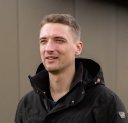
 Marten Lienen
1 previous affiliation
- Technical University of Munich2019–2025
- PhD student · 2019–2025
Research Overview
Marten Lienen focuses on generative modeling, the intersection of machine learning and physical systems, and probabilistic forecasting. His early work developed scalable methods for optimal transport and continuous-time dynamics via differential equations. Recently, his research investigates advanced generative frameworks, including diffusion models, flow matching, and Bayesian sample inference, to model complex temporal and structured data.
Research Trajectory
Marten Lienen's research trajectory begins with early collaborative work in network systems, participating in the development of Rate-Adaptive Link Quality Estimation for Coded Packet Networks in 2016. His focus subsequently shifted toward foundational machine learning methods. In 2021, he contributed to the area of Differentiable Optimal Transport in Deep Neural Networks by co-developing LCN-Sinkhorn, a hybrid approach presented in Scalable Optimal Transport in High Dimensions for Graph Distances, Embedding Alignment, and More. By combining Locality Sensitive Hashing with Nyström approximations, this work achieved log-linear complexity, enabling optimal transport on massive graphs and high-dimensional embeddings that were previously computationally prohibitive.
In 2022, Lienen concentrated on the intersection of deep learning and continuous-time dynamical systems. He introduced a method for spatio-temporal forecasting on arbitrarily distributed points in Learning the Dynamics of Physical Systems from Sparse Observations with Finite Element Networks. By deriving a continuous-time model via the finite element method, the resulting graph neural network could incorporate structural biases from known partial differential equations. By leveraging this mechanism, he derived a transport variant from the convection equation, improving the model's ability to capture underlying physical laws. To support the computational demands of such continuous-time models, he also developed torchode: A Parallel ODE Solver for PyTorch, an optimized solver capable of processing multiple ordinary differential equations independently and in parallel on GPUs. The implementation tracks each ODE's progress separately and is specifically designed for compatibility with PyTorch's JIT compiler.
Moving into 2023 and 2024, Lienen's work increasingly leveraged generative modeling to address complex, non-standard data domains. He participated in research targeting the broader area of Marked Temporal Point Processes for Complex Event Sequences, contributing to Add and Thin: Diffusion for Temporal Point Processes. This model replaced traditional autoregressive sampling with a global denoising process to prevent error accumulation in long-term forecasting. He applied similar generative principles to fluid dynamics, addressing the research direction of Neural Surrogates and the Simulation Fidelity Bottleneck. In From Zero to Turbulence: Generative Modeling for 3D Flow Simulation, he proposed TurbDiff, a diffusion model that generates fully developed 3D turbulent flow states directly, bypassing the slow temporal roll-outs of traditional solvers. This approach demonstrated the ability to generate realistic flow states significantly faster than conventional numerical methods, without requiring an initial flow state. Concurrently, he explored generative applications in computer vision, contributing to the area of Adversarial Purification via Generative Manifold Reconstruction through the evaluation of AI vision models in Assessing Robustness via Score-Based Adversarial Image Generation.
In 2025 and 2026, Lienen expanded his focus to novel generative frameworks and state space models. He addressed the initialization of State Space Models in UnHiPPO: Uncertainty-aware Initialization for State Space Models, using linear stochastic control and Kalman filtering. This reformulation allows models to implicitly denoise signals, significantly improving robustness against noisy real-world data without increasing computational costs. He also introduced a unifying generative framework in Generative Modeling with Bayesian Sample Inference, which frames data generation as an iterative process of Bayesian posterior updates, bridging Bayesian Flow Networks and diffusion models under a single theoretical umbrella.
This theoretical foundation has informed his most recent collaborative work across diverse modalities. In time series forecasting, he co-developed TSFlow in Flow Matching with Gaussian Process Priors for Probabilistic Time Series Forecasting, which utilizes structured priors to simplify generative paths and improve forecasting accuracy. For discrete structures, he participated in research within the direction of Stochastic Correction for Robust Generative Sampling, applying these concepts to Discrete Bayesian Sample Inference for Graph Generation. This work addresses the inherent difficulty of generating discrete, unordered structures of varying sizes, adapting continuous generative principles to the discrete domain of graph edges. Finally, he returned to temporal point processes with Edit-Based Flow Matching for Temporal Point Processes, introducing a non-autoregressive framework that learns continuous-time sequences of insertions, deletions, and substitutions to efficiently generate event data.
Current Directions
Recent work investigates advanced generative paradigms, specifically moving beyond standard diffusion models to explore Bayesian Sample Inference and Flow Matching. The most recent papers in the evidence address the challenge of applying continuous generative frameworks to complex, structured, or discrete data modalities. This includes utilizing structured Gaussian Process priors to improve probabilistic time series forecasting and adapting Bayesian updates for the discrete domain of graph generation. Additionally, current research focuses on non-autoregressive sequence modeling, developing edit-based flow matching techniques to efficiently generate temporal point processes without the compounding errors typical of step-by-step autoregressive generation.
Profile updated
Loading new papers…
Other researchers whose papers cluster into the same research directions — a proxy for overlapping technical interests and shared intellectual neighborhoods.
See something wrong? Report a mistake