

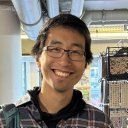
 Stephen Y. Zhang
· 4 previous affiliations
- Flatiron InstituteCurrent
- Current
- The University of Melbourne2022–2026
- PhD student · 2022–2026
- Intern · 2025
- University of British Columbia2019–2021
- MS student · 2019–2021
Research Overview
Stephen Y. Zhang focuses on optimal transport, trajectory inference from population snapshots, and generative flow models. His work bridges theoretical guarantees in convex optimization with scalable algorithms for recovering complex stochastic dynamics. Recently, his research has centered on simulation-free methods for Schrödinger bridges and advancing flow matching techniques for high-dimensional data generation.
Research Trajectory
Stephen Y. Zhang's research trajectory begins with foundational work in recovering stochastic dynamics from static population snapshots. In 2022, he contributed to the development of grid-free algorithms for trajectory inference, addressing the challenge of reconstructing population dynamics from temporal marginals. This work, detailed in Trajectory Inference via Mean-field Langevin in Path Space, introduced a method utilizing point clouds coupled via Schrödinger bridges that evolve through noisy gradient descent. By studying the mean-field limit of these dynamics, the research provided proofs of global optimality, advancing the broader area of Guarantees of Global Optimality via Convex Reformulation.
Building on these foundations, Zhang expanded his focus to biological and non-equilibrium systems where populations undergo growth, division, and death. In Inferring stochastic dynamics with growth from cross-sectional data, he introduced Unbalanced Probability Flow Inference (UPFI). By leveraging the Lagrangian formulation of the Fokker-Planck equation, UPFI disentangles deterministic drift from random noise and population growth, allowing for more accurate recovery of biological trajectories and gene regulatory networks. This contribution significantly advanced the research direction of Unbalanced Transport for Population Dynamics.
Concurrently, Zhang addressed the computational bottlenecks of modeling out-of-equilibrium systems. In Learning non-equilibrium diffusions with Schrödinger bridges: from exactly solvable to simulation-free, he developed a framework using multivariate Ornstein-Uhlenbeck (mvOU) reference dynamics. This approach yielded exact solutions for Gaussian data and a simulation-free training algorithm (mvOU-OTFM) that improved both speed and accuracy over existing simulation-based methods. This work intersects with several key research areas, including Learning Non-Gradient Dynamics from Population Snapshots, Scaling Optimal Transport for Massive Datasets, and the specific domain of Gaussian Preservation in Optimal Transport and Schrödinger Bridges.
As his work progressed, Zhang increasingly applied optimal transport principles to improve generative flow models. With collaborators, he investigated the scaling of optimal transport couplings in On Fitting Flow Models with Large Sinkhorn Couplings. By increasing batch sizes for source-to-target pairings and carefully tuning the regularization of the Sinkhorn algorithm, this research demonstrated faster training and higher generation quality. This methodological improvement also touched upon the research direction of Compressing Deep Learning Representations with PCA.
Most recently, Zhang has continued to refine flow matching techniques. In Flow Matching with Semidiscrete Couplings, he and his co-authors explored semidiscrete approaches to generative modeling, focusing on straightening probability paths and utilizing linear trajectories to facilitate fast and efficient data generation.
Current Directions
The most recent papers in the evidence indicate a strong focus on advancing flow-based generative models and scaling optimal transport for high-dimensional data. Recent work investigates the use of semidiscrete couplings and large Sinkhorn pairings to improve the training efficiency and generation quality of flow models. A central theme in this current research is the straightening of probability paths to enable faster generative modeling. Additionally, Zhang continues to explore simulation-free frameworks for solving Schrödinger bridge problems, aiming to reconstruct complex, non-equilibrium dynamics without the computational overhead of traditional simulation-based methods.
Profile updated
Loading new papers…
Other researchers whose papers cluster into the same research directions — a proxy for overlapping technical interests and shared intellectual neighborhoods.
See something wrong? Report a mistake