

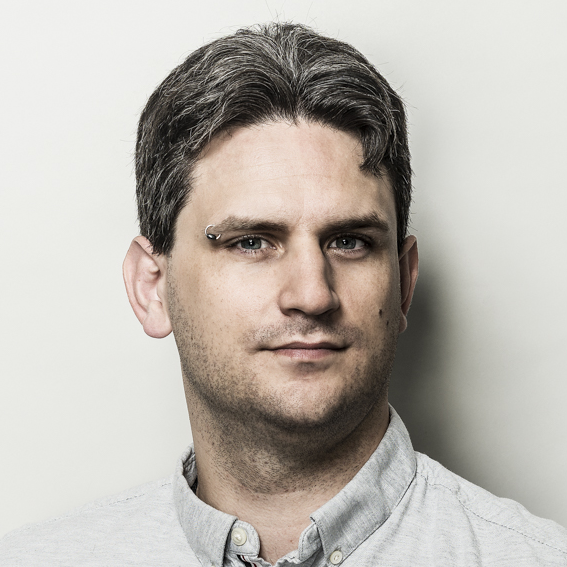
 Marcus A Brubaker
· 9 previous affiliations
- York UniversitySince 2016
- Associate Professor · Since 2023
- Current
- Assistant Professor · 2016–2023
- Google (United States)Since 2024
- Researcher · Since 2024
- Google DeepMind (United Kingdom)Since 2024
- Research Scientist · Since 2024
- Structura BiotechnologySince 2016
- Co-Founder and Scientific Advisor · Since 2016
- Samsung AI Center2021–2024
- Visiting Professor · 2021–2024
- Samsung (South Korea)2021–2024
- Visiting Professor · 2021–2024
- Borealis AI2018–2024
- Academic Advisor · 2020–2024
- Research Director · 2018–2020
- University of Toronto2001–2016
- Postdoc · 2014–2016
- PhD student · 2006–2011
- HBSc, MSc, PhD, Computer Science · 2001–2011
- MS student · 2004–2006
- Undergrad student · 2001–2004
- Postdoc · 2011–2014
Research Overview
Marcus A Brubaker focuses on computer vision, probabilistic modeling, and machine learning, with a particular emphasis on generative models and 3D structure estimation. His trajectory spans foundational work in Markov Chain Monte Carlo methods and Cryo-EM reconstruction to recent advancements in normalizing flows and novel view synthesis. Currently, he investigates geometry-aware diffusion models and amortized Bayesian inference to improve the consistency and efficiency of complex visual and statistical systems.
Research Trajectory
Brubaker’s early research addressed physical modeling and complex sampling in computer vision and statistics. He introduced Physics-Based Person Tracking Using Simplified Lower-Body Dynamics (2007), which utilized biomechanical properties such as balance and ground contact to improve 3D person tracking. Expanding into broader statistical methodologies, he subsequently developed A Family of MCMC Methods on Implicitly Defined Manifolds (2012) to enable sampling from distributions that cannot be easily defined in standard Euclidean spaces.
This interest in complex probabilistic inference naturally extended to structural biology and the area of 3D Reconstruction from Unposed Two Dimensional Projections. In Building proteins in a day: Efficient 3D molecular reconstruction (2015), he applied modern stochastic optimization to scale Cryo-EM structure estimation to large datasets, reducing the cost of objective function evaluation by orders of magnitude. This line of inquiry culminated in cryoSPARC: algorithms for rapid unsupervised cryo-EM structure determination (2017), a system that significantly accelerated unsupervised structure determination and aligns with his role as a co-founder of Structura Biotechnology. Concurrently, he contributed to foundational tools in probabilistic programming as an original contributor to Stan: A Probabilistic Programming Language (2017), advancing the broader field of Self-Tuning Markov Chain Monte Carlo via Online Adaptation by enabling high-performance Bayesian inference for complex models.
Moving toward representation learning, his research explored temporal modeling with Time2Vec: Learning a Vector Representation of Time (2019), a model-agnostic approach contributing to the direction of Cyclical Temporal Encoding in Deep Learning. Around this time, he also established a deep focus on generative models, particularly normalizing flows, providing a comprehensive overview of the field in Normalizing Flows: An Introduction and Review of Current Methods (2021).
In the early 2020s, his work increasingly intersected with computational photography and neural representations. He investigated the area of Continuous Image Representation via Implicit Neural Fields through Neural Image Representations for Multi-Image Fusion and Layer Separation (2021), framing image fusion as an unsupervised optimization problem to separate complex layers like reflections and moiré patterns. He also addressed fundamental camera pipeline challenges, such as Auto White-Balance Correction for Mixed-Illuminant Scenes (2022). Applying generative models to these pipelines, he advanced research in Density Estimation with Invertible Neural Networks by capturing complex image signal processor distributions in Modeling sRGB Camera Noise with Normalizing Flows (2022) and extending this to scenarios lacking clean reference data in Noise2NoiseFlow: Realistic Camera Noise Modeling without Clean Images (2022). Furthering coordinate networks, he developed Residual Multiplicative Filter Networks for Multiscale Reconstruction (2022) to enable coarse-to-fine optimization for continuous signals.
More recently, his focus has shifted toward generative novel view synthesis (GNVS) and diffusion models. He contributed to the direction of Sequential Next View Prediction for 3D Scene Consistency with Long-Term Photometric Consistent Novel View Synthesis with Diffusion Models (2023), introducing techniques to maintain geometric consistency across virtual camera movements. He expanded on this with PolyOculus: Simultaneous Multi-view Image-based Novel View Synthesis (2024), proposing a set-based generative model capable of simultaneously producing multiple self-consistent views without relying on low-order autoregressive generation.
Alongside these vision advances, he returned to structural biology optimization in Efficient high-resolution refinement in cryo-EM with stochastic gradient descent (2023), identifying ill-conditioning issues at high frequencies and proposing a preconditioned SGD algorithm. In 2025, his work on 3D consistency continued with Geometry-Aware Diffusion Models for Multiview Scene Inpainting, which fuses multi-view information in a latent space to produce sharp completions. He also addressed scale ambiguities in GNVS with Learn Your Scales: Towards Scale-Consistent Generative Novel View Synthesis (2025). Finally, bridging his long-standing interests in Bayesian methods and modern architectures, he explored Amortized In-Context Bayesian Posterior Estimation (2025), training Transformers to perform rapid probabilistic predictions and bypass expensive iterative simulations.
Current Directions
The most recent papers in the evidence indicate a dual focus on geometrically consistent generative vision and the acceleration of probabilistic inference. In the domain of novel view synthesis and 3D scene editing, recent work investigates how diffusion models can be constrained to produce scale-consistent and photometrically stable outputs across multiple viewpoints, moving beyond autoregressive single-image generation to multi-view latent fusion. Concurrently, research in statistical machine learning explores amortized Bayesian inference, utilizing Transformer architectures and in-context learning to provide near-instant posterior estimation that is robust to real-world data and model misspecification.
Profile updated
Loading new papers…
Other researchers whose papers cluster into the same research directions — a proxy for overlapping technical interests and shared intellectual neighborhoods.
See something wrong? Report a mistake