

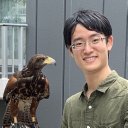
 Makoto Morishita
· 5 previous affiliations
- Future CorporationSince 2024
- Researcher · Since 2024
- Tohoku UniversitySince 2024
- Researcher · Since 2024
- PhD student · 2020–2022
- フューチャー株式会社Since 2024
- Chief Research Engineer · Since 2024
- NTT (Japan)2017–2024
- Researcher · 2017–2024
- MS student · 2015–2017
Research Overview
Makoto Morishita focuses on neural machine translation, parallel corpus construction, and the optimization of translation models for diverse linguistic domains. His trajectory spans early work in syntax-based translation to the development of large-scale web-crawled datasets like JParaCrawl. Recently, his research investigates diverse decoding strategies and methods to mitigate overcorrection in generative text editing.
Research Trajectory
Morishita’s early research explored the integration of syntactic structures into translation systems. In 2015, he introduced methods for parser self-training to improve syntax-based translation models, detailed in Parser self-training for syntax-based machine translation. This work contributed to the broader research direction of Grounding Neural Translation with Statistical Constraints, focusing on how structural inductive biases can be applied across diverse linguistic typologies.
As the field transitioned toward deep learning, Morishita began investigating the practical and computational aspects of training neural machine translation (NMT) models. In An Empirical Study of Mini-Batch Creation Strategies for Neural Machine Translation (2017), he analyzed how sorting corpora by sentence length to minimize padding affects both training efficiency and translation quality. He subsequently applied these optimizations to competitive shared tasks, developing systems for the WMT 2018 evaluation in NTT's Neural Machine Translation Systems for WMT 2018. This submission highlighted the effectiveness of rigorous noisy data filtering and right-to-left re-ranking strategies within Transformer architectures.
Recognizing that NMT performance is heavily bottlenecked by the availability of high-quality parallel data, Morishita focused on large-scale corpus construction. Following successful deployments of web-crawled parallel corpora for scientific and timely disclosure texts in NTT Neural Machine Translation Systems at WAT 2019, he led the development of a massive English-Japanese dataset. JParaCrawl: A Large Scale Web-Based English-Japanese Parallel Corpus (2020) introduced over 8.7 million automatically aligned sentence pairs, demonstrating its utility as a pre-training resource for domain-specific fine-tuning. Concurrently, he collaborated on evaluating how well these models handle non-standard text, contributing to PheMT: A Phenomenon-wise Dataset for Machine Translation Robustness on User-Generated Contents to align automated metrics with human translation quality on noisy inputs.
In 2021, Morishita expanded the architectural capabilities of NMT models by incorporating broader document context. Context-aware Neural Machine Translation with Mini-batch Embedding proposed methods to integrate contextual information efficiently during training. The following year, he released an expanded version of his parallel corpus, JParaCrawl v3.0: A Large-scale English-Japanese Parallel Corpus (2022), which significantly advanced work in the area of Translation Mediated Cross-lingual Alignment and supported the broader direction of Scaling Language Models to the Global Long Tail.
During this period, Morishita also explored how human feedback and error detection can refine translation systems. He investigated human-in-the-loop approaches in Domain Adaptation of Machine Translation with Crowdworkers, contributing to the research area of Native Data for Culturally Grounded Multilingual Models. Additionally, he participated in the development of diagnostic tools for cross-lingual communication in Chat Translation Error Detection for Assisting Cross-lingual Communications, which intersects with the research direction of The Hallucination Problem in Machine Translation. His ongoing work in competitive MT evaluation continued with submissions like NT5 at WMT 2022 General Translation Task and SKIM at WMT 2023 General Translation Task.
Most recently, Morishita has focused on improving the diversity and reliability of generated translations. In Generating Diverse Translation with Perturbed kNN-MT (2024), he and his collaborators addressed the tendency of models to underestimate valid but divergent predictions. By expanding the search space of k-nearest neighbor machine translation, this work generates more diverse translation candidates while advancing the research area of Conservative Strategies for Automated Translation Refinement.
Current Directions
Recent work investigates the mechanisms of diverse decoding and retrieval-augmented generation in neural sequence models. The most recent papers in the evidence address the limitations of standard k-nearest neighbor machine translation, specifically focusing on how to generate a wider variety of valid translation candidates without falling victim to overcorrection. By perturbing the retrieval space, this ongoing research aims to provide users with multiple high-quality translation options that better capture semantic nuances and diverse vocabulary choices.
Profile updated
Loading new papers…
Other researchers whose papers cluster into the same research directions — a proxy for overlapping technical interests and shared intellectual neighborhoods.
See something wrong? Report a mistake