

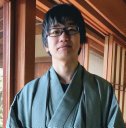
 Katsuki Chousa
· 2 previous affiliations
- NTT (Japan)Since 2020
- Researcher · Since 2020
- Nara Institute of Science and TechnologySince 2023
- PhD student · Since 2023
- MS student · 2018–2020
Research Overview
Katsuki Chousa focuses on neural machine translation, sequence modeling, and the development of large-scale parallel corpora. Their work addresses technical challenges in transformer architectures, such as output length control, while also contributing foundational datasets for English-Japanese translation. The most recent research involves participating in shared translation tasks and expanding web-crawled linguistic resources.
Research Trajectory
Chousa’s published research trajectory in the available corpus spans from 2020 to 2022, with a consistent focus on improving English-Japanese machine translation through both architectural modifications and data resource expansion.
In 2020, Chousa collaborated as a second author on Incorporating Noisy Length Constraints into Transformer with Length-aware Positional Encodings. This work addressed the common under-translation problem in Neural Machine Translation (NMT), which often stems from the model's limited ability to manage output sequence lengths. The research proposed a novel training approach for Transformer models utilizing length-aware positional encodings. To prevent exact target sentence lengths from degrading overall translation performance, the methodology introduced random noise within a specific window size to the length constraints during training. During inference, the system predicted output lengths using a BERT-based model. Experimental results on the ASPEC English-to-Japanese translation task demonstrated the efficacy of this constraint-based approach.
By 2022, Chousa’s focus expanded to address the data scarcity that limits machine translation performance for many language pairs. Recognizing that translation accuracy is heavily dependent on the volume and quality of parallel corpora, Chousa was a second author on JParaCrawl v3.0: A Large-scale English-Japanese Parallel Corpus, presented at LREC. This project aimed to bridge the resource gap between highly resourced language pairs (like English-German) and English-Japanese by constructing a massive web-based parallel corpus containing over 21 million unique parallel sentences.
In the same year, Chousa participated as a co-author in international benchmarking efforts, contributing to the NT5 at WMT 2022 General Translation Task. This middle-author contribution reflects collaborative involvement in developing and evaluating competitive translation systems for standardized, large-scale shared tasks.
Current Directions
The most recent papers in the evidence are from 2022. This recent work investigates the practical scaling and evaluation of machine translation systems. Rather than focusing solely on algorithmic tweaks, the latest efforts emphasize the foundational importance of training data, specifically through the curation and release of massive web-crawled datasets for English-Japanese translation. Additionally, Chousa's recent collaborative participation in the WMT shared tasks indicates an ongoing interest in benchmarking state-of-the-art translation models against rigorous, community-standardized evaluations.
Profile updated
Loading new papers…
Other researchers whose papers cluster into the same research directions — a proxy for overlapping technical interests and shared intellectual neighborhoods.
See something wrong? Report a mistake