

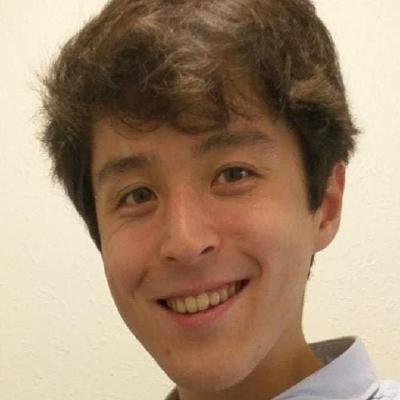
 Luke Gessler
· 3 previous affiliations
- Indiana UniversitySince 2024
- Assistant Professor · Since 2024
- University of Colorado Boulder2023–2024
- Postdoc · 2023–2024
- Georgetown University2018–2023
- PhD student · 2018–2023
Research Overview
Luke Gessler focuses on computational linguistics and natural language processing, with a particular emphasis on low-resource languages, language documentation, and the computational modeling of orthographic and morphological systems. His work addresses the technical and structural barriers that prevent the development of effective language technologies for the majority of the world's languages, specifically investigating how to resolve ambiguities in underspecified writing systems and how to leverage auxiliary data sources, such as translations, to improve morphological analysis when primary training data is scarce.
Research Trajectory
Gessler’s early research, beginning around 2020, concentrated on the intersection of phonology and orthography in Indo-Aryan languages. This work addressed the problem of Resolving Lexical Ambiguity from Orthographic Underspecification, where the written form of a language does not fully represent its phonetic reality. A primary focus during this period was the challenge of grapheme-to-phoneme (G2P) conversion, particularly the phenomenon of schwa deletion in Hindi and Punjabi. In these languages, the "lossy" nature of the script requires computational models to predict whether a schwa sound should be realized or omitted based on phonetic context, a task essential for high-quality speech synthesis and recognition.
This focus on phonetic representation aligned with broader efforts in Cross-Lingual Phonetic Bootstrapping for Low-Resource Speech. By treating languages not as isolated entities but as systems with shared phonetic patterns, Gessler’s work contributed to overcoming the "data wall" that typically limits Automatic Speech Recognition (ASR) development for under-resourced languages. During this time, he also participated in community-wide efforts to define the landscape of language technology for documentation and revitalization, contributing to the synthesis of research priorities for endangered language support.
As his research progressed toward 2024, Gessler shifted toward more complex structural analyses, specifically canonical morphological segmentation. This task involves decomposing words into their underlying morphemes, a process complicated by phonological changes that occur at morpheme boundaries. His recent work explores how to mitigate the scarcity of gold-standard segmentation data by incorporating semantic signals from translation data. This trajectory reflects a move from local phonetic labeling toward more holistic sequence-to-sequence modeling that integrates multiple levels of linguistic information.
Methodologically, Gessler’s work often utilizes Sliding Window Feature Extraction for Sequence Labeling. While modern NLP often prioritizes long-range dependencies, his research demonstrates that for tasks like G2P conversion and morphological segmentation, the most critical information is often found within local contexts. By refining how models capture these local dependencies, his work improves the accuracy of fundamental linguistic processing tasks in data-constrained environments.
Current Directions
Gessler’s more recent interests suggest an expansion into the development of automated pipelines and mixed-methods research. This includes an emerging focus on Bridging the Usability Gap in Computational Biology. Just as the "bioinformatics bottleneck" restricts complex biological analysis to a small group of specialists, the "NLP bottleneck" often limits the use of advanced computational tools by field linguists and documentation practitioners. Gessler’s work seeks to democratize these technologies by creating more accessible, automated workflows for linguistic analysis.
Furthermore, his research has begun to explore the integration of different types of evidence to better understand systemic challenges in data-driven fields. This involves The Mechanics of Qualitative and Quantitative Data Integration, a methodological approach that uses large-scale data to identify patterns while employing The Mechanics of Semi-Structured Qualitative Interviewing to understand the underlying motivations and frictions within a research or documentation ecosystem. This shift indicates a growing interest in the human and systemic factors that influence how technology is adopted and utilized in specialized domains.
Representative Work
Supervised Grapheme-to-Phoneme Conversion of Orthographic Schwas in Hindi and Punjabi (2020). In this work, Gessler, as second author, collaborated on a supervised approach to the problem of schwa deletion. The research addresses the inherent ambiguity in the Devanagari and Gurmukhi scripts, where the presence or absence of a schwa is not explicitly marked. The authors developed a model to predict these phonetic realizations, which is a critical step for building accurate speech technologies in these widely spoken but computationally challenging languages.
TAMS: Translation-Assisted Morphological Segmentation (2024). Gessler contributed to the development of TAMS, a method designed to improve canonical morphological segmentation in language documentation contexts. Recognizing that while labeled segmentation data is often scarce, translation data is frequently more accessible, the research proposes a character-level sequence-to-sequence model that leverages translation representations. This approach allows the model to use semantic cues from translations to better identify morpheme boundaries and underlying forms.
A Summary of the First Workshop on Language Technology for Language Documentation and Revitalization (2020). Gessler was part of a large multi-institutional group that summarized the findings and future directions of the inaugural workshop on this topic. The paper outlines the state of the field, highlighting the need for closer collaboration between computational linguists and speech communities, and identifies key technical challenges in applying NLP to endangered language data.
Profile updated
Loading new papers…
Other researchers whose papers cluster into the same research directions — a proxy for overlapping technical interests and shared intellectual neighborhoods.
See something wrong? Report a mistake