

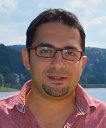
 Ramy Eskander
· 3 previous affiliations
- Google (United States)Since 2023
- Engineer · Since 2023
- Twitter (United States)2021–2023
- Senior Research Scientist · 2021–2023
- Columbia University2012–2021
- PhD student · 2018–2021
- Researcher · 2012–2018
Research Overview
Ramy Eskander focuses on computational morphology, dialectal natural language processing, and cross-lingual learning for low-resource languages. His early work centered on building foundational morphological analyzers and treebanks for Egyptian Arabic, addressing the gap between standardized text and regional dialects. More recently, he investigates unsupervised cross-lingual techniques and robust morphological reinflection to support truly low-resource linguistic scenarios.
Research Trajectory
Eskander’s early research primarily addressed the challenges of processing morphologically rich and dialectal variations of Arabic. In 2012, he co-authored A Morphological Analyzer for Egyptian Arabic, which adapted computational tools to handle the specific linguistic features of the Egyptian dialect. This work contributed to the research direction of Overcoming Data Scarcity for Low Resource Dialectal Modeling, addressing the performance degradation that standard language models experience when applied to regional dialects.
Building on this foundation, Eskander led the development of automated methods for morphological learning. As first author of Automatic Extraction of Morphological Lexicons from Morphologically Annotated Corpora in 2013, he introduced a language-independent algorithm optimized for morphologically rich languages, demonstrating significant error reductions for both Egyptian Arabic and German. This research aligns with the broader area of Morphological Analysis for Polysynthetic and Agglutinative Languages, where the goal is to computationally model complex word formations.
By 2014, Eskander’s focus expanded to the creation of comprehensive linguistic resources and the architectural challenges of dialectal annotation. He served as the senior author on Developing an Egyptian Arabic Treebank: Impact of Dialectal Morphology on Annotation and Tool Development. This work highlighted the necessity of specialized morphological analyzers to mediate between informal, written dialectal text and the segmented forms required for syntactic trees. During this period, he also participated as a co-author in collaborative projects addressing themes such as Orthographic Normalization for Dialectal and Informal Text and Hybrid Architectures for Robust Linguistic Error Correction, contributing to tools like MADAMIRA and systems for the QALB-2014 shared task.
In 2016, Eskander’s trajectory shifted toward broader, language-independent preprocessing frameworks and supervised morphological tasks. He was the senior author of SPLIT: Smart Preprocessing (Quasi) Language Independent Tool, which provided a highly configurable, dynamic preprocessing framework designed to ensure consistency across diverse natural language processing pipelines. Concurrently, he contributed to supervised morphological paradigm completion, co-authoring The Columbia University - New York University Abu Dhabi SIGMORPHON 2016 Morphological Reinflection Shared Task Submission, which improved upon baseline systems across multiple languages.
By 2020, Eskander’s research evolved to tackle the constraints of data scarcity through unsupervised and cross-lingual methodologies. As first author of Unsupervised Cross-Lingual Part-of-Speech Tagging for Truly Low-Resource Scenarios, he investigated methods to project linguistic annotations across languages without relying on large, parallel corpora or extensive supervised training data.
Current Directions
The most recent papers in the evidence indicate a sustained focus on unsupervised learning and cross-lingual transfer for low-resource languages. Recent work investigates how to effectively process languages that lack large annotated corpora, relying on cross-lingual projection rather than supervised training. This methodological shift aligns with broader research themes such as Density Based Sample Selection for Robust Unsupervised Learning, where models must navigate noisy or unlabeled data to generate reliable pseudo-labels. Additionally, Eskander's continued involvement in morphological reinflection tasks highlights an ongoing interest in building robust, adaptable systems capable of handling complex morphological paradigms across diverse linguistic contexts.
Profile updated
Loading new papers…
Other researchers whose papers cluster into the same research directions — a proxy for overlapping technical interests and shared intellectual neighborhoods.
See something wrong? Report a mistake