

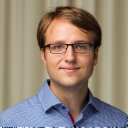
 Lukas Hoyer
· 6 previous affiliations
- Google (United States)Since 2023
- Senior Research Scientist · Since 2026
- Researcher · 2024–2026
- Student Researcher · 2023
- ETH Zurich2019–2024
- Ph.D. Candidate · 2021–2024
- Teaching Assistant · 2021–2022
- Master of Science, Robotics, Systems and Control · 2019–2021
- Spectral-Explorer2015–2019
- Founder and CEO · 2015–2019
- PreMaster Program · 2019
- Undergrad student · 2015–2019
- Intern · 2018–2019
Research Overview
Lukas Hoyer focuses on semantic image understanding, domain adaptation, and label-efficient learning for computer vision. His early work explored self-supervised depth estimation and predictive environment representations for autonomous systems. More recently, his research investigates the integration of vision-language models and generative diffusion techniques to improve domain-generalizable and semi-supervised semantic segmentation.
Research Trajectory
Hoyer’s early research addressed the fundamental need for robust environment representations in autonomous systems. He introduced a grid-based, predictive architecture for spatio-temporal fusion and short-term prediction in Short-Term Prediction and Multi-Camera Fusion on Semantic Grids. Recognizing the high cost of dense pixel annotations, his focus shifted toward label-efficient learning strategies. He demonstrated how self-supervised monocular depth estimation could enhance semi-supervised semantic segmentation in Three Ways To Improve Semantic Segmentation With Self-Supervised Depth Estimation, contributing to the research direction of Geometry Aware Data Augmentation for Scene Understanding.
A major theme in Hoyer's subsequent work is unsupervised domain adaptation (UDA), which aims to transfer models trained on accessible synthetic data to real-world environments. He addressed the memory bottlenecks of high-resolution UDA in HRDA: Context-Aware High-Resolution Domain-Adaptive Semantic Segmentation, enabling models to preserve fine details that are often lost in downscaled predictions. He systematically benchmarked network architectures for UDA in DAFormer: Improving Network Architectures and Training Strategies for Domain-Adaptive Semantic Segmentation, revealing the efficacy of Transformers for adaptation tasks and intersecting with the area of Shape Bias in Vision Transformers. This architectural exploration was later formalized and expanded in Domain Adaptive and Generalizable Network Architectures and Training Strategies for Semantic Image Segmentation.
Continuing to leverage geometric priors, Hoyer integrated depth information into data selection and multi-task learning in Improving Semi-Supervised and Domain-Adaptive Semantic Segmentation with Self-Supervised Depth Estimation, advancing the broader area of Geometry-Aware Data Augmentation for Scene Understanding and aligning with the area of Joint Learning of Scene Geometry and Semantics. To further improve UDA robustness, he developed a masked image consistency module in MIC: Masked Image Consistency for Context-Enhanced Domain Adaptation, forcing networks to learn spatial relationships rather than relying on local textures. This masking strategy was extended to multi-modal inputs in MICDrop: Masking Image and Depth Features via Complementary Dropout for Domain-Adaptive Semantic Segmentation, which utilized a complementary dropout technique across RGB and depth maps to capture fine structures.
Hoyer has also extensively investigated weak supervision and generative data augmentation. He benchmarked the limitations of current scribble-supervised models on complex real-world scenes in Scribbles for All: Benchmarking Scribble Supervised Segmentation Across Datasets. To improve semi-supervised learning, he integrated the semantic priors of vision-language models in SemiVL: Semi-Supervised Semantic Segmentation with Vision-Language Guidance, using text-based class definitions to guide spatial reasoning. Addressing domain generalization, he utilized latent diffusion models to generate diverse synthetic training data in DGInStyle: Domain-Generalizable Semantic Segmentation with Image Diffusion Models and Stylized Semantic Control, decoupling semantic layout from image style and contributing to the research direction of Generative Data Augmentation with Diffusion Models.
In recent collaborative work, Hoyer guided the development of a large-scale synthetic benchmark in RealDriveSim: A Realistic Multi-Modal Multi-Task Synthetic Dataset for Autonomous Driving, providing multi-modal depth for modern perception stacks and touching upon the research direction of Multi-Modal Perception with Mismatched Sensor Fields of View. He also contributed to automated image tagging pipelines in From open-vocabulary to vocabulary-free semantic segmentation, leveraging vision-language models to bypass manual class definitions. He also collaborated on Rewis3d: Reconstruction for Weakly-Supervised Semantic Segmentation, which uses feed-forward 3D scene reconstruction as an auxiliary signal to propagate sparse annotations across 2D images. Expanding into unsupervised video understanding, Hoyer co-developed S2D: Sparse-To-Dense Keymask Distillation for Unsupervised Video Instance Segmentation, which establishes temporal coherence in real video data through motion-guided keymask selection and implicit mask propagation. In addition, Hoyer contributed to On-Policy Self-Training: Data-Free Self-Improvement in Large Language Models, presenting a framework that enables foundation models to improve across text and multimodal tasks by generating their own training queries and privileged reasoning traces from high-level topics.
Current Directions
The most recent papers in the evidence address the persistent annotation bottleneck in dense prediction tasks. Current work investigates scalable solutions for semantic segmentation that minimize reliance on dense, manual labeling. This includes leveraging large-scale, multi-modal synthetic datasets for autonomous driving and utilizing vision-language models to achieve vocabulary-free segmentation. Additionally, recent research explores unsupervised video instance segmentation via motion-guided keymask distillation on real videos, as well as data-free on-policy self-training frameworks that allow foundation models to generate their own curricula and reasoning traces.
Profile updated
Loading new papers…
Other researchers whose papers cluster into the same research directions — a proxy for overlapping technical interests and shared intellectual neighborhoods.
See something wrong? Report a mistake