

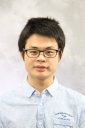
 Lu Lu
· 4 previous affiliations
- Yale UniversitySince 2023
- Assistant Professor · Since 2023
- University of Pennsylvania2021–2023
- Assistant Professor · 2021–2023
- Postdoc · 2020–2021
- Brown University2014–2020
- PhD student · 2014–2020
2 other authors named Lu Lu: Lu Lu (31 papers), Lu Lu (19 papers)
Research Overview
Lu Lu focuses on scientific machine learning, artificial intelligence for science, and multiscale modeling for physical and biological systems. His trajectory spans the development of physics-informed neural networks and deep neural operators that embed physical laws into machine learning architectures. Currently, his work addresses uncertainty quantification, active learning, and the application of foundation models to complex partial differential equations.
Research Trajectory
The trajectory begins with foundational contributions to integrating mathematical constraints into deep learning. Early collaborative work explored the area of Parameter Identifiability in Complex Dynamical Systems, demonstrating how embedding ordinary differential equations into neural network architectures could infer hidden dynamics from sparse biological data in Systems biology informed deep learning for inferring parameters and hidden dynamics. This theme of physics-constrained learning was further contextualized in a comprehensive review of Physics-informed machine learning, which outlined how teaching neural networks the governing rules of physical systems enables the solution of high-dimensional problems with reduced data requirements, advancing the broader research direction of Neural Operators for Resolution Independent Scientific Computing.
Building on these principles, he introduced DeepXDE: A Deep Learning Library for Solving Differential Equations, providing a versatile framework for physics-informed neural networks (PINNs) capable of handling integro-differential, fractional, and stochastic PDEs. Concurrently, he developed a novel architecture for learning nonlinear operators, detailed in Learning nonlinear operators via DeepONet based on the universal approximation theorem of operators. DeepONet demonstrated the ability to approximate mathematical operators with low generalization error, establishing a new paradigm for complex system simulation and control.
As his research group expanded, the focus shifted toward rigorous validation and algorithmic efficiency. In systems biology, his lab developed a workflow for Systems Biology: Identifiability analysis and parameter identification via systems-biology informed neural networks, ensuring accurate parameter estimation under noisy conditions. To address the training bottlenecks of PINNs, his group investigated research directions such as Automated Loss Weighting for Physics-Informed Neural Networks and Residual Based Adaptive Sampling for Physics Informed Neural Networks. This effort yielded novel adaptive methods like RAD and RAR-D, introduced in A comprehensive study of non-adaptive and residual-based adaptive sampling for physics-informed neural networks, which intelligently distribute residual points to improve accuracy. They also tackled the challenge of out-of-distribution generalization in Reliable extrapolation of deep neural operators informed by physics or sparse observations, aiming to move neural operators beyond interpolation to handle inputs outside their training support.
In 2024, the application of these neural operators scaled to highly complex, domain-specific challenges. For geological carbon sequestration, his team developed hybrid architectures to accelerate 3D simulations, presented in Efficient and generalizable nested Fourier-DeepONet for three-dimensional geological carbon sequestration and Fourier-MIONet: Fourier-enhanced multiple-input neural operators for multiphase modeling of geological carbon sequestration. These models combined multiple-input operators with Fourier neural networks to drastically reduce memory usage and training time. Similar Fourier-enhanced architectures were adapted for seismic analysis in Fourier-DeepONet: Fourier-enhanced deep operator networks for full waveform inversion with improved accuracy, generalizability, and robustness, allowing models to generalize across different seismic source frequencies and locations. Beyond the physical sciences, he demonstrated the versatility of these methods in financial economics, utilizing deep learning to simultaneously solve and estimate continuous-time general equilibrium models in Deep learning for solving and estimating dynamic macro-finance models.
Methodologically, his work has continued to push the boundaries of data efficiency and geometric flexibility. Contributing to the area of Learning Partial Differential Equations on Irregular Domains, he evaluated physics-informed DeepONets on manifolds identified only by randomly sampled point clouds in Solving forward and inverse PDE problems on unknown manifolds via physics-informed neural operators. To further reduce data requirements, his group introduced a novel approach in One-shot learning for solution operators of partial differential equations, leveraging the local nature of PDEs to train a neural network on a single solution and predict outcomes for new conditions.
Most recently, his research has incorporated probabilistic frameworks to improve model reliability. He participated in developing a lightweight framework for predictive uncertainty quantification in neural operators, detailed in Active operator learning with predictive uncertainty quantification for partial differential equations. By outputting probability distributions rather than point estimates, this work advances the research direction of Sample Selection Guided by Model Uncertainty, enabling efficient active learning and Bayesian optimization for PDEs.
Current Directions
Recent work investigates the intersection of probabilistic machine learning and scientific simulation. The most recent papers in the evidence address predictive uncertainty quantification for partial differential equations, shifting from deterministic point estimates to probabilistic surrogate models. This enables active operator learning and Bayesian optimization, significantly improving data efficiency. Additionally, current research focuses on scaling neural operators to increasingly complex, high-dimensional physical systems—such as 3D geological carbon sequestration and full waveform inversion—while enhancing their ability to generalize across irregular geometries, unknown manifolds, and out-of-distribution inputs.
Profile updated
Loading new papers…
Other researchers whose papers cluster into the same research directions — a proxy for overlapping technical interests and shared intellectual neighborhoods.
See something wrong? Report a mistake