

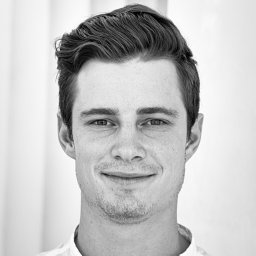
 Julius Berner
· 5 previous affiliations
- Nvidia (United States)Since 2024
- Researcher · Since 2024
- California Institute of Technology2023–2024
- Postdoctoral Researcher · 2023–2024
- University of Vienna2016–2023
- Researcher PHD Student · 2018–2023
- Master's degree, Mathematics · 2016–2018
- AI Research Intern · 2022
- ETH Zurich2022
- Visiting PHD Student · 2022
Research Overview
Julius Berner focuses on the theoretical foundations of deep learning, generative modeling, and scientific machine learning. His early work established rigorous guarantees for neural network optimization and the numerical solution of high-dimensional partial differential equations. Recently, he has concentrated on diffusion models and stochastic optimal control, developing efficient sampling methods for complex, multimodal distributions and continuous physical systems.
Research Trajectory
Berner’s early research investigated the theoretical properties of neural networks, particularly concerning optimization and generalization. Collaborative work characterized the exact parameter degeneracies of networks using ReLU activations, as detailed in How degenerate is the parametrization of neural networks with the ReLU activation function? (2019). This research demonstrated that under mild regularization, close functions imply close parameters under a Sobolev norm, guaranteeing that local minima in sufficiently wide networks are almost globally optimal.
Building on these theoretical foundations, Berner shifted toward scientific machine learning, specifically addressing the computational bottlenecks of traditional grid-based solvers. He presented a deep learning algorithm based on the Feynman-Kac formula in Numerically Solving Parametric Families of High-Dimensional Kolmogorov Partial Differential Equations via Deep Learning (2020). This work reformulated the numerical approximation of entire families of PDEs as a single statistical learning problem, contributing to the area of Solving High Dimensional PDEs via Stochastic Path Integration. He further analyzed these methods in Analysis of the Generalization Error: Empirical Risk Minimization over Deep Artificial Neural Networks Overcomes the Curse of Dimensionality in the Numerical Approximation of Black-Scholes Partial Differential Equations (2020), providing theoretical backing for how empirical risk minimization over deep architectures can bypass dimensional scaling issues in financial and physical models.
Recognizing that standard Feynman-Kac approaches often suffer from high variance during optimization, subsequent work sought more stable formulations. In Robust SDE-Based Variational Formulations for Solving Linear PDEs via Deep Learning (2022), Berner and colleagues leveraged Backward Stochastic Differential Equations (BSDEs) to create memory-efficient, robust loss functions that achieved faster convergence across physics and finance benchmarks. Returning to statistical learning theory, he also explored the limits of neural network guarantees in Learning ReLU networks to high uniform accuracy is intractable (2023), quantifying the sample complexity required to achieve high accuracy with respect to the uniform norm, a critical requirement for security and computational science applications. During this period, he also led an evaluation of large language models in formal reasoning, introducing the GHOSTS dataset to benchmark models on natural-language mathematics in Mathematical Capabilities of ChatGPT (2023).
By 2024, Berner’s focus expanded to encompass advanced generative modeling and continuous-time neural architectures. To address the limitations of global operations in standard Neural Operators, he contributed to Neural Operators with Localized Integral and Differential Kernels (2024), which introduced learnable stencils to capture fine-grained local details in fluid dynamics while maintaining resolution independence. Simultaneously, he began deeply investigating diffusion models. In An optimal control perspective on diffusion-based generative modeling (2024), he formalized the connection between diffusion processes and the research direction of Generative Diffusion as Stochastic Optimal Control, advancing the broader area of Overcoming Local Mode Entrapment in Multimodal Sampling. This theoretical framing was complemented by practical sampling advancements in Improved sampling via learned diffusions (2024).
To sample from high-dimensional unnormalized densities without relying on training data, Berner and collaborators developed methods that solve underlying continuity and Fokker-Planck equations. This approach, detailed in Physics-informed neural networks for sampling (2024), utilizes physics-informed neural networks (PINNs) to avoid the mode collapse often seen in standard normalizing flows. Continuing this trajectory into continuous-time formulations, he explored neural stochastic differential equations in From discrete-time policies to continuous-time diffusion samplers: Asymptotic equivalences and faster training (2025), focusing on scenarios where only an energy function is available. He also formalized a framework for translating standard deep learning architectures into discretization-agnostic models in Principled Approaches for Extending Neural Architectures to Function Spaces for Operator Learning (2025), enabling zero-shot super-resolution across different grid sizes.
Current Directions
The most recent papers in the evidence indicate a dual focus on scaling high-dimensional sampling techniques and optimizing complex generative architectures. In the domain of video generation, Berner contributed to Flex-Forcing: Towards a Unified Autoregressive and Bidirectional Video Diffusion Model (2026), which introduces a flexible chunking mechanism to balance the speed of autoregressive generation with the quality of bidirectional diffusion. For image generation, his team introduced Variational Flow Maps: Make Some Noise for One-Step Conditional Generation (2026), a method that achieves high-quality conditional outputs in a single step by learning optimal starting noise distributions rather than guiding iterative sampling paths.
Additionally, Berner is investigating novel mathematical structures to bypass the computational overhead of neural networks in diffusion models. In Tensor Train Diffusion: Leveraging Low-Rank Structures for High-Dimensional Score-Based Sampling (2026), he and his collaborators replace neural networks with Functional Tensor Trains. By solving the Hamilton-Jacobi-Bellman equation using low-rank tensor structures, this work achieves significantly faster training and higher sampling accuracy, contributing to the research direction of Scaling High-Order Derivatives in Scientific Machine Learning.
Profile updated
Loading new papers…
Other researchers whose papers cluster into the same research directions — a proxy for overlapping technical interests and shared intellectual neighborhoods.
See something wrong? Report a mistake