

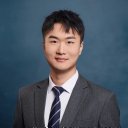
 Linhao Luo
· 4 previous affiliations
- Monash UniversitySince 2022
- Postdoc · Since 2025
- PhD student · 2022–2026
- Research Intern · 2021
- Harbin Institute of Technology2016–2021
- Bachelor's degree, Computer Science · 2016–2021
- Tencent (China)2020
- Research Intern · 2020
Research Overview
Linhao Luo focuses on the intersection of large language models, knowledge graphs, and graph neural networks to enhance complex reasoning and factual accuracy in artificial intelligence. His trajectory spans early work in graph-based recommendation systems to the development of graph foundation models for retrieval-augmented generation. Currently, he investigates unified frameworks that integrate structured graph topology with semantic reasoning to mitigate language model hallucinations.
Research Trajectory
Luo’s early research concentrated on graph mining and recommender systems, particularly addressing the complexities of user interactions in specialized domains. In 2020, he introduced a motif-based graph neural network to model sparse reciprocal links in A Motif-Based Graph Neural Network to Reciprocal Recommendation for Online Dating, contributing to the research direction of Reciprocal Recommendation for Two-Sided Markets. He expanded his focus on complex graph structures with Detecting Communities from Heterogeneous Graphs: A Context Path-based Graph Neural Network Model (2021), which captured high-order relationships between diverse node types without relying on manually defined meta-paths. Continuing his work in recommendation architectures, he developed MAMDR: A Model Agnostic Learning Framework for Multi-Domain Recommendation (2023), a framework designed to resolve domain conflict and overfitting through domain negotiation and regularization strategies.
As large language models emerged as dominant paradigms, Luo’s focus shifted toward evaluating and enhancing their factual reliability using structured knowledge, contributing broadly to the area of Factual Inaccuracy and Hallucination in Large Language Models. He proposed a framework to automatically generate questions from knowledge graphs to test model accuracy in Systematic Assessment of Factual Knowledge in Large Language Models (2023). He further investigated the faithfulness of model logic in Direct Evaluation of Chain-of-Thought in Multi-hop Reasoning with Knowledge Graphs (2024), revealing a "reasoning gap" where models arrive at correct answers through flawed intermediate steps. This evaluation work naturally led to methods for improving inference, such as Reasoning on Graphs: Faithful and Interpretable Large Language Model Reasoning (2024). To synthesize this rapidly growing intersection, he co-authored the comprehensive survey Unifying Large Language Models and Knowledge Graphs: A Roadmap (2024), mapping the broader research direction of Grounding Language Models with Structured Knowledge Graphs.
In 2025, Luo advanced these concepts into concrete architectural integrations and foundation models. He outlined the theoretical trajectory for this integration in Integrating Large Language Models and Knowledge Graphs for Next-level AGI. To strictly enforce factual generation, he developed Graph-constrained Reasoning: Faithful Reasoning on Knowledge Graphs with Large Language Models, which utilizes a trie-based index to constrain token decoding to valid graph paths, effectively eliminating reasoning hallucinations. He also explored how language models can uncover logical connections within graphs in ChatRule: Mining Logical Rules with Large Language Models for Knowledge Graph Reasoning, aligning with his broader interest in the area of Serializing Structured Graphs into Natural Language Sequences. Concurrently, his work on Beyond Memorization: A Rigorous Evaluation Framework for Medical Knowledge Editing introduced a benchmark for medical knowledge editing, directly advancing the research direction of Shifting from Static Benchmarks to Dynamic Evaluation.
During this period, Luo also pioneered the use of graph foundation models for retrieval tasks. He introduced GFM-RAG: Graph Foundation Model for Retrieval Augmented Generation (2025), a query-dependent graph neural network designed to connect information across multiple documents in a single step. This work was a key contribution to the research direction of Iterative Retrieval Augmented Generation for Multi Hop Reasoning. Alongside these developments in language and reasoning, he maintained his interest in complex recommendation systems, publishing Rrcn: a reinforced random convolutional network-based reciprocal recommendation approach for online dating (2025) to capture complex user attributes through reinforcement learning, further contributing to his ongoing work in reciprocal recommendation for two-sided markets.
Moving into 2026, Luo’s trajectory expanded to encompass unified reasoning frameworks and multi-agent systems. He developed G-reasoner: Foundation Models for Unified Reasoning over Graph-structured Knowledge, which standardizes graph data into a "QuadGraph" format to seamlessly combine graph topology with text semantics for highly scalable reasoning. He also participated in collaborative efforts to optimize multi-agent architectures. This included participation in CARD: Towards Conditional Design of Multi-agent Topological Structures, which dynamically reshapes how agents communicate based on environmental constraints, and Youtu-GraphRAG: Vertically Unified Agents for Graph Retrieval-Augmented Complex Reasoning, a framework that integrates graph construction and retrieval through a shared schema and hierarchical knowledge tree.
Current Directions
The most recent papers in the evidence address the development of unified foundation models and multi-agent systems for complex reasoning over graph-structured data. Recent work investigates how to standardize diverse graph topologies into unified formats—such as the "QuadGraph" structure—to allow large language models to seamlessly process both structural and semantic information at scale. Additionally, current research explores the dynamic design of multi-agent communication networks, focusing on how agentic systems can adapt their topological structures in response to shifting environmental constraints, tool availability, and computational costs. This includes the integration of graph construction and retrieval into vertically unified agent frameworks to improve the efficiency and accuracy of multi-hop reasoning tasks.
Profile updated
Loading new papers…
Other researchers whose papers cluster into the same research directions — a proxy for overlapping technical interests and shared intellectual neighborhoods.
See something wrong? Report a mistake