

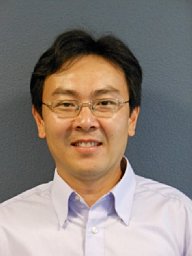
 Alan Wee-Chung Liew
· 5 previous affiliations
- Griffith UniversitySince 2007
- Full Professor · Since 2022
- Deputy Director, Institute for Integrated Intelligent Systems (IIIS) · Since 2019
- Associate Professor · 2007–2021
- Chinese University of Hong Kong2004–2007
- Assistant Professor · 2004–2007
- City University of Hong Kong1997–2004
- Senior Research Fellow · 2002–2004
- Researcher · 1998–2003
- Research Fellow · 1997–2002
- University of Tasmania1993–1996
- PhD student · 1993–1996
- University of Auckland1989–1992
- B.Eng, Electrical & Electronic Engineering · 1989–1992
Research Overview
Alan Wee-Chung Liew focuses on computer vision, biomedical image analysis, and pattern recognition in bioinformatics. His early work developed spatial fuzzy clustering techniques for image segmentation and gene expression analysis, establishing robust methods for handling noise and missing data. His current research investigates explainable artificial intelligence in medical imaging and the integration of graph-structured knowledge with large language models.
Research Trajectory
Liew’s early research concentrated on image processing and computer vision, specifically advancing the research direction of Spatially Aware Inference for Image Restoration and Segmentation. In the early 2000s, he developed novel region-based algorithms for lip tracking to improve visual speech recognition systems. This work included Lip contour extraction from color images using a deformable model, which utilized a stochastic cost function to partition images, and Segmentation of color lip images by spatial fuzzy clustering, which integrated spatial interactions between neighboring pixels to improve segmentation accuracy.
He subsequently extended these spatial clustering principles to the medical domain. To address noise and artifacts in magnetic resonance imaging, he introduced An Adaptive Spatial Fuzzy Clustering Algorithm for 3D MR Image Segmentation. This algorithm modeled intensity nonuniformity as a multiplicative bias field, contributing to the broader area of Correcting Spatially Varying Intensity Distortions. He later generalized this approach in Image Segmentation Based on Adaptive Cluster Prototype Estimation, incorporating local contextual information to exploit inter-pixel correlations in real-world images. Concurrently, he addressed image compression artifacts, proposing a deblocking algorithm in POCS-based blocking artifacts suppression using a smoothness constraint set with explicit region modeling. This work aligned with his broader contributions to the area of Spatially Adaptive Parameter Maps for Image Restoration and work in Preserving High-Frequency Textures in Image Restoration.
By the mid-2000s, Liew began applying pattern recognition techniques to computational biology. He provided a comprehensive overview of the domain in Pattern recognition techniques for the emerging field of bioinformatics: A review, focusing on DNA sequence and microarray data analysis. He then made specific methodological contributions to the research direction of Discovering Localized Submatrix Patterns. In Discovering biclusters in gene expression data based on high-dimensional linear geometries, he reframed the detection of co-regulated gene groups as a geometric problem, using a Fast Hough Transform to unify additive and multiplicative patterns. Recognizing the pervasive issue of incomplete datasets in microarray experiments, he also published Missing value imputation for gene expression data: computational techniques to recover missing data from available information, surveying algorithmic strategies for recovering missing data points.
In recent years, Liew’s research has evolved to address complex challenges in deep learning, explainable artificial intelligence (XAI), and multimodal reasoning. Returning to his early interest in lip features, he guided the development of modern deep neural networks for biometrics in Lip Feature Disentanglement for Visual Speaker Authentication in Natural Scenes, addressing practical difficulties like complex backgrounds and limited user samples. In the medical domain, he has focused heavily on making deep learning models interpretable. He oversaw a major synthesis of the field in Explainable Artificial Intelligence in Biomedical Image Analysis: A Comprehensive Survey, which proposed a modality-centered taxonomy for XAI techniques. Applying these principles, his group developed Explainable multimodal hematology analysis for white blood cell classification and attribute prediction, utilizing structured prompts to semantically align visual and morphological features for state-of-the-art cell classification.
Liew has also investigated Evidence Theory to improve model robustness in the presence of incomplete or shifted data distributions. He and his collaborators proposed Integration of Multikinds Imputation With Covariance Adaptation Based on Evidence Theory to mitigate the degradation of classification performance caused by imputed training data. Similarly, they developed Multi-Source Multi-Target Domain Adaptation Based on Evidence Theory, which aligns statistical distributions to reduce discrepancies across diverse domains.
Most recently, Liew has participated in research exploring graph foundation models and their integration with large language models (LLMs). He guided the design of Graph Retrieval-Augmented LLM for Conversational Recommendation Systems, a framework that retrieves relevant items and past conversations from a graph to ground LLM recommendations. He also collaborated on Rethinking Feature Alignment in Generalist Graph Anomaly Detection: A Relational Fingerprint-based Approach, which introduces a universal structural prior to prevent negative transfer across heterogeneous graphs. Further advancing the area of Aligning Graph Structures with Large Language Model Token Spaces, he contributed to G-reasoner: Foundation Models for Unified Reasoning over Graph-structured Knowledge, which combines graph topology with text semantics to enhance multi-hop reasoning. Alongside his graph-based research, he continues to explore novel physiological representations, recently collaborating on Learning Cardiac Latent Representations in Vectorcardiogram Space to model the heart's electrical activity as a unified 3D trajectory.
Current Directions
The most recent papers in the evidence indicate that Liew is currently focused on three primary research themes: explainable AI in biomedical imaging, robust learning under uncertainty, and graph-augmented foundation models.
In the biomedical domain, his work investigates how to bridge the semantic gap between raw medical images and clinical reasoning. This involves designing multimodal architectures that align visual features with structured clinical concepts, ensuring that deep learning models provide interpretable, vision-language explanations for their diagnostic predictions.
Parallel to his medical imaging work, he is exploring the application of Evidence Theory to handle incomplete data and domain shifts. This research addresses the statistical discrepancies that arise when models are trained on imputed data or deployed across multiple source and target domains, seeking to improve generalization in real-world environments.
Finally, his recent collaborations address the integration of graph-structured knowledge with large language models. This work focuses on overcoming the knowledge sparsity and reasoning limitations of standard LLMs by developing unified graph abstractions, relational fingerprints, and retrieval-augmented generation frameworks that allow foundation models to seamlessly reason over complex, heterogeneous network topologies.
Profile updated
Loading new papers…
Other researchers whose papers cluster into the same research directions — a proxy for overlapping technical interests and shared intellectual neighborhoods.
See something wrong? Report a mistake