

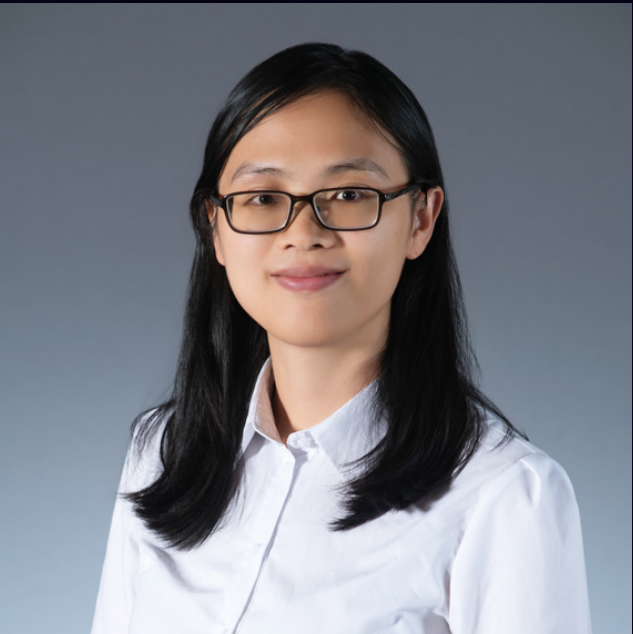
 Liangqiong Qu
· 5 previous affiliations
- University of Hong KongSince 2022
- Assistant Professor · Since 2022
- Current
- Stanford University2019–2022
- Postdoc · 2019–2022
- Postdoc · 2018–2019
- Shenyang Institute of Automation2011–2018
- PhD student · 2011–2018
- City University of Hong Kong2011–2018
- PhD student · 2011–2018
Research Overview
Liangqiong Qu focuses on medical image processing, federated learning, and the application of vision-language models to healthcare. Her trajectory spans foundational work in privacy-preserving decentralized training to advanced multimodal generation techniques. Currently, she investigates methods for overcoming volumetric context loss in 3D medical imaging and improving automated clinical report generation.
Research Trajectory
Liangqiong Qu’s research trajectory spans foundational improvements in machine learning robustness to advanced applications in medical image analysis. Her earlier contributions include work in the area of Spatio-Temporal Graph Neural Networks, establishing a basis for handling complex, structured data representations.
By 2024, her focus expanded significantly into decentralized and privacy-preserving machine learning. To address the challenges of training models across diverse client devices, she and her collaborators introduced FLHetBench: Benchmarking Device and State Heterogeneity in Federated Learning. This benchmark provides new sampling methods and metrics to evaluate models in the broader area of Federated Learning Robustness to Statistical Data Heterogeneity. Concurrently, she investigated the privacy-utility tradeoff in federated systems. In A New Federated Learning Framework Against Gradient Inversion Attacks, she developed HyperFL, a hypernetwork-based approach that mitigates vulnerabilities associated with the research direction of Reconstructing Private Data from Model Gradients. Her work on parameter-efficient federated learning also led to Selective Aggregation for Low-Rank Adaptation in Federated Learning, which demonstrated that sharing only specific components of Low-Rank Adaptation (LoRA) matrices can reduce communication costs while maintaining performance. This methodology was further formalized and expanded in a subsequent 2025 publication, Selective Aggregation for Low-Rank Adaptation in Federated Learning.
Alongside her federated learning research, Qu has maintained a strong focus on computer vision, particularly in specialized domains with limited data. In 2024, she proposed MCDNet: An Infrared Small Target Detection Network Using Multi-Criteria Decision and Adaptive Labeling Strategy, which utilizes a second-order adaptive labeling strategy to overcome the scarcity of high-quality training samples in infrared imaging.
A major pillar of her recent trajectory involves integrating large language models (LLMs) with medical imaging. In See Detail Say Clear: Towards Brain CT Report Generation via Pathological Clue-driven Representation Learning, she introduced a framework that uses segmented regions and medical entities to guide LLMs, bridging the gap between visual recognition and text synthesis. She expanded on this in 2025 with MEPNet: Medical Entity-Balanced Prompting Network for Brain CT Report Generation, which addresses biased learning by feeding the model both visual embeddings and the learning status of specific medical findings. To tackle the complexities of 3D imaging, she developed HSENet: Hybrid Spatial Encoding Network for 3D Medical Vision-Language Understanding. Together, these models represent significant progress in the research direction of Overcoming Volumetric Context Loss in Medical Vision Models. Further unifying multimodal medical tasks, she contributed to Discrete Diffusion Models with MLLMs for Unified Medical Multimodal Generation, a framework capable of generating images from reports and vice versa.
In 2025, Qu also advanced techniques for model efficiency and lifelong learning. She explored privacy-sensitive model compression in Exploring Federated Pruning for Large Language Models, demonstrating that a one-shot pruning strategy can outperform more complex iterative methods without sharing raw data. In the area of Knowledge Retention in Continual Deep Learning, she proposed Distribution-aware Forgetting Compensation for Exemplar-Free Lifelong Person Re-identification, which uses text-guided prompt learning to prevent catastrophic forgetting without requiring access to historical data. Additionally, she contributed to StyleTailor: Towards Personalized Fashion Styling via Hierarchical Negative Feedback, applying vision-language models to collaborative agent workflows outside the medical domain.
Current Directions
Recent work investigates the intersection of large language models and complex visual data, with a particular emphasis on healthcare applications. The most recent papers in the evidence address the challenge of translating 3D medical imaging, such as CT scans, into accurate clinical text. This involves developing hybrid spatial encoding networks and entity-balanced prompting strategies to ensure that rare or complex pathologies are not overlooked by automated systems. Concurrently, ongoing research explores unified multimodal generation, leveraging discrete diffusion models to seamlessly translate between medical images and text reports. Beyond medical imaging, current efforts also focus on optimizing large language models for decentralized environments, investigating one-shot federated pruning and selective parameter aggregation to enable privacy-preserving fine-tuning at scale.
Profile updated
Loading new papers…
Other researchers whose papers cluster into the same research directions — a proxy for overlapping technical interests and shared intellectual neighborhoods.
See something wrong? Report a mistake