

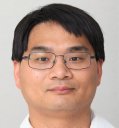
 Liang Sun
· 7 previous affiliations
- Alibaba Group (China)Since 2017
- Senior Staff Engineer · Since 2021
- Senior Staff Engineer · Since 2017
- Staff Engineer · 2017–2021
- Ant Group (China)Since 2026
- Senior Staff Engineer · Since 2026
- Microsoft (United States)2014–2017
- Senior Data Scientist · 2014–2017
- Opera Solutions2011–2014
- Senior Scientist · 2014
- Staff Scientist · 2011–2014
- Arizona State University2006–2011
- Research Associate · 2006–2011
- Applied Research & Technology Center, Motorola2009
- Research Intern · 2009
- Chinese Academy of Sciences2003–2006
- M.S., Computer Science · 2003–2006
2 other authors named Liang Sun: Liang Sun (Nanjing University of Aeronautics and Astronautics · 110 papers), Liang Sun (1 paper)
Research Overview
Liang Sun focuses on time series anomaly detection, robust forecasting, and interpretable machine learning. His trajectory spans early work in canonical correlation analysis and sparse signal recovery to the development of deep seasonal-trend decomposition and frequency-domain architectures for sequential data. Recently, his research investigates foundation models for general time series analysis and physics-driven forecasting systems.
Research Trajectory
Sun’s early research focused on fundamental machine learning problems, particularly dimensionality reduction, multi-label classification, and sparse signal recovery. He introduced methods for Adaptive diffusion kernel learning from biological networks for protein function prediction and developed A least squares formulation for canonical correlation analysis. This work demonstrated that Canonical Correlation Analysis (CCA) could be effectively framed as a least-squares problem, a concept he later expanded upon in Canonical Correlation Analysis for Multilabel Classification: A Least-Squares Formulation, Extensions, and Analysis.. During this period, he also addressed the multiple measurement vector model in compressive sensing, proposing algorithms for the Efficient Recovery of Jointly Sparse Vectors by reformulating convex relaxations into more tractable optimization problems.
By 2019, while affiliated with Alibaba Group, Sun’s focus shifted toward the complexities of real-world sequential data. He participated in the design of RobustSTL: A Robust Seasonal-Trend Decomposition Algorithm for Long Time Series., a method capable of handling seasonality shifts and abrupt trend changes in data with anomalies. This work contributed to the broader area of Deep Seasonal Trend Decomposition for Time Series Analysis and explored new Disentangling Trend and Seasonality in Time Series Networks. Recognizing the data requirements of deep neural networks, he also collaborated on a comprehensive review of Time Series Data Augmentation for Deep Learning: A Survey, systematizing methods in the research direction of Frequency Domain Augmentation for Time Series Learning.
Between 2022 and 2023, Sun’s research increasingly leveraged frequency-domain representations to improve long-term forecasting and anomaly detection. He contributed to FEDformer: Frequency Enhanced Decomposed Transformer for Long-term Series Forecasting, an architecture that shifts attention mechanisms to the frequency domain to achieve linear computational complexity, advancing the field of Efficient Long Horizon Time Series Forecasting. He also helped design FiLM: Frequency improved Legendre Memory Model for Long-term Time Series Forecasting, which uses Legendre polynomial projections to preserve historical information while filtering noise via Fourier projections. Building on these spectral techniques, his group introduced TFAD: A Decomposition Time Series Anomaly Detection Architecture with Time-Frequency Analysis to exploit both domains simultaneously.
Concurrently, Sun explored the adaptation of large-scale architectures for sequential data. He participated in the development of One Fits All: Power General Time Series Analysis by Pretrained LM, which demonstrated that frozen pre-trained language models could be repurposed for forecasting and anomaly detection by treating time series patches as tokens. This work intersected with the area of Temporal Patching for Time Series Transformers and addressed challenges in Mitigating Non-Stationary Distribution Shift in Time-Series Forecasting. To handle complicated underlying temporal dynamics and recurring anomalies, he also directed research on Time Series Subsequence Anomaly Detection via Graph Neural Networks.
In 2024, Sun’s work emphasized the interpretability and robustness of time series models. To address the limitations of traditional explainability tools that ignore temporal dependencies, his group proposed methods to Explain Temporal Black-Box Models via Functional Decomposition. He also advanced real-time multivariate imputation through BayOTIDE: Bayesian Online Multivariate Time Series Imputation with Functional Decomposition, utilizing state-space Gaussian Processes to handle irregular sampling efficiently. Recognizing that real-world training data is often contaminated, he investigated the theoretical foundations of training on noisy data in RobustTSF: Towards Theory and Design of Robust Time Series Forecasting with Anomalies. Beyond time series, he applied his expertise in foundation models to computer vision, guiding the development of APSeg: Auto-Prompt Network for Cross-Domain Few-Shot Semantic Segmentation to improve the generalization of models like the Segment Anything Model (SAM) on unseen domains.
The most recent papers in the evidence, published in 2026, show a continued expansion into physics-informed machine learning and advanced in-context learning. Sun directed the creation of ProtoTS: Learning Hierarchical Prototypes for Explainable Time Series Forecasting to further demystify model predictions. To bridge the distributional gap between historical data and future targets, his group introduced Bridging Past and Future: Distribution-Aware Alignment for Time Series Forecasting. Pushing into domain-specific physical systems, he oversaw the development of DeepPrim: a Physics-Driven 3D Short-term Weather Forecaster via Primitive Equation Learning, integrating atmospheric science equations into a Neural ODE and 3D Vision Transformer framework. Finally, he contributed to Baguan-TS: dual in-context learning model for time series forecasting with covariates, a sequence-native framework that enables rapid, gradient-free adaptation to new forecasting tasks.
Current Directions
Recent work investigates the intersection of foundation models, interpretability, and physics-informed machine learning for complex sequential data. A major theme in the most recent papers is the development of sequence-native architectures that support in-context learning, allowing models to adapt to new multivariate forecasting tasks and covariates without extensive retraining or manual feature engineering.
Additionally, current research addresses the "black box" nature of deep time series models. This involves designing frameworks that utilize functional decomposition and hierarchical prototypes to provide transparent, temporally aware explanations for predictions and anomalies. Finally, there is an active focus on integrating hard physical constraints—such as the primitive equations of atmospheric dynamics—into deep learning systems, creating hybrid models that maintain the efficiency of data-driven approaches while respecting the fundamental laws of the modeled environments.
Profile updated
Loading new papers…
Other researchers whose papers cluster into the same research directions — a proxy for overlapping technical interests and shared intellectual neighborhoods.
See something wrong? Report a mistake