

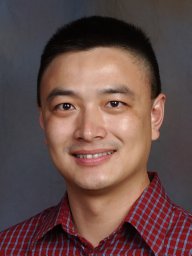
 Li Shen
· 9 previous affiliations
- University of PennsylvaniaSince 2018
- Professor of Computer and Information Science (Secondary) · Since 2025
- Full Professor · Since 2023
- Faculty of Graduate Group in Bioengineering · Since 2020
- Full Professor · Since 2018
- Current
- Interim Director, Division of Informatics, Department of Biostatistics, Epidemiology and Informatics · Since 2025
- Professor of Radiology (Secondary) · Since 2023
- Professor of Informatics · Since 2018
- Adjunct Faculty of Radiology and Imaging Sciences · 2018–2023
- Associate Director, IU Center for Computational Biology and Bioinformatics · 2014–2017
- Associate Professor of Radiology and Imaging Sciences · 2013–2017
- Adjunct Faculty of Informatics and Computing · 2012–2020
- Adjunct Faculty of Electrical and Computer Engineering · 2014–2019
- Adjunct Faculty of Computer and Information Science · 2008–2019
- The MICCAI Society2015–2019
- Executive Director, Board of Directors · 2016–2019
- Member, Board of Directors · 2015–2019
- Indiana University2007–2017
- Associate Professor · 2013–2017
- Assistant Professor · 2007–2013
- Assistant Professor · 2004–2007
- Dartmouth College1998–2004
- PhD, Computer Science · 1998–2004
- Master of Science (MS), Computer Science
4 other authors named Li Shen: Li Shen (Sun Yat-sen University · 533 papers), Li Shen (Alibaba Group (China) · 11 papers), Li Shen (3 papers), Li Shen (Sony AI · Sony (Japan) · 1 paper)
Research Overview
Li Shen focuses on brain imaging genomics, biomedical informatics, and machine learning for complex disease analysis. His early trajectory established foundational methods for using quantitative imaging phenotypes to uncover genetic risk factors in Alzheimer's disease. Currently, he develops advanced topological network models and generative frameworks to map causal dynamics and disease progression in high-dimensional biological data.
Research Trajectory
His early research applied shape description and machine learning to neuroanatomy. In Morphometric Analysis of Brain Structures for Improved Discrimination (2003), he utilized spherical harmonics and support vector machines to classify hippocampal data in schizophrenia, contributing to the research direction of Automated Volumetric Analysis of Brain Structure.
A major focus of his subsequent work has been integrating genetics with neuroimaging, particularly within the context of the Alzheimer's Disease Neuroimaging Initiative (ADNI). He led a Whole genome association study of brain-wide imaging phenotypes for identifying quantitative trait loci in MCI and AD: A study of the ADNI cohort (2010), mapping genetic variants to structural brain changes. Expanding on this, he investigated specific molecular pathways in Amyloid pathway-based candidate gene analysis of [11C]PiB-PET in the Alzheimer’s Disease Neuroimaging Initiative (ADNI) cohort (2011). By leveraging PiB-PET imaging as a high-resolution trait, this work identified the DHCR24 gene's association with amyloid deposition, advancing the area of Maximizing Statistical Power in Imaging Genetics. He later synthesized these approaches in Genetic analysis of quantitative phenotypes in AD and MCI: imaging, cognition and biomarkers (2013), demonstrating that continuous traits offer significantly more statistical power than binary diagnoses—a key insight for the broader field of Quantitative Endophenotypes for Genetic Discovery.
In parallel with genetic discovery, his research has addressed predictive modeling for cognitive decline. In High-Order Multi-Task Feature Learning to Identify Longitudinal Phenotypic Markers for Alzheimer's Disease Progression Prediction (2012), his lab introduced a structured sparsity-inducing model to capture temporal correlations in clinical data. This contributed to the research directions of Continuous Disease Progression Modeling and Multimodal Learning for Disease Trajectory Prediction. He formalized the integration of these disciplines in a comprehensive review, Brain Imaging Genomics: Integrated Analysis and Machine Learning (2020), outlining the computational frameworks necessary to link molecular characteristics with brain function.
More recently, his trajectory has expanded to encompass complex network topologies and single-cell analysis. His group investigated structural deterioration in Caudal and Thalamic Segregation in White Matter Brain Network Communities in Alzheimer's Disease Population (2024), using diffusion tensor imaging to map white matter connectivity changes. To handle the scale of modern cellular data, he developed a novel computational framework in QOT: Efficient Computation of Sample Level Distance Matrix from Single-Cell Omics Data through Quantized Optimal Transport (2024), which quantizes cell populations into Gaussian Mixture Models to accelerate optimal transport calculations. Additionally, he introduced the Homological Vertex Importance Profile (H-VIP) in Quantifying Contributions from Topological Cycles in the Brain Network towards Cognition (2024), a metric designed to identify which specific brain regions are critical for forming the complex topological loops that predict cognitive performance.
Current Directions
The most recent papers in the evidence investigate the causal dynamics, topological properties, and fundamental representation of high-dimensional biological data. Building on his prior topological research, he further refined the H-VIP metric in H-VIP: quantifying regional topological contributions of the brain network to cognition (2025) to bridge the gap between local node activity and global network connectivity. To capture the temporal complexity of neural activity, he introduced a two-timescale state-space model in Reconstructing brain causal dynamics for subject and task fingerprints using fMRI time-series data (2025), which separates rapid neuronal signaling from slower hemodynamic responses to achieve highly accurate subject and task identification.
His group is also advancing foundational machine learning architectures. In Bi-Lipschitz Autoencoder With Injectivity Guarantee (2026), he addressed "encoder collapse" in dimensionality reduction by enforcing a separation criterion that preserves complex manifold structures under significant distribution shifts. In parallel, he continues to develop automated tools for biological analysis, such as the UNITO framework detailed in Automated cytometric gating with human-level performance using bivariate segmentation (2025), which reframes cytometry gating as an image segmentation problem using U-Net architectures. Finally, he participates in collaborative efforts to model complex disease pathways, such as the development of survival models in Bayesian pathway analysis over brain network mediators for survival data (2026), which quantifies the mediating role of brain networks between genetic exposure and disease onset.
Profile updated
Loading new papers…
Other researchers whose papers cluster into the same research directions — a proxy for overlapping technical interests and shared intellectual neighborhoods.
See something wrong? Report a mistake