

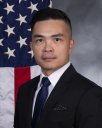
 Duy Duong-Tran
· 2 previous affiliations
- University of PennsylvaniaSince 2022
- Researcher · Since 2022
- Current
- United States Naval AcademySince 2023
- Assistant Professor · Since 2023
Research Overview
Duy Duong-Tran focuses on network neuroscience, mathematical modeling, and the application of artificial intelligence to biomedical data. His trajectory spans the topological analysis of functional brain connectivity and the development of multimodal frameworks for neuroimaging and genomics. Recently, his work investigates the integration of large language models and geometric deep learning to address complex challenges in clinical diagnostics and molecular property prediction.
Research Trajectory
Beginning in 2022, Duong-Tran's research examined the structural and functional properties of brain networks, particularly in the context of neurodegenerative diseases. With collaborators, he investigated how the resolution of brain maps impacts graph theoretical measurements, demonstrating in Consistency of Graph Theoretical Measurements of Alzheimer's Disease Fiber Density Connectomes Across Multiple Parcellation Scales that transitivity serves as a robust marker for Alzheimer's Disease across different parcellation scales. He expanded on this structural analysis by exploring white matter anatomical deterioration in Caudal and Thalamic Segregation in White Matter Brain Network Communities in Alzheimer's Disease Population. Concurrently, he developed methods to maintain the unique identifiability of individual brain networks, introducing techniques in Preserving Human Large-Scale Brain Connectivity Fingerprint Identifiability with Random Projections.
A significant portion of his trajectory involves applying topological data analysis (TDA) to neuroimaging, contributing to the broader area of Higher-Order Functional Connectivity in Brain Networks. He introduced a TDA framework utilizing persistent homology to quantify non-local properties of brain connectivity in Homological Landscape of Human Brain Functional Sub-Circuits, revealing topological signatures that align with specific cognitive states. This topological approach was further applied to bridge distinct imaging modalities; in Volume-Optimal Persistence Homological Scaffolds of Hemodynamic Networks Covary with MEG Theta-Alpha Aperiodic Dynamics, he and his colleagues linked slow hemodynamic fMRI signals with fast electrical MEG activity. This work advanced the research direction of Localizing Global Topology via Homological Scaffolding by showing that topological cavities in functional networks correlate with aperiodic electrical noise.
As his research evolved, Duong-Tran began integrating large language models (LLMs) and advanced machine learning into biomedical and genomic contexts. In the area of Knowledge-Guided Feature Synthesis from Tabular Metadata, he contributed to the development of the FREEFORM framework in Knowledge-Driven Feature Selection and Engineering for Genotype Data with Large Language Models. This project utilized LLMs to process complex genetic variant features for phenotype prediction, aligning with efforts in Grounding Generative Models in Live External Knowledge.
In 2025, his focus on neuroimaging and genomics yielded several sophisticated multimodal frameworks. He led the development of the GIANT (Genetically Informed brAiN aTlas) map in A genetically informed brain atlas for enhancing brain imaging genomics, which groups brain regions based on shared genetic influences rather than anatomical landmarks, significantly improving the identification of genetic variants associated with brain structure. He also contributed to Reconstructing brain causal dynamics for subject and task fingerprints using fMRI time-series data, which utilized a two-timescale state-space model to extract causal signatures from fMRI data. To improve clinical diagnostics, he participated in designing MREF-AD, a hierarchical gating system detailed in Multimodal Fusion of Regional Brain Experts for Interpretable Alzheimer's Disease Diagnosis that treats different brain regions as individual experts to weigh MRI and PET data.
Expanding into holistic physiological modeling, Duong-Tran oversaw research in Integrating Slow Neural Oscillations and Physiological Burden for Trait Anxiety Prediction. This work combined resting-state fMRI with blood biomarkers to predict anxiety vulnerability, contributing to the field of Multimodal Sensing of Internal Human States. Beyond neuroscience, he addressed challenges in cellular biology by developing the UNITO framework in Automated cytometric gating with human-level performance using bivariate segmentation. By framing protein expression data as a 2D density map segmentation problem, this work advanced the research direction of Automated Cell Population Identification in High Dimensional Cytometry.
Most recently, in 2026, Duong-Tran's collaborative work has extended to molecular modeling and medical visual question answering (VQA). He participated in the design of FACET: A Fragment-Aware Conformer Ensemble Transformer, an architecture that fuses 2D chemical graphs with 3D conformer ensembles for efficient molecular property prediction. Additionally, he contributed to Structural Bottleneck Reasoning: Efficient Medical VQA via Concept Alignment, which introduced the StructAlign framework to integrate expert clinical concepts as latent causal mediators, reducing the need for dense manual annotations in medical AI systems.
Current Directions
The most recent papers in the evidence indicate a strong focus on multimodal artificial intelligence and geometric deep learning applied to complex biological systems. Current work investigates the fusion of diverse data modalities—such as combining 2D chemical graphs with 3D conformers for molecular property prediction, or integrating functional neuroimaging with physiological biomarkers to assess mental health traits. Additionally, there is an ongoing emphasis on improving the interpretability and efficiency of clinical AI. This includes developing frameworks that utilize predefined clinical concepts to guide medical visual question answering and designing genetically informed atlases that better align anatomical structures with their underlying biological drivers.
Profile updated
Loading new papers…
Other researchers whose papers cluster into the same research directions — a proxy for overlapping technical interests and shared intellectual neighborhoods.
See something wrong? Report a mistake