

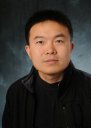
 Li Shang
· 3 previous affiliations
- Fudan UniversitySince 2020
- Full Professor · Since 2020
- University of Colorado Boulder2012–2019
- Associate Professor · 2012–2019
- Intel (Israel)2010–2012
- Deputy Director · 2010–2012
Research Overview
Li Shang focuses on human-centered machine learning, computer systems architecture, and the intersection of artificial intelligence with electronic design automation. His early work addressed power and thermal management in hardware systems, eventually evolving into mobile sensing and scalable recommendation algorithms. Recently, his research investigates the optimization of large language models, sparse expert architectures, and machine learning techniques for chip design.
Research Trajectory
The trajectory begins in the early 2000s with a focus on power and thermal modeling for hardware systems. Early work introduced adaptive regression techniques for estimating power consumption in reconfigurable devices, detailed in High-Level Power Modeling of CPLDs and FPGAs. Expanding from individual components to system-level design, he developed evolutionary algorithms for resource allocation and scheduling in Hardware-Software Co-Synthesis of Low Power Real-Time Distributed Embedded Systems with Dynamically Reconfigurable FPGAs. As on-chip communication became a dominant power consumer, his research addressed network interconnects. He proposed dynamic voltage scaling for communication links in Dynamic Voltage Scaling with Links for Power Optimization of Interconnection Networks and subsequently developed architectural thermal models to manage the heat generated by these interconnects in Thermal Modeling, Characterization and Management of On-Chip Networks.
In the 2010s, the focus broadened to include human-centric applications and data-driven systems. In the domain of mobile sensing, he contributed to MAQS: a personalized mobile sensing system for indoor air quality monitoring, which utilized Wi-Fi localization and CO2-based air exchange metrics to track indoor environments. Concurrently, he addressed scalability challenges in recommender systems with WEMAREC: Accurate and Scalable Recommendation through Weighted and Ensemble Matrix Approximation, proposing a method to partition large matrices without losing the accuracy typically sacrificed by co-clustering approaches.
Moving into the 2020s, his work increasingly bridged machine learning with electronic design automation (EDA) and deep learning optimization. Returning to physical chip design through an AI lens, he applied variational graph convolutional networks to map circuit connectivity to physical locations in GraphPlanner: Floorplanning with Graph Neural Network. This intersection of graphs and hardware continued with The Power of Graph Signal Processing for Chip Placement Acceleration, which framed circuit netlists as graphs to generate high-quality initial placements, advancing the area of multi-scale spectral decomposition for graph representation learning. Parallel to his EDA research, he explored the theoretical underpinnings of neural network efficiency, introducing a structured pruning method based on the condition number of the Polyak-Łojasiewicz and Lipschitz constants in Over-parameterized Model Optimization with Polyak-{\L}ojasiewicz Condition.
Most recently, the trajectory has concentrated heavily on the architecture and efficiency of Large Language Models (LLMs), particularly Mixture-of-Experts (MoE) systems. To capture rare domain knowledge during pretraining, he developed cluster-guided sparse experts in Once Read is Enough: Domain-specific Pretraining-free Language Models with Cluster-guided Sparse Experts for Long-tail Domain Knowledge. Addressing the memory wall in mixture of experts for edge devices, Oracle-MoE: Locality-preserving Routing in the Oracle Space for Memory-constrained Large Language Model Inference introduced a routing mechanism based on shared semantic groups to reduce memory I/O overhead. He also tackled the problem of expert collapse—where specialized experts converge on identical functions—by separating shared linguistic noise from expert-specific knowledge in SD-MoE: Spectral Decomposition for Effective Expert Specialization. Further refining MoE architectures, Multi-Head Attention as a Source of Catastrophic Forgetting in MoE Transformers identified multi-head attention layers as a bottleneck that mixes features before routing, proposing a solution that routes individual attention heads to distinct expert banks to improve continual learning.
Current Directions
Recent work investigates the fundamental optimization and quantization limits of large language models. The most recent papers in the evidence address the mathematical structure of LLM gradients and weights to drastically reduce computational overhead. In Spectra: Rethinking Optimizers for LLMs Under Spectral Anisotropy, the focus is on geometric alignment of optimizer states in low-rank training, identifying and suppressing dominant grammar-related gradient spikes to improve training efficiency and reduce optimizer memory.
Concurrently, research in low-bit precision training for large language models has led to frameworks like Metis: Training LLMs with FP4 Quantization, which isolates dominant mathematical components to enable 4-bit fully quantized training of neural networks with near-lossless performance. Together, these directions emphasize making massive AI models computationally feasible for both training and inference without sacrificing their representational power or succumbing to hardware memory constraints.
Profile updated
Loading new papers…
Other researchers whose papers cluster into the same research directions — a proxy for overlapping technical interests and shared intellectual neighborhoods.
See something wrong? Report a mistake