

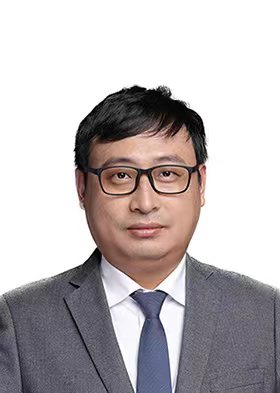
 Fan Yang
· 1 previous affiliation
- Fudan UniversityCurrent
- Current
- Professor · 2017–2024
- Associate Professor · 2012–2017
- Assistant Professor · 2008–2011
- PhD student · 2003–2008
35 other authors named Fan Yang: Fan Yang (Fujitsu Research and Development Center Co. Ltm. · 105 papers), Fan Yang (Microsoft Research Asia (China) · Microsoft (United States) · 78 papers), Fan Yang (Beijing ZOYEN Technology Co, Ltd · Peking University · 68 papers), Fan Yang (Weifang University · 67 papers), Fan Yang (Amazon (United States) · 57 papers), and 30 more
Research Overview
Fan Yang focuses on the design automation of integrated circuits, the development of AI accelerators, and the optimization of large-scale machine learning models. His trajectory bridges electronic design automation for analog circuits with fundamental improvements in neural network training efficiency. Recently, his work addresses the memory and computational bottlenecks of large language models and mixture-of-experts architectures.
Research Trajectory
Fan Yang's published research trajectory reflects a dual interest in the theoretical foundations of machine learning and the practical optimization of complex systems, including electronic design automation (EDA). Early in this period, his collaborative work explored representation learning, specifically contributing to the research direction of Sample Efficiency through Disentangled Representation Learning. In Recursive Disentanglement Network (2022), he and his co-authors formulated compositional disentanglement from an information-theoretic perspective, introducing a network that recursively propagates regulatory inductive biases to improve data-efficient learning. This work also advanced the broader area of Inductive Biases for Identifiable Representation Learning.
In 2023, Yang's research bridged high-dimensional optimization with circuit design in cVTS: A Constrained Voronoi Tree Search Method for High Dimensional Analog Circuit Synthesis. This paper proposed a domain decomposition method using hierarchical Voronoi trees to solve large-scale analog circuit synthesis problems, reflecting his expertise in EDA. Concurrently, he investigated the training dynamics of deep neural networks. In Over-parameterized Model Optimization with Polyak-Lojasiewicz Condition, his team analyzed the convergence and generalization gaps in over-parameterized models, using these theoretical insights to develop a structured pruning method. This focus on training efficiency continued with Train Faster, Perform Better: Modular Adaptive Training in Over-Parameterized Models, which introduced a modular Neural Tangent Kernel to selectively update only the most trainable network components. This contribution aligns with the research directions of Selective Backpropagation for Efficient Neural Network Training and Exploiting Heterogeneous Convergence for Efficient Neural Training.
As large language models (LLMs) and sparse architectures became increasingly prominent, Yang's focus shifted toward mitigating their computational and memory bottlenecks. In 2024, he participated in the development of Once Read is Enough: Domain-specific Pretraining-free Language Models with Cluster-guided Sparse Experts for Long-tail Domain Knowledge. This research introduced a method to route long-tail domain clusters to specialized experts during initial pretraining, avoiding the need for expensive secondary domain-specific training. Building on the Mixture-of-Experts (MoE) paradigm, he co-authored Oracle-MoE: Locality-preserving Routing in the Oracle Space for Memory-constrained Large Language Model Inference in 2025. By routing tokens based on shared high-level semantic groups rather than individual embeddings, the architecture drastically reduced memory I/O overhead for edge devices. This work advanced the areas of Memory Efficient Inference for Mixture of Experts Models and Hardware Aware Design for On Device Deep Learning.
The most recent phase of Yang's trajectory heavily emphasizes the structural refinement and quantization of LLMs and MoE models. In SD-MoE: Spectral Decomposition for Effective Expert Specialization (2026), he and his collaborators addressed the "expert collapse" problem by using spectral decomposition to separate shared linguistic noise from expert-specific knowledge, improving training efficiency and downstream performance. He also contributed to Multi-Head Attention as a Source of Catastrophic Forgetting in MoE Transformers, which identified multi-head attention layers as a bottleneck that mixes distinct features before routing. The proposed solution routed individual attention heads to specific expert banks to improve model retention across diverse tasks.
Alongside architectural improvements, Yang has explored fundamental optimization and quantization techniques for LLMs. In Spectra: Rethinking Optimizers for LLMs Under Spectral Anisotropy, his team identified that LLM gradients are dominated by a small subset of directions representing common grammar. By suppressing this dominant spike, the Spectra optimizer reduced memory usage and accelerated training. Similarly, in Metis: Training LLMs with FP4 Quantization, he helped develop a framework that isolates and separately quantizes dominant mathematical components, enabling near-lossless 4-bit training while significantly reducing the computational footprint.
Current Directions
The most recent papers in the evidence indicate a strong focus on the efficiency, scalability, and structural integrity of large language models, particularly those utilizing Mixture-of-Experts (MoE) architectures. Recent work investigates methods to overcome memory and computational bottlenecks during both training and inference. This includes developing novel routing mechanisms to prevent expert collapse and catastrophic forgetting in MoE models, as well as designing memory-efficient optimizers that account for the spectral anisotropy of LLM gradients. Additionally, Yang is actively exploring extreme low-bit precision techniques, such as FP4 quantization, to reduce the hardware footprint of training massive models without sacrificing downstream accuracy.
Profile updated
Loading new papers…
Other researchers whose papers cluster into the same research directions — a proxy for overlapping technical interests and shared intellectual neighborhoods.
See something wrong? Report a mistake