

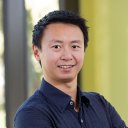
 Leo Zhou
· 5 previous affiliations
- DiscoverSince 2024
- Assistant Professor · Since 2024
- Current
- California Institute of Technology2021–2024
- Postdoc · 2021–2024
- Harvard University2014–2021
- PhD student · 2014–2021
- Undergrad student · 2010–2014
Research Overview
Leo Zhou focuses on quantum information theory, mathematical optimization, and the computational complexity of many-body physics. His trajectory spans fundamental limits in quantum simulation to the design of near-term quantum algorithms for classically hard problems. Currently, he investigates the performance of quantum approximate optimization algorithms and the noise resilience of hybrid quantum-classical systems.
Research Trajectory
Leo Zhou’s research bridges theoretical physics, computer science, and mathematical optimization, with a consistent focus on understanding the computational capabilities and limits of quantum systems. At the University of California, Los Angeles (UCLA), Zhou leads the Quantum Algorithmic Science & Engineering (QASE) Lab, which focuses on developing applications for quantum computers and analyzing the physical world through quantum information. His earlier work established foundational results in quantum complexity theory, which subsequently informed his design of algorithms for Noisy Intermediate-Scale Quantum (NISQ) devices.
In his early trajectory, Zhou investigated the fundamental limits of simplifying complex quantum systems. A central challenge in quantum complexity is whether highly entangled, many-body Hamiltonians can be reduced to simpler models without losing their essential physical properties. In 2018, Zhou authored On Gap-Simulation of Hamiltonians and the Impossibility of Quantum Degree-Reduction, which introduced a rigorous framework called gap-simulation. The paper proved that, unlike classical systems, general quantum Hamiltonians cannot be sparsified into low-degree interaction graphs without significantly increasing interaction strengths. This finding highlighted a "correlation barrier" created by many-body entanglement, a result highly relevant to the research direction of Mapping Dense Optimization Problems to Sparse Quantum Hardware.
Concurrently, Zhou began translating theoretical quantum models into practical architectures for near-term hardware. In Quantum Optimization for Maximum Independent Set Using Rydberg Atom Arrays (2018), Zhou and his collaborators proposed a method to map the NP-hard Maximum Independent Set (MIS) problem directly onto the physical interactions of Rydberg atoms. By utilizing the "Rydberg blockade" effect—where the excitation of one atom prevents the excitation of its neighbors—the team demonstrated how near-term quantum devices could naturally encode the constraints of complex combinatorial problems. This theoretical framework later served as the foundation for large-scale experimental realizations of quantum optimization.
By 2021, Zhou’s focus expanded to the efficient simulation and preparation of complex quantum states. In Strongly Universal Hamiltonian Simulators, he demonstrated that relatively simple 1D and 2D spin systems can efficiently simulate any local Hamiltonian, including those with complex, all-to-all interactions. By employing a circuit-to-Hamiltonian mapping based on Quantum Phase Estimation rather than traditional perturbative gadgets, the work achieved "strong universality" with only polynomial overhead, advancing the viability of analog quantum simulation.
In the same year, Zhou explored alternative methods for state preparation that do not rely exclusively on fragile unitary gates. In Symmetry-protected dissipative preparation of matrix product states, he developed a protocol to prepare Matrix Product States by engineering controlled dissipation. By leveraging the internal symmetries of these states, the method proved inherently robust against control errors and capable of logarithmic scaling through parallelization. This approach of utilizing noise as a resource aligns with work in the area of The Quantum Simulation to Hardware Performance Gap.
Most recently, Zhou has rigorously analyzed the performance of variational quantum algorithms on classically intractable problems. In 2024, he published Statistical Estimation in the Spiked Tensor Model via the Quantum Approximate Optimization Algorithm. This work provided a formal analysis of the Quantum Approximate Optimization Algorithm (QAOA) applied to a classic statistical inference problem, investigating the algorithm's potential to overcome the computational-statistical gaps that limit classical high-dimensional data analysis. Expanding on the capabilities of QAOA, Zhou also co-authored A Quantum Approximate Optimization Algorithm for Local Hamiltonian Problems (2024). The paper introduced HamQAOA, a variational algorithm utilizing a symmetry-breaking driver Hamiltonian to solve problems like Quantum MaxCut. The algorithm demonstrated the ability to prepare complex Bethe states in linear time, a process previously assumed to require exponential circuit depth.
Current Directions
Zhou’s most recent work in the evidence centers on the intersection of quantum optimization, landscape geometry, and hardware constraints. A major focus is the broader area of Navigating Rugged Landscapes in Global Optimization, where researchers analyze how quantum algorithms can escape local minima in highly non-convex problem spaces. Within this domain, Zhou contributes to the theme of Quantum Tunneling for Global Optimization in Non-Convex Landscapes, investigating how quantum effects might provide advantages over classical thermal fluctuations in finding global optima.
Additionally, Zhou’s recent research addresses the physical limitations of current quantum hardware. He is actively engaged in the research direction of Depth-Aware Hybrid Quantum-Classical Optimization, which seeks to design algorithms that respect the strict coherence time limits of NISQ devices by minimizing circuit depth. Complementing this is his work in the area of Algorithmic Noise Resilience in Near Term Quantum Computing, exploring how specific quantum algorithms—particularly those used for machine learning and optimization—possess structural properties that make them inherently robust to the gate and measurement errors prevalent in modern quantum processors.
Profile updated
Loading new papers…
Other researchers whose papers cluster into the same research directions — a proxy for overlapping technical interests and shared intellectual neighborhoods.
See something wrong? Report a mistake