

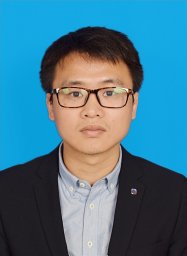
 Leo Yu Zhang
· 5 previous affiliations
- Griffith UniversitySince 2023
- Associate Professor · Since 2026
- Senior Lecturer · 2023–2026
- Deakin University2018–2023
- Senior Lecturer · 2023
- Lecturer · 2018–2022
- City University of Hong Kong2013–2017
- Postdoc · 2016–2017
- PhD student · 2013–2016
- Research Assistant · 2016
- Visiting PHD Student · 2015
Research Overview
Leo Yu Zhang focuses on trustworthy artificial intelligence, applied cryptography, and multimedia security. His early work explored chaotic image encryption and compressive sensing, while his recent research addresses vulnerabilities in machine learning systems. He currently investigates adversarial robustness, backdoor defenses, and the security of federated learning and embodied AI.
Research Trajectory
Zhang’s early research concentrated on applied cryptography, with a particular emphasis on securing multimedia data. In 2014, he introduced A chaotic image encryption scheme owning temp-value feedback, contributing to the research direction of Breaking Spatial Correlation in Multimedia Encryption and the broader area of Content Dependent Diffusion in Chaotic Image Encryption. He continued to analyze the vulnerabilities and design of these systems in On the Security of a Class of Diffusion Mechanisms for Image Encryption. Concurrently, Zhang explored the intersection of signal processing and security, specifically within the area of Simultaneous Compression and Encryption via Compressive Sensing. He detailed how the inherent randomness of measurement matrices could achieve simultaneous compression and encryption in A Review of Compressive Sensing in Information Security Field, and proposed new methods for secure sampling in Bi-level Protected Compressive Sampling. His work on chaos theory later culminated in From Chaos to Pseudorandomness: A Case Study on the 2-D Coupled Map Lattice, which provided a rigorous theoretical framework for transforming chaotic dynamics into high-quality pseudorandom numbers, advancing the field of Dynamical Degradation of Chaotic Systems in Finite Precision.
As machine learning became ubiquitous, Zhang’s focus shifted toward Trustworthy AI, addressing critical security and privacy flaws in distributed and deep learning frameworks. In the context of federated learning, he collaborated on Shielding Federated Learning: Aligned Dual Gradient Pruning Against Gradient Leakage, proposing a gradient sparsification method to mitigate risks in the area of Gradient Inversion and Privacy Leakage in Federated Learning. He subsequently directed research into sophisticated defenses for decentralized systems, introducing MARS: A Malignity-Aware Backdoor Defense in Federated Learning. This work utilized a novel "Backdoor Energy" metric derived from a neuron's Lipschitz constant to identify and thwart adaptive attacks that bypass traditional statistical defenses.
By 2025, Zhang’s research agenda had expanded to encompass a wide array of adversarial threats against deep neural networks. A major theme of this recent work is backdoor detection and mitigation across different learning paradigms. He developed TED++: Submanifold-Aware Backdoor Detection via Layerwise Tubular-Neighbourhood Screening, a framework that detects stealthy attacks by screening hidden-layer activations against a locally estimated tubular neighborhood, requiring minimal clean data. For computer vision applications, his group introduced Test-Time Backdoor Detection for Object Detection Models, a black-box defense that measures the fragility of detections under varying foreground and background conditions. Addressing vulnerabilities in pre-trained models, he proposed Trusted Core Bootstrapping in Secure Transfer Learning: Training Clean Models Against Backdoor in (Both) Pre-trained Encoders and Downstream Datasets. Conversely, he also investigated how backdoors can be made more resilient, as demonstrated in Persistent Backdoor Attacks in Class-Incremental Learning via Structural Invariant Anchoring, which anchors triggers to structurally invariant subspaces to survive continuous model updates.
Beyond backdoors, Zhang has addressed data poisoning, adversarial robustness, and generative media. He provided a robust shield against stubborn data poisoning techniques in Detecting and Corrupting Convolution-based Unlearnable Examples. To improve model resilience, he introduced Nasty Adversarial Training: A Probability Sparsity Perspective for Robustness Enhancement, a regularization technique that forces networks to produce sparse probability distributions, thereby increasing spatial margins between classes. In the realm of synthetic media, his team released the RedFace dataset in Towards Real-World Deepfake Detection: A Diverse In-the-wild Dataset of Forgery Faces, highlighting the failure of existing detectors against high-quality, commercial deepfakes.
Zhang has also explored the security of physical AI systems and foundational machine learning challenges. He led the development of BadRobot: Jailbreaking Embodied LLM Agents in the Physical World, a systematic attack framework that exploits gaps between linguistic reasoning and physical execution to manipulate robots controlled by large language models. Additionally, he has contributed to core computational statistics with Accelerated Parallel Tempering via Neural Transports, addressing the challenge of sampling from complex, high-dimensional probability distributions, and synthesized the broader implications of neural network retention in Memorization in Deep Learning: A Survey.
Current Directions
Recent work investigates the expanding attack surface of modern artificial intelligence, moving beyond traditional classification tasks to secure complex, interactive, and continuous learning systems. The most recent papers in the evidence address the vulnerabilities of embodied LLM agents, demonstrating how linguistic jailbreaks can translate into physical harm when executed by robotic systems. Concurrently, Zhang is focused on enhancing adversarial robustness through novel regularization techniques like probability sparsity, and developing proactive defenses against persistent backdoors in class-incremental and transfer learning environments. His ongoing research emphasizes the need for practical, test-time defenses and the rigorous evaluation of AI security under real-world, in-the-wild conditions.
Profile updated
Loading new papers…
Other researchers whose papers cluster into the same research directions — a proxy for overlapping technical interests and shared intellectual neighborhoods.
See something wrong? Report a mistake