

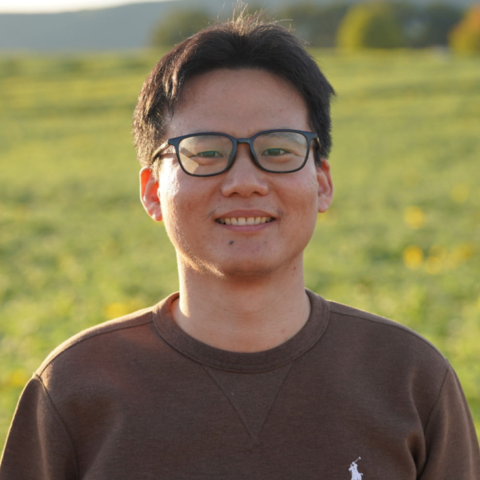
 Jinyuan Jia
· 4 previous affiliations
- Pennsylvania State UniversitySince 2023
- Assistant Professor · Since 2023
- Current
- Postdoc · 2022–2023
- Duke University2019–2022
- PhD student · 2019–2022
- Iowa State University2016–2019
- PhD student · 2016–2019
2 other authors named Jinyuan Jia: Jinyuan Jia (2 papers), Jinyuan Jia (2 papers)
Research Overview
Jinyuan Jia focuses on the security, privacy, and provable robustness of machine learning systems, with a particular emphasis on large language models and distributed learning frameworks. His research trajectory spans from foundational defenses against data poisoning and adversarial perturbations to deterministic certification methods for complex architectures. Most recently, his work addresses the safety and transparency of LLM-empowered systems, including defenses against prompt injection and knowledge corruption.
Research Trajectory
Jia's early research explored privacy vulnerabilities and defenses in online platforms. In 2017, he investigated how user information could be exposed in social networks, detailing these mechanisms in AttriInfer: Inferring User Attributes in Online Social Networks Using Markov Random Fields. The following year, he developed a countermeasure, AttriGuard: A Practical Defense Against Attribute Inference Attacks via Adversarial Machine Learning, which utilized adversarial machine learning techniques to protect user attributes.
By 2020, his focus expanded to the security of distributed and federated learning systems. He analyzed vulnerabilities in decentralized setups, demonstrating how adversaries could compromise models in Local Model Poisoning Attacks to Byzantine-Robust Federated Learning. He further explored these threat models in the context of privacy-preserving mechanisms with Data Poisoning Attacks to Local Differential Privacy Protocols.
Concurrently, Jia began a sustained investigation into certified robustness, aiming to provide mathematical guarantees that models could withstand adversarial perturbations. He extended randomized smoothing techniques beyond standard classification to derive tight guarantees for top-k predictions in Certified Robustness for Top-k Predictions against Adversarial Perturbations via Randomized Smoothing. He subsequently adapted this framework for discrete binary data to protect graph neural networks against structural attacks in Certified Robustness of Graph Neural Networks against Adversarial Structural Perturbation. Both of these works navigated challenges inherent to the research direction of The Computational Overhead of Multi-Pass Inference.
To address data poisoning, Jia analyzed ensemble learning methods, proving that bootstrap aggregating (bagging) inherently provides certified robustness against the insertion, deletion, or modification of training examples. This work, Intrinsic Certified Robustness of Bagging against Data Poisoning Attacks, contributed significantly to the broader area of Bridging the Certified Robustness Gap in Deep Learning. It also advanced methodologies in the area of The Subsample Size Trade-Off in Robust Ensembles and the direction of Certified Robustness via Partitioned Ensemble Voting.
In 2022 and 2023, Jia's work addressed the growing threat of backdoor attacks across various learning paradigms. He introduced the first backdoor attack targeting self-supervised learning in BadEncoder: Backdoor Attacks to Pre-trained Encoders in Self-Supervised Learning, showing how downstream classifiers inherit malicious behaviors from pre-trained image encoders. To counter such threats in distributed environments, he developed FedGame: A Game-Theoretic Defense against Backdoor Attacks in Federated Learning, a minimax framework that evaluates client behavior to neutralize adaptive adversaries.
Returning to certification, Jia shifted toward deterministic guarantees. He introduced a framework for 3D data in PointCert: Point Cloud Classification with Deterministic Certified Robustness Guarantees, which partitions point clouds and uses majority voting to ensure stability against point manipulation. He extended deterministic certification to graph structures in GNNCert: Deterministic Certification of Graph Neural Networks against Adversarial Perturbations and to natural language processing with TextGuard: Provable Defense against Backdoor Attacks on Text Classification.
Most recently, Jia's trajectory has centered on the security and transparency of large language models (LLMs). He identified critical vulnerabilities in retrieval-augmented generation (RAG) systems, demonstrating how external knowledge databases can be exploited in PoisonedRAG: Knowledge Corruption Attacks to Retrieval-Augmented Generation of Large Language Models. He also participated in evaluating model alignment, contributing to TASO: Jailbreak LLMs via Alternative Template and Suffix Optimization, a framework that bypasses safety guardrails by iteratively refining adversarial prompts. This research intersects with the broader area of Knowledge Poisoning in Retrieval Augmented Generation.
To secure and interpret these complex models, Jia and his collaborators developed PISanitizer: Preventing Prompt Injection to Long-Context LLMs via Prompt Sanitization, a defense mechanism that neutralizes hidden malicious instructions by leveraging the model's own attention mechanisms. He also addressed the challenge of tracing outputs back to specific inputs in massive documents with TracLLM: A Generic Framework for Attributing Long Context LLMs. Continuing his focus on rigorous guarantees, his 2026 work, EnsembleSHAP: Faithful and Certifiably Robust Attribution for Random Subspace Method, provides provable assurances for feature attribution, ensuring that explanations remain reliable even under adversarial manipulation.
Current Directions
Jia’s most recent research investigates the security, safety, and interpretability of large language models and foundation models. A primary focus is identifying and mitigating vulnerabilities in LLM-empowered systems, particularly those utilizing long contexts or external knowledge bases. This includes analyzing the mechanics of prompt injection attacks, evaluating the resilience of safety guardrails against sophisticated jailbreak techniques, and securing retrieval-augmented generation (RAG) pipelines against knowledge corruption.
In parallel, his work emphasizes the trustworthiness and transparency of complex AI systems. Recent efforts address the challenge of attribution in long-context models, seeking reliable methods to trace generated outputs back to specific source documents or tokens. He also continues to advance the field of provably secure machine learning, developing feature attribution methods that offer deterministic, certified robustness guarantees against adversarial manipulation.
Profile updated
Loading new papers…
Other researchers whose papers cluster into the same research directions — a proxy for overlapping technical interests and shared intellectual neighborhoods.
See something wrong? Report a mistake