

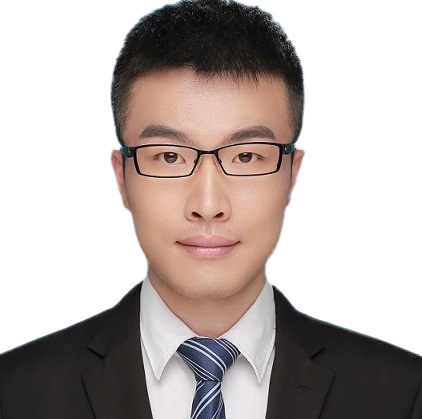
 Lei Yang
3 previous affiliations
- Nanyang Technological University2025–2026
- Postdoc · 2025–2026
- Tsinghua University2020–2024
- PhD student · 2020–2024
- Beihang University2015–2018
- MS student · 2015–2018
13 other authors named Lei Yang: Lei Yang (Hong Kong Polytechnic University · 234 papers), Lei Yang (South China University of Technology · 120 papers), Lei Yang (University of Nevada, Reno · 95 papers), Lei Yang (Chinese University of Hong Kong · Sensetime (China) · 77 papers), Lei Yang (StepFun AI (China) · 51 papers), and 8 more
Research Overview
Lei Yang focuses on autonomous driving perception, multi-modal sensor fusion, and adaptive reasoning for intelligent vehicles. His trajectory spans from foundational 3D object detection and bird's-eye-view representations to cooperative vehicle-to-everything (V2X) systems. Recently, his work investigates end-to-end autonomous driving frameworks that integrate long-horizon world modeling and dynamic reasoning mechanisms.
Research Trajectory
Beginning in 2023, much of the early work in the evidence centers on advancing vision-centric 3D object detection. He introduced BEVHeight: A Robust Framework for Vision-based Roadside 3D Object Detection, which addresses the unique depth estimation challenges inherent in roadside cameras. Because traditional bird's-eye-view (BEV) methods struggle when the depth difference between vehicles and the ground shrinks at a distance, this framework provided a targeted solution to extend perception beyond the visual range of ego-vehicle sensors. In the same year, he developed Lite-FPN for keypoint-based monocular 3D object detection, further refining the efficiency and accuracy of monocular vision systems.
Moving into 2024, the focus expanded to multi-modal fusion and the robustness of perception systems under real-world conditions. With collaborators, he worked on GraphBEV: Towards Robust BEV Feature Alignment for Multi-modal 3D Object Detection. This research tackled the critical issue of misalignment between LiDAR and camera features caused by inaccurate sensor calibration. To correct errors in depth estimation, the team introduced a local alignment module that employs neighbor-aware depth features via graph matching. He also participated in the development of RoboFusion: Towards Robust Multi-Modal 3D Object Detection via SAM, a framework designed to handle out-of-distribution noise in harsh driving environments. By adapting visual foundation models for autonomous driving scenarios, this work contributed to several broader research areas, including the direction of Quality Aware Dynamic Weighting for Multimodal Sensor Fusion and the area of Adaptive Reliability Weighting for Multi Modal Perception. The methodologies explored here also intersect with efforts in the research area of Real-Time Perception for Autonomous Edge Systems and the broader direction of Accelerating Transformer Inference for Real-Time Deployment.
Expanding beyond single-vehicle perception in 2025, he led the creation of V2X-Radar: A Multi-modal Dataset with 4D Radar for Cooperative Perception. Recognizing the limitations of datasets that rely exclusively on cameras and LiDAR, this large-scale, real-world dataset incorporates 4D radar to improve autonomous driving safety, particularly in adverse weather conditions where traditional sensors often fail.
By 2026, the trajectory shifted toward end-to-end driving systems and the integration of complex reasoning models. He contributed to DeepSight: Long-Horizon World Modeling via Latent States Prediction for End-to-End Autonomous Driving, a framework that predicts latent semantic features in BEV space in parallel. This approach maintains high inference efficiency while modeling long-horizon scenarios, aligning with the research direction of 360 Degree Spatial Reasoning for Autonomous Agents and touching upon the broader area of Mitigating the Inference Latency of Chain of Thought. Concurrently, he collaborated on AdaThinkDrive: Adaptive Thinking via Reinforcement Learning for Autonomous Driving. This novel framework uses a reinforcement learning approach with a custom reward system to dynamically decide whether a driving scene requires complex chain-of-thought reasoning or if direct prediction is sufficient, thereby optimizing both performance and computational efficiency. Later that year, Yang contributed to DriveFuture: Future-Aware Latent World Models for Autonomous Driving, which learns planning-oriented foresight by conditioning current latent state modeling on future world states to guide a diffusion-based trajectory planner.
Current Directions
The most recent papers in the evidence address the integration of adaptive reasoning and long-horizon world modeling into end-to-end autonomous driving systems. Recent work investigates how intelligent vehicles can dynamically scale their computational deliberation at test time, using reinforcement learning to choose between direct prediction and complex reasoning based on the immediate complexity of the driving scene. Additionally, current efforts explore latent world modeling that explicitly conditions decision-making and diffusion-based trajectory planning on predicted future world states, as well as parallel prediction of latent semantic features in bird's-eye-view spaces. This focus on cognitive and predictive efficiency is complemented by an ongoing interest in cooperative perception, particularly the use of novel sensor modalities like 4D radar to ensure robust, all-weather performance across connected autonomous vehicles.
Profile updated
Loading new papers…
Other researchers whose papers cluster into the same research directions — a proxy for overlapping technical interests and shared intellectual neighborhoods.
See something wrong? Report a mistake