

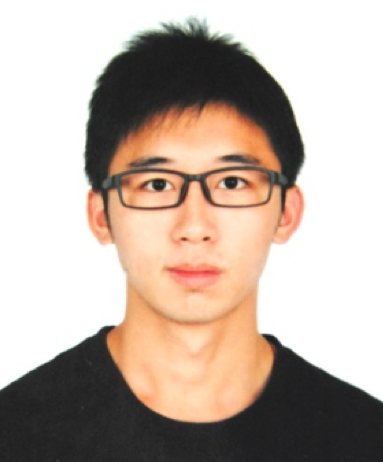
 Lei Yang
· 3 previous affiliations
- Chinese University of Hong KongSince 2017
- Researcher · Since 2020
- PhD student · 2017–2020
- Sensetime (China)Since 2020
- Researcher · Since 2020
- Current
- Tsinghua University2011–2015
- Undergrad student · 2011–2015
13 other authors named Lei Yang: Lei Yang (Hong Kong Polytechnic University · 234 papers), Lei Yang (South China University of Technology · 120 papers), Lei Yang (University of Nevada, Reno · 95 papers), Lei Yang (StepFun AI (China) · 51 papers), Lei Yang (George Mason University · 26 papers), and 8 more
Research Overview
Lei Yang focuses on 3D human modeling, generative motion synthesis, and spatial intelligence in multimodal foundation models. His early research addressed large-scale visual classification and face clustering before transitioning to high-fidelity human rendering and text-driven animation. Most recently, his work investigates the spatial reasoning capabilities of large vision-language models and the underlying mechanisms of video generation.
Research Trajectory
Lei Yang's early work concentrated on scaling visual recognition and clustering. He introduced methods to handle the computational bottlenecks of massive classification tasks, specifically addressing the memory demands of the final softmax layer, in Accelerated Training for Massive Classification via Dynamic Class Selection. He then developed frameworks for organizing large-scale, unlabeled facial data. This included Learning to Cluster Faces on an Affinity Graph and subsequent work on reliable label propagation in the presence of unknown outliers, detailed in Learn to Propagate Reliably on Noisy Affinity Graphs. He further refined these clustering techniques by transforming the problem into confidence and connectivity estimation with graph convolutional networks in Learning to Cluster Faces via Confidence and Connectivity Estimation. Concurrently, he explored ways to bypass manual annotation entirely, leveraging web captions to iteratively clean and expand training data for highly accurate face models in Caption-Supervised Face Recognition: Training a State-of-the-Art Face Model Without Manual Annotation.
Moving into 3D vision and human-centric modeling, Yang contributed to monocular 3D object detection. He helped address error amplification in depth estimation by modeling depth probabilistically in Geometry Uncertainty Projection Network for Monocular 3D Object Detection. His focus then shifted heavily toward 3D human digitisation and motion. He participated in the creation of large-scale, multi-modal datasets to bridge laboratory sensing and mobile applications, notably HuMMan: Multi-modal 4D Human Dataset for Versatile Sensing and Modeling, which provided 60 million frames across modalities like RGB-D and point clouds. This interest in high-fidelity human modeling expanded with DNA-Rendering: A Diverse Neural Actor Repository for High-Fidelity Human-centric Rendering, which supplied extensive data capturing complex clothing and human-object interactions for neural rendering. He also contributed to scaling up expressive human pose and shape estimation using large Vision Transformers in SMPLer-X: Scaling Up Expressive Human Pose and Shape Estimation.
Yang's research increasingly emphasized generative models for human avatars and motion. He collaborated on AvatarCLIP: zero-shot text-driven generation and animation of 3D avatars, utilizing vision-language models to supervise neural human generation. This text-driven approach was further formalized in MotionDiffuse: Text-Driven Human Motion Generation With Diffusion Model. To achieve more precise control, he contributed to FineMoGen: Fine-Grained Spatio-Temporal Motion Generation and Editing, a diffusion framework that decouples spatial and temporal modeling and leverages large language models for zero-shot editing, advancing the research area of Seamless Composition of Multi Action Human Motion Sequences. Expanding from single-subject animation to interactive scenarios, he worked on Duolando: Follower GPT with Off-Policy Reinforcement Learning for Dance Accompaniment. This work introduced a massive motion-capture dataset of duet dances and utilized reinforcement learning to prevent physical glitches like foot-skating, contributing to broader research directions such as Decomposing Human Motion into Modular Body Part Tokens and Multi-Person Coordination in Generative Human Motion.
In his most recent work, Yang has directed research evaluating and enhancing the spatial reasoning capabilities of multimodal foundation models. He oversaw an empirical study assessing the limitations of leading models in Has GPT-5 Achieved Spatial Intelligence? An Empirical Study. Building on these insights, he guided the development of the SenseNova-SI model family in Scaling Spatial Intelligence with Multimodal Foundation Models, demonstrating how massive, diverse datasets can improve spatial understanding. Concurrently, he has investigated the fundamental mechanisms of video generation. He directed Demystifing Video Reasoning, which revealed that diffusion-based video models perform reasoning along denoising steps—a mechanism termed "Chain-of-Steps"—rather than sequentially across frames. He also collaborated on accelerating these models, contributing to SGMD: Score Gradient Matching Distillation for Few-Step Video Diffusion Distillation to improve motion dynamics while reducing generation time.
Current Directions
Recent work investigates the spatial intelligence and reasoning capabilities of multimodal foundation models. The most recent papers in the evidence address how large vision-language models comprehend spatial relationships, proposing new taxonomies and massive datasets to scale up these capabilities. Additionally, ongoing research explores the underlying mechanisms of video generation, specifically analyzing how diffusion models perform reasoning through denoising steps rather than sequential frames, alongside efforts to accelerate video diffusion distillation for faster, more dynamic generation.
Profile updated
Loading new papers…
Other researchers whose papers cluster into the same research directions — a proxy for overlapping technical interests and shared intellectual neighborhoods.
See something wrong? Report a mistake