

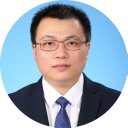
 Lei Hou
· 2 previous affiliations
- Tsinghua UniversitySince 2010
- Associate Professor · Since 2026
- Assistant Professor · 2019–2025
- Postdoc · 2016–2019
- PhD student · 2010–2016
- Undergrad student · 2006–2010
Research Overview
Lei Hou focuses on natural language processing, complex reasoning over knowledge graphs, and the evaluation of large language models. His trajectory spans from optimizing logical queries and hierarchical task decomposition to developing autonomous search agents and educational diagnostic assessments. Recently, his work investigates iterative reasoning, reinforcement learning for search agents, and agent-based educational science.
Research Trajectory
Hou’s research frequently addresses the structural and logical limitations of large language models (LLMs), with an early emphasis on complex reasoning and knowledge graph integration. Contributing to the research direction of Hierarchical Task Decomposition for Complex Reasoning, his group developed methods to solve First-Order Logic queries on incomplete knowledge graphs. This effort culminated in the Query Computation Tree Optimization (QTO) framework, detailed in Answering Complex Logical Queries on Knowledge Graphs via Query Computation Tree Optimization. By treating queries as computation trees and utilizing a forward-backward propagation algorithm, QTO finds mathematically exact optimal solutions without requiring massive training on complex queries. A parallel study under the same title, Answering Complex Logical Queries on Knowledge Graphs via Query Computation Tree Optimization, further demonstrated how this framework navigates search spaces that previous methods could only approximate, yielding significant improvements in accuracy.
Continuing with hierarchical and structured approaches in 2023, Hou addressed explainable question answering by breaking down complex queries to select appropriate heterogeneous knowledge sources in Reasoning over Hierarchical Question Decomposition Tree for Explainable Question Answering. To mitigate the limitations of standard chain-of-thought reasoning—such as negative retrieval and error propagation—he introduced a probabilistic framework in Probabilistic Tree-of-thought Reasoning for Answering Knowledge-intensive Complex Questions.
Alongside reasoning architectures, Hou has focused heavily on rigorous evaluation paradigms, advancing the broader area of Shifting from Static Benchmarks to Dynamic Evaluation. To combat testing leakage and automate evaluation, he proposed a reference-free framework in Benchmarking Foundation Models with Language-Model-as-an-Examiner, where an LLM acts as an examiner to formulate and assess open-ended questions based on its own knowledge. He also explored the cognitive dimensions of LLMs using educational diagnostic assessments based on Bloom's Taxonomy in Exploring the Cognitive Knowledge Structure of Large Language Models: An Educational Diagnostic Assessment Approach. Further expanding resources for deep text understanding, he developed the benchmark KoRC: Knowledge Oriented Reading Comprehension Benchmark for Deep Text Understanding.
Moving into 2024, his research addressed structural knowledge extraction and taxonomy generation. He developed TaxoSeq, a plug-in that transforms tree-like taxonomies into sequences using bracket tree modeling, as presented in Exploring sequence-to-sequence taxonomy expansion via language model probing. This work utilized a constrained decoding strategy to ensure the generated results adhered strictly to the underlying taxonomy structure. In 2025, his focus on knowledge base question answering (KBQA) continued with Dynamic multi teacher knowledge distillation for semantic parsing in KBQA. Recognizing that different logical forms excel at specific types of questions, this work integrates the strengths of various logical frameworks by employing multi-teacher knowledge distillation to improve semantic parsing.
More recently, Hou's work has expanded into agentic systems and alignment. He participated in the development of autonomous search agents in WebSeer: Training Deeper Search Agents through Reinforcement Learning with Self-Reflection. This research, which aligns with work in the area of Iterative Retrieval Augmented Generation for Multi Hop Reasoning, combines self-reflection mechanisms with a two-stage reinforcement learning framework to enable multi-step web searches and autonomous error correction. He also contributed to reward model training for narrative generation in StoryAlign: Evaluating and Training Reward Models for Story Generation. Bridging his interests in artificial intelligence and educational methodology, he co-authored Toward Agent-based Educational Science: Rethinking Educational Research in the Age of AI, advocating for a paradigm shift where educational theories are formalized as interacting agents to allow for in silico experimentation of developmental processes.
Current Directions
The most recent papers in the evidence indicate a strong focus on autonomous agents, the alignment of generative models, and the intersection of AI with educational science. Recent work investigates the use of reinforcement learning and self-reflection mechanisms to train deeper search agents capable of multi-step reasoning and autonomous error correction, achieving strong performance on complex benchmarks with relatively compact models. Additionally, Hou is exploring new methodological frameworks for educational research, proposing agent-based systems that simulate pedagogical environments to evaluate developmental impacts computationally. His ongoing efforts also address the evaluation and training of reward models to better align generative outputs in complex, open-ended tasks like story generation.
Profile updated
Loading new papers…
Other researchers whose papers cluster into the same research directions — a proxy for overlapping technical interests and shared intellectual neighborhoods.
See something wrong? Report a mistake