

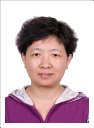
 Juanzi Li
· 1 previous affiliation
- Tsinghua UniversityCurrent
- Current
- Full Professor · 2008–2025
Research Overview
Juanzi Li focuses on knowledge graph construction, natural language processing, and the alignment and reasoning capabilities of large language models. Her early work established foundational methods for ontology alignment and multilingual knowledge bases, gradually evolving toward integrating structured knowledge with deep learning. Recently, she investigates long-context understanding, retrieval-augmented generation, and reinforcement learning for complex agentic reasoning.
Research Trajectory
Juanzi Li's research trajectory begins with foundational contributions to data mining and semantic web technologies, focusing on the extraction and alignment of structured knowledge. Early work included the development of ArnetMiner: extraction and mining of academic social networks, which provided methods for modeling academic networks. Building on the need to connect disparate semantic structures, she introduced RiMOM: A Dynamic Multistrategy Ontology Alignment Framework, a system that quantitatively estimated similarity characteristics to automatically select and combine matching strategies for ontology alignment. This focus on cross-domain knowledge integration naturally extended to multilingual contexts. With XLore: A Large-scale English-Chinese Bilingual Knowledge Graph, she and her collaborators addressed the English-centric bias of traditional knowledge bases by integrating major wikis across languages. This work advanced the broader research direction of Bridging Information Asymmetry across Multilingual Knowledge Bases.
As deep learning transformed natural language processing, Li's focus shifted toward integrating rich textual semantics with structured knowledge graphs (KGs). She developed the TEKE framework in Text-Enhanced Representation Learning for Knowledge Graph, which dynamically adjusted KG embeddings using entity co-occurrence networks from external text corpora to better handle complex many-to-many relations. Concurrently, she explored temporal and sequential modeling, introducing a Contextual Hierarchical LSTM in What Happens Next? Future Subevent Prediction Using Contextual Hierarchical LSTM to predict and rank future subevents based on latent topic features. The convergence of pre-trained language models (PLMs) and KGs culminated in KEPLER: A Unified Model for Knowledge Embedding and Pre-trained Language Representation, a unified architecture that injected factual knowledge from KGs into PLMs while simultaneously leveraging textual data to improve knowledge embeddings.
Moving into the era of large language models (LLMs), Li's research increasingly addressed complex reasoning, interpretability, and long-context understanding. To move beyond opaque question-answering systems, she contributed to KQA Pro: A Dataset with Explicit Compositional Programs for Complex Question Answering over Knowledge Base. This dataset introduced KoPL, a symbolic programming language that provided explicit reasoning paths, supporting the broader area of Fine-Grained Supervision of Intermediate Reasoning Steps. As models scaled, evaluating their capacity to process extensive information became critical. She led the development of LongBench: A Bilingual, Multitask Benchmark for Long Context Understanding, which revealed significant performance gaps in top-tier models as context lengths approached their theoretical limits.
Recent work has heavily emphasized making LLMs more reliable, verifiable, and agentic. In the domain of retrieval-augmented generation (RAG), her group proposed SeaKR: Self-aware Knowledge Retrieval for Adaptive Retrieval Augmented Generation, a framework that monitors a model's internal hidden states to dynamically trigger external information retrieval based on uncertainty. This was complemented by ReaRAG: Knowledge-guided Reasoning Enhances Factuality of Large Reasoning Models with Iterative Retrieval Augmented Generation, which utilized strategic distillation to enable large reasoning models to iteratively search, reflect, and self-correct on multi-hop questions. To ensure the verifiability of long-form answers, she developed LongCite: Enabling LLMs to Generate Fine-grained Citations in Long-Context QA, training models to produce accurate, sentence-level citations in a single pass.
Li has also explored the deployment of LLMs in complex, interactive, and multimodal environments. She benchmarked the fragility of models in executing complex directives with AGENTIF: Benchmarking Instruction Following of Large Language Models in Agentic Scenarios. Applying multi-agent coordination to education, she introduced Awaking the Slides: A Tuning-free and Knowledge-regulated AI Tutoring System via Language Model Coordination, a system that transforms static presentations into interactive tutoring sessions. In multimodal reasoning, her work on Hard Negative Contrastive Learning for Fine-Grained Geometric Understanding in Large Multimodal Models improved the geometric reasoning capabilities of vision encoders by training them against subtly perturbed diagrams. Additionally, she has investigated the mechanistic underpinnings of model alignment; Towards Understanding Safety Alignment: A Mechanistic Perspective from Safety Neurons identified a sparse "safety circuit" within LLMs, demonstrating that safety and helpfulness behaviors often compete for the same neural pathways.
Most recently, Li's trajectory has focused on pushing the boundaries of long-form generation and autonomous search agents through reinforcement learning (RL). Addressing the limitations of supervised fine-tuning, she led LongWriter: Unleashing 10,000+ Word Generation from Long Context LLMs, which utilized a "plan-then-write" pipeline to generate ultra-long training data. This significantly advanced the research direction of Scaling Output Length in Long Context Language Models. She further refined this approach in LongWriter-Zero: Mastering Ultra-Long Text Generation via Reinforcement Learning, demonstrating that RL can incentivize models to plan structures autonomously, contributing to the area of Maintaining Global Coherence in Long Form Text Generation. Parallel efforts in generation evaluation include StoryAlign: Evaluating and Training Reward Models for Story Generation, which investigates reward modeling and verbosity biases in narrative contexts. Finally, WebSeer: Training Deeper Search Agents through Reinforcement Learning with Self-Reflection introduced a two-stage RL framework that equips search agents with self-reflection mechanisms to autonomously correct reasoning errors during deep web searches.
Current Directions
The most recent papers in the evidence indicate a strong focus on enhancing the autonomy, reliability, and output scale of large language models through reinforcement learning and self-reflection mechanisms. A primary current direction involves scaling long-form text generation, moving beyond supervised data constraints by using reinforcement learning to encourage models to plan and structure ultra-long outputs autonomously. Concurrently, Li is advancing the design of autonomous agents—particularly in search and retrieval-augmented generation—by developing systems that can monitor their own internal uncertainty, iteratively retrieve information, and self-correct reasoning errors. Her recent work also emphasizes the mechanistic interpretability of model alignment, investigating how safety constraints are localized within neural circuits to better balance helpfulness and harmlessness in deployed systems.
Profile updated
Loading new papers…
Other researchers whose papers cluster into the same research directions — a proxy for overlapping technical interests and shared intellectual neighborhoods.
See something wrong? Report a mistake