

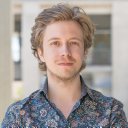
 Kilian Lieret
· 5 previous affiliations
- Meta (United States)Since 2026
- Researcher · Since 2026
- Princeton University2022–2026
- Researcher · 2024–2026
- Associate Research Scholar · 2023–2024
- Postdoc · 2022–2024
- Postdoctoral Resesarch Associate · 2022–2023
- Doctoral Researcher · 2018–2022
- Master of Science (M.Sc.), Elite Master Program Theoretical and Mathematical Physics · 2014–2018
- Bachelor of Science (B.Sc.), Physics · 2011–2015
- The University of Tokyo2017–2018
- Research Stay · 2017–2018
- Summer Research Student · 2017
Research Overview
Kilian Lieret focuses on machine learning for high-energy physics, software engineering automation, and scalable technical education. His early trajectory spans particle decay measurements and the development of neural network architectures for charged particle tracking at major collider experiments. Most recently, his research investigates the capabilities and evaluation of autonomous language model agents for complex software engineering tasks.
Research Trajectory
Lieret's early work involved large-scale experimental physics, participating in the Belle Collaboration's First measurement of the CKM angle $ϕ3$ with $B^±→ D( {K}_{\mathrm{S}}^0 $$ π^+π^−π^0) K^{±}$ decays in 2019. By leveraging external data to account for strong-phase differences, this work extracted fundamental parameters of CP violation without relying on complex theoretical models of the D meson decay, contributing to the broader area of Systematic Error Propagation in Particle Decay Measurements.
Recognizing the growing computational demands of high-energy physics (HEP), Lieret became deeply involved in community-led educational initiatives to address the field's software sustainability challenges. In 2021, he helped detail the efforts of the HEP Software Foundation and IRIS-HEP in Software Training in HEP, advancing the research direction of Hierarchical Mentorship for Scalable Technical Training. He expanded on these themes by developing sustainable, open-source training ecosystems to transform physicists into proficient software engineers in Train to Sustain. Later, he guided a comprehensive survey of these practices across major experiments like ATLAS and CMS in Training and onboarding initiatives in high energy physics experiments.
Concurrently, Lieret developed machine learning architectures to handle the massive data processing requirements of modern colliders like the High-Luminosity LHC. He introduced a multi-objective learning framework for clustering hits into tracks in High Pileup Particle Tracking with Object Condensation. Continuing in this domain, he collaborated on Locality-Sensitive Hashing-Based Efficient Point Transformer for Charged Particle Reconstruction, which presented HEPTv2, an end-to-end point transformer that drastically reduces inference latency while maintaining tracking accuracy. This work advanced the area of Sub-quadratic Attention via Locality Sensitive Hashing.
In 2024, Lieret's research focus expanded significantly into the automation of software engineering using large language models (LLMs). He contributed to the design of specialized interfaces for language models in SWE-agent: Agent-Computer Interfaces Enable Automated Software Engineering, treating agents as a new category of end users with specific interface needs. This focus on tool use and environment design contributed to the broader research direction of Stateful Interaction for Autonomous LLM Agents. He also participated in evaluating these models on complex scientific research problems in SciCode: A Research Coding Benchmark Curated by Scientists, which demonstrated the limitations of current models in realistic research settings.
His work on evaluating and improving LLM agents continued into 2025 with SWE-bench Multimodal: Do AI Systems Generalize to Visual Software Domains?, which tested agent generalization to visual contexts. He also collaborated on EnIGMA: Interactive Tools Substantially Assist LM Agents in Finding Security Vulnerabilities, demonstrating how real-time access to debuggers and server utilities improves autonomous cybersecurity performance on Capture The Flag challenges. To address the need for high-quality training data in this space, he helped develop a novel pipeline for generating task instances that break existing tests in SWE-smith: Scaling Data for Software Engineering Agents.
Most recently, Lieret has focused on rigorous benchmarking of goal-oriented software engineering. In 2026, he co-developed ProgramBench: Can Language Models Rebuild Programs From Scratch?, challenging agents to reconstruct complex software projects from executables and documentation alone. He also co-authored CodeClash: Benchmarking Goal-Oriented Software Engineering, which evaluates LLMs in multi-round tournaments requiring iterative development and maintenance to achieve high-level objectives.
Current Directions
Recent work investigates the capabilities, limitations, and evaluation of large language models in complex software engineering environments. The most recent papers in the evidence address the gap between isolated coding tasks and goal-oriented software development. This includes creating rigorous benchmarks that challenge AI agents to rebuild entire software projects from scratch or maintain codebases iteratively over multi-round tournaments. A central theme in this current research is moving beyond simple bug-fixing to assess how autonomous agents handle long-horizon, multi-step reasoning, interactive tool use, and multimodal inputs in realistic digital domains.
Profile updated
Loading new papers…
Other researchers whose papers cluster into the same research directions — a proxy for overlapping technical interests and shared intellectual neighborhoods.
See something wrong? Report a mistake