

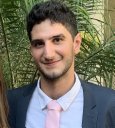
 Khaled Kamal Saab
· 5 previous affiliations
- OpenAI (United States)Since 2025
- Member of Technical Staff · Since 2025
- Google DeepMind (United Kingdom)2023–2025
- Senior Research Scientist · 2024–2025
- Research Scientist · 2023–2024
- Stanford University2017–2023
- PhD student · 2017–2023
- Research Intern · 2020
- Georgia Institute of Technology2014–2017
- Computer Engineering · 2014–2017
Research Overview
Khaled Kamal Saab focuses on the intersection of machine learning, signal processing, and clinical informatics, with a particular emphasis on developing robust architectures for spatiotemporal modeling and improving the efficiency of medical data labeling. His work addresses the challenges of analyzing complex, multivariate biosignals—such as electroencephalography (EEG) and electrocardiography (ECG)—by leveraging graph neural networks, structured state-space models, and weak supervision techniques. His research trajectory reflects a transition from foundational optimization and signal processing toward the development of scalable, trustworthy AI systems for medical diagnostics and genomic analysis.
Research Trajectory
The early stages of Saab’s research were grounded in classical signal processing and optimization. In 2015, his work focused on the convergence properties of iterative methods under uncertainty, specifically addressing the limitations of the traditional Newton-Raphson method when applied to noisy function measurements. This period established a foundation in stochastic performance indices and recursive algorithms, providing a mathematical basis for handling additive noise in iterative estimation—a theme that would later evolve into managing noise in deep learning labels.
By 2019, Saab’s focus shifted toward the practical barriers of medical machine learning, specifically the "bottleneck" of data labeling. He participated in the development of cross-modal data programming, a framework designed to programmatically generate training labels for medical images or time series by applying natural language processing to associated clinical text reports. This work marked a move toward weak supervision and clinician-driven model development, aiming to reduce the time and expertise required to build high-performing medical models. During this period, he also contributed to epidemiological modeling, applying inverse dynamics to quantify the impact of preventive measures during the COVID-19 pandemic.
In 2021, Saab began exploring the fundamental dynamics of deep learning optimization and generalization. He led research into the "double descent" phenomenon, providing a quantitative framework to detect patterns where generalization error fluctuates during training. This work identified the critical role of noisy labels in both training and validation sets and revealed how high learning rates could obscure these patterns through an "aliasing" effect. This analytical approach to model behavior coincided with a deepening focus on spatiotemporal modeling for healthcare.
From 2021 to 2023, Saab’s work increasingly centered on the representation of non-Euclidean data structures in clinical signals. He contributed to the development of graph neural network (GNN) architectures designed to capture the electrode geometry and dynamic brain connectivity inherent in EEG data. This research addressed long-standing challenges in automated seizure detection, such as the classification of rare seizure types and the need for quantitative interpretability in seizure localization. This line of inquiry culminated in the integration of Structured State Space (S4) models with GNNs to master long-range temporal dependencies in multivariate biosignals.
Most recently, Saab has focused on the development of open-source frameworks for multimodal medical AI and the scaling of foundation models. His work on ViLMedic established a standardized platform for research at the intersection of computer vision and natural language processing in medicine, facilitating tasks like radiology report generation. His latest contributions involve the development of large-scale epigenetic foundation models, extending sequence modeling paradigms to methylated DNA and human genomic annotation.
Current Directions
Saab’s current research is directed toward the creation of trustworthy and scalable AI systems for clinical and biological applications. A primary focus is the refinement of time-series architectures that can expressively represent complicated dependencies while remaining computationally efficient over long sequences. This includes the development of discrete state-space models that overcome the limitations of prior autoregressive representations.
Another significant direction is the advancement of clinical seizure detection through the use of routine "workflow notes." By leveraging large-scale, weakly labeled datasets derived from clinical annotations, Saab aims to improve model robustness across diverse patient subgroups and reduce false alarm rates in intensive care settings. Furthermore, his involvement in genomic foundation models suggests a growing interest in applying large-scale pre-training to understand cell identity and gene regulation through epigenetic data.
Representative Work
A Stochastic Newton-Raphson Method with Noisy Function Measurements In this 2015 study, Saab addresses the convergence failures of the traditional Newton-Raphson (NR) method in the presence of additive noise. The paper demonstrates that zero-convergence cannot be achieved without the introduction of a multiplicative gain that itself converges to zero. Saab proposes a novel recursive algorithm that provides optimal iterative-varying gains by minimizing a stochastic performance index. The research proves that for linearized functions, the estimation error covariance matrix converges to zero under additive zero-mean white noise, offering a robust alternative to traditional NR methods in noisy environments.
Double Descent Optimization Pattern and Aliasing: Caveats of Noisy Labels This 2021 paper provides a quantitative framework for analyzing "epoch-wise double descent," a phenomenon where the generalization error of a model improves, degrades, and then improves again as training progresses. Saab and his collaborators demonstrate that this pattern is fundamentally linked to the presence of noisy labels in both the training and validation sets. A key contribution of the work is the identification of an "aliasing" effect caused by high learning rates, which can hide the double descent pattern without resolving the underlying generalization issues. This work offers critical insights into the optimization dynamics of overparameterized models.
ViLMedic: a framework for research at the intersection of vision and language in medical AI Saab led the development of ViLMedic, an open-source library designed to standardize research in medical multimodal AI. Released in 2022, the framework provides modular components and reproducible solutions for tasks that combine computer vision and natural language processing, such as medical visual question answering (VQA) and automated radiology report generation. By providing a unified benchmarking environment, ViLMedic addresses the fragmentation in medical AI research and enables the implementation of state-of-the-art models for complex clinical language-vision tasks.
Towards trustworthy seizure onset detection using workflow notes This 2023 research introduces a method for training seizure detection models on an extensive dataset of nearly 69,000 hours of EEG data by utilizing "workflow notes"—routine annotations made by clinical staff during patient monitoring. Saab proposes shifting from a standard binary classification (seizure vs. no-seizure) to a multi-label approach that identifies 26 distinct brain activity attributes. This methodology significantly enhances the robustness of the models across different patient demographics and reduces false alarm rates by 50%, representing a major step toward deploying trustworthy AI in clinical environments.
Effectively Modeling Time Series with Simple Discrete State Spaces In this 2023 paper, Saab and his co-authors investigate the limitations of combining state-space models (SSMs) with deep learning for sequence modeling. They provide a theoretical proof that many prior SSM representations are unable to express autoregressive time-series processes. To resolve this, they introduce "SpaceTime," a new state-space architecture based on a novel SSM parameterization. SpaceTime improves the ability of models to represent complex dependencies and forecast over long horizons while maintaining efficient training performance, outperforming existing methods on diverse time-series benchmarks.
Cross-Modal Data Programming Enables Rapid Medical Machine Learning Saab participated in the development of cross-modal data programming, a method to alleviate the medical data labeling crisis. This approach allows clinicians to generate training labels for a target modality (such as images) by writing heuristic rules over an auxiliary modality (such as text reports). The framework generalizes the strategy of programmatic labeling in a theoretically grounded way, enabling models to improve as more unlabeled data becomes available. This work demonstrates how clinician-driven weak supervision can drastically reduce the time required to develop high-accuracy machine learning models for specialized medical domains.
Profile updated
Loading new papers…
Other researchers whose papers cluster into the same research directions — a proxy for overlapping technical interests and shared intellectual neighborhoods.
See something wrong? Report a mistake