

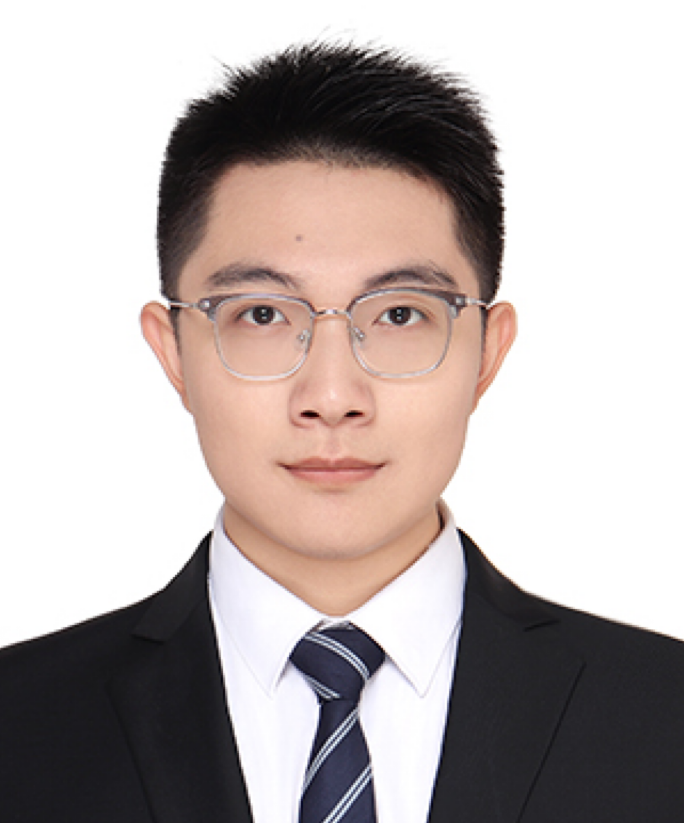
 Ke Ji
· 4 previous affiliations
- Current
- Chinese University of Hong KongSince 2024
- PhD student · 2024–2028
- Southeast University2021–2024
- MS student · 2021–2024
- Zhengzhou University2017–2021
- Undergrad student · 2017–2021
Research Overview
Ke Ji focuses on the specialization of large language models for complex reasoning, medical diagnostics, and autonomous agentic systems. His early research addressed hierarchical text classification and clinical domain adaptation, while his recent work investigates reinforcement learning with verifiable rewards to enhance multi-step reasoning and tool use in language models.
Research Trajectory
His early research investigated methods for structuring knowledge and enforcing consistency in language models. He introduced the Hierarchical Verbalizer for Few-Shot Hierarchical Text Classification, addressing the challenge of mapping unstructured semantic spaces to complex domain hierarchies. Building on this, he developed Domain-Hierarchy Adaptation via Chain of Iterative Reasoning for Few-shot Hierarchical Text Classification, which contributed to the broader research direction of Enforcing Logical Consistency in Hierarchical Classification. Concurrently, he directed research into intrinsic hallucinations in large language models, overseeing the development of OntoFact: Unveiling Fantastic Fact-Skeleton of LLMs via Ontology-Driven Reinforcement Learning to systematically detect and mitigate factual errors beyond standard question-answering paradigms.
A significant portion of his trajectory involves adapting language models for the rigorous demands of healthcare, contributing to the area of Grounding Large Language Models for Clinical Reliability. He participated in the development of HuatuoGPT-II, One-stage Training for Medical Adaption of LLMs, which streamlined domain adaptation to achieve robust performance on Chinese medical benchmarks. To address the critical need for interpretability in clinical diagnostics, he collaborated on CoD, Towards an Interpretable Medical Agent using Chain of Diagnosis, a framework that mirrors a physician's reasoning pathway to provide transparent disease confidence distributions. Recognizing that medical applications require complex, verifiable logic, he contributed to HuatuoGPT-o1, Towards Medical Complex Reasoning with LLMs and the related study Towards Medical Complex Reasoning with LLMs through Medical Verifiable Problems. These projects advanced the field of Scaling Language Model Reasoning Beyond Verifiable Rewards by transforming standard medical questions into open-ended problems, allowing models to deliberate, backtrack, and self-correct using an LLM-based verifier.
Expanding beyond domain-specific applications, his work explores how models can improve their own reasoning capabilities with minimal human intervention. He proposed a novel training paradigm in LLMs Could Autonomously Learn Without External Supervision, demonstrating that models can self-educate using raw text and closed-book self-testing. Continuing this focus on efficiency, he introduced The First Few Tokens Are All You Need: An Efficient and Effective Unsupervised Prefix Fine-Tuning Method for Reasoning Models. This work revealed that the initial steps of a reasoning chain are highly consistent, allowing models to be fine-tuned on short prefixes to match supervised performance while drastically reducing computational costs. In parallel, he contributed to optimizing retrieval-augmented generation systems through SmartRAG: Jointly Learn RAG-Related Tasks From the Environment Feedback, which applied reinforcement learning to jointly train decision-making, query rewriting, and generation modules, advancing the broader area of Iterative Retrieval Augmented Generation for Multi Hop Reasoning.
More recently, his research has shifted toward agentic systems, tool use, and synthetic data generation. He developed an annotation-free framework in Enhancing Persona Consistency for LLMs' Role-Playing using Persona-Aware Contrastive Learning, utilizing a "Chain of Persona" reasoning step to maintain character fidelity, a contribution to the domain of Multi-Agent Role Play for Synthetic Post-Training Data. He also collaborated on WebExplorer: Explore and Evolve for Training Long-Horizon Web Agents, which addressed data scarcity in web navigation by using model-based exploration and query evolution. This work demonstrated how targeted synthetic data can help smaller architectures outperform massive baselines, aligning with the broader research direction where Small Specialized Models Surpass Large General Purpose Models. Furthering the study of agentic generalization, he participated in DIVE: Scaling Diversity in Agentic Task Synthesis for Generalizable Tool Use, a framework that reverse-derives tasks from successful real-world tool executions to scale training diversity. He also explored active learning for instruction tuning in DiverSeed: Integrating Active Learning for Target Domain Data Generation in Instruction Tuning.
In addition, Ji contributed to JCLDE: Hierarchical multi-label text classification via text-label joint contrastive learning and label-differentiation enhancement, advancing hierarchical text classification through joint contrastive learning and label differentiation. Ji also participated in research on Syntactic enhancement and redundant feature elimination in text graph neural networks for propaganda detection, leveraging text graph neural networks with syntactic enhancements for identifying propaganda techniques.
Current Directions
The most recent papers in the evidence address the scalability and generalization of autonomous agents through advanced data synthesis and reinforcement learning. Recent work investigates how to generate high-diversity training environments for agentic tool use by executing real-world tools and reverse-deriving tasks from the resulting evidence. Additionally, ongoing research focuses on active learning techniques for target domain data generation and the optimization of long-horizon web agents, emphasizing how specialized, high-quality synthetic data can enable smaller models to navigate complex, multi-step environments effectively.
Profile updated
Loading new papers…
Other researchers whose papers cluster into the same research directions — a proxy for overlapping technical interests and shared intellectual neighborhoods.
See something wrong? Report a mistake