

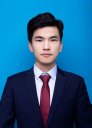
 Jingsheng Gao
· 1 previous affiliation
- Shanghai Jiao Tong UniversitySince 2016
- PhD student · Since 2020
- Current
- Undergrad student · 2016–2020
Research Overview
Jingsheng Gao focuses on large language model optimization, multi-modal representation learning, and dialogue generation. His trajectory spans from disentangling complex multi-party conversations and aligning vision-language prompts to developing parameter-efficient compression techniques for foundation models. Currently, his work emphasizes retrieval-augmented generation and adaptive reasoning frameworks to improve the efficiency and reliability of language models.
Research Trajectory
Gao’s early published trajectory centers on natural language processing and dialogue systems. In 2023, he addressed the challenges of multi-participant conversations, focusing specifically on dialogue disentanglement—the task of separating intertwined chat logs into coherent, readable sessions. He proposed CluCDD: Contrastive Dialogue Disentanglement Via Clustering, a model that aggregates utterances using contrastive learning to improve session clustering over traditional two-step methods. He expanded on this architecture with Toward an end-to-end implicit addressee modeling for dialogue disentanglement, introducing an end-to-end framework designed to better model implicit addressees in noisy, multi-party environments. Concurrently, he contributed to the research area of Personalized Dialogue Generation for Low Resource Personas by developing LiveChat: A Large-Scale Personalized Dialogue Dataset Automatically Constructed from Live Streaming, providing a large-scale foundation for training personalized conversational agents. In broader text classification, he collaborated on Hierarchical Verbalizer for Few-Shot Hierarchical Text Classification, a prompt-tuning framework that uses hierarchy-aware verbalizers to improve performance in low-resource settings, advancing the research direction of Enforcing Logical Consistency in Hierarchical Classification.
Alongside his work in text, Gao explored visual-semantic alignment and multi-modal learning. In the domain of Text Embeddings as Semantic Anchors for Vision Models, he introduced the Multi-Modal Equivalent Transformer (MMET) in Learning Robust Visual-Semantic Embedding for Generalizable Person Re-identification. This approach leverages masked multimodal modeling to learn robust features that generalize across unseen camera networks without breaking down in new environments. He further bridged the gap between vision-language models and downstream tasks with LAMM: Label Alignment for Multi-Modal Prompt Learning, dynamically adjusting category embeddings to improve prompt tuning. His computer vision research also extends to medical imaging; he participated in developing EGE-UNet: An Efficient Group Enhanced UNet for Skin Lesion Segmentation and later explored frequency-domain feature extraction in Learning multi-axis representation in frequency domain for medical image segmentation, capturing global and local contexts for more accurate medical image analysis.
By 2025, Gao's focus shifted toward the efficiency, reliability, and augmentation of Large Language Models (LLMs) and Vision-Language Models (VLMs). To address the computational bottlenecks of deploying massive models, he developed novel Singular Value Decomposition (SVD) compression techniques. He introduced CPSVD: Enhancing Large Language Model Compression via Column-Preserving Singular Value Decomposition, a training-free framework that preserves high-sensitivity weight columns, and ARA: Adaptive Rank Allocation for Efficient Large Language Model SVD Compression, which intelligently distributes compression budgets across model layers using a specialized staircase mask and full-rank guidance loss.
In parallel, he advanced the architecture of Retrieval-Augmented Generation (RAG) systems. With SmartRAG: Jointly Learn RAG-Related Tasks From the Environment Feedback, he moved away from isolated component training, instead using reinforcement learning to jointly optimize the query rewriter, retrieval decision-maker, and answer generator. This work contributes significantly to the broader fields of Jointly Optimizing Retrieval and Generation and Uncertainty-Triggered Adaptive Retrieval for Large Language Models. His recent research also tackles model reliability and data generation, evidenced by MPI-CD: Multi-Path Information Contrastive Decoding for Mitigating Hallucinations in Large Vision-Language Models and DiverSeed: Integrating Active Learning for Target Domain Data Generation in Instruction Tuning, which integrates active learning to generate high-quality instruction-tuning data for specific target domains.
Current Directions
Recent work investigates the intersection of model efficiency and dynamic reasoning in foundation models. The most recent papers in the evidence address the challenge of deploying Large Language Models under strict memory and latency constraints, utilizing adaptive rank allocation and column-preserving decomposition to compress models without sacrificing alignment or performance. Additionally, his current research emphasizes end-to-end optimization for Retrieval-Augmented Generation, exploring how reinforcement learning and environment feedback can create language models that possess "inter-module awareness"—knowing precisely when and how to retrieve external information. He is also actively exploring active learning strategies for automated data generation to improve instruction tuning in specialized domains and mitigating hallucinations in complex vision-language tasks.
Profile updated
Loading new papers…
Other researchers whose papers cluster into the same research directions — a proxy for overlapping technical interests and shared intellectual neighborhoods.
See something wrong? Report a mistake