

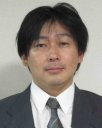
 Kazushi Mimura
· 3 previous affiliations
- Hiroshima City UniversityCurrent
- Full Professor · Current
- RIKENSince 2025
- Researcher · Since 2025
- The University of TokyoSince 2026
- Researcher · Since 2026
Research Overview
Kazushi Mimura focuses on statistical-mechanical informatics, coding theory, and the theoretical foundations of machine learning. His trajectory spans the application of statistical physics to lossy data compression and iterative signal recovery, advancing the mathematical understanding of complex inference algorithms. His most recent work investigates the dynamics of modern Hopfield networks and the spectral properties of neural tangent kernels in deep learning.
Research Trajectory
Mimura’s early research applied the replica method and other tools from statistical physics to fundamental problems in information theory. In Typical Performance of Irregular Low-Density Generator-Matrix Codes for Lossy Compression, published in 2008, he analyzed the theoretical performance limits of irregular LDGM codes, demonstrating how specific connection patterns allow these codes to approach the Shannon rate-distortion bound. This work contributed to the broader research direction of Deterministic Constructions for Optimal Information Theoretic Codes. Concurrently, he investigated the dynamics of neural network models. His 2009 paper Parallel Dynamics of Continuous Hopfield Model Revisited provided a rigorous theoretical framework for continuous Hopfield models using Generating Functional Analysis (GFA). He proved that existing statistical neurodynamics methods were special cases that ignored the Onsager reaction term, a foundational analysis that aligns with the area of Overcoming the Capacity Wall in Associative Memory. He further explored the intersection of statistical mechanics and coding theory in Statistical mechanics of an error correcting code using monotonic and nonmonotonic treelike multilayer perceptrons, investigating how tree-like neural architectures can be utilized to achieve highly efficient communication.
In 2011, Mimura expanded his focus on practical, scalable algorithms for inference and compression. He introduced a near-optimal lossy compression algorithm for biased binary sources in Linear Complexity Lossy Compressor for Binary Redundant Memoryless Sources, achieving linear computational complexity. He also examined the practical viability of graphical model inference engines in Belief Propagation for Error Correcting Codes and Lossy Compression Using Multilayer Perceptrons. This study revealed the complex realities of using belief propagation on multilayer perceptrons, despite their theoretical capacity to reach Shannon bounds. Both of these studies advanced the research direction of Convergence of Message Passing on Loopy Graphs. During this period, he also documented broader community advancements in information theory through an International Conference Report summarizing the technical contributions at the 2011 IEEE International Symposium on Information Theory.
A major recurring theme in Mimura's trajectory is the use of Generating Functional Analysis to model complex iterative systems, particularly contributing to the area of Predictable Iterative Estimation via Onsager Correction. In Generating Functional Analysis for Iterative CDMA Multiuser Detectors, he applied GFA to accurately model multiuser detectors in CDMA systems, correctly accounting for retarded self-interaction where previous methods failed at high system loads. He later extended this rigorous theoretical foundation to sparse signal recovery in Generating Functional Analysis of Iterative Sparse Signal Recovery Algorithms with Divergence-Free Estimators. This 2018 work proved that the performance of Orthogonal Approximate Message Passing (OAMP) can be described by a simple scalar recursion without relying on the unrealistic assumption of independent Gaussian messages.
Moving into hybrid computing architectures, Mimura and collaborators developed systems for complex signal processing tasks. In L0 regularization-based compressed sensing with quantum-classical hybrid approach, the team paired a Coherent Ising Machine with a classical processor to tackle L0-regularized compressed sensing, demonstrating performance that approaches theoretical limits in practical applications like MRI reconstruction.
More recently, Mimura's work has addressed the theoretical properties of modern neural networks and clustering algorithms. In Neural Tangent Kernels and Fisher Information Matrices for Simple ReLU Networks with Random Hidden Weights, he participated in deriving the spectral decomposition of the Neural Tangent Kernel for two-layer ReLU networks, providing a mathematical explanation for the inherent simplicity bias in deep learning. Returning to associative memory models, he provided an exact dynamical analysis of dense associative memory in Dynamical properties of dense associative memory. By analyzing the retrieval process over time, this research demonstrated that dense associative memory is fundamentally robust against self-noise. Finally, his research extends to geometric data analysis, as seen in Making clustering methods workable for shapes using the ordinary Procrustes sum of squares, which adapts clustering techniques for complex shape analysis.
Current Directions
The most recent work in the evidence focuses on the rigorous mathematical characterization of modern machine learning architectures. A primary current direction involves analyzing the training dynamics and spectral properties of neural networks, particularly using tools like Neural Tangent Kernels to understand how networks prioritize and process information and why they exhibit a simplicity bias. Alongside this, there is an ongoing focus on the dynamical properties of dense associative memory systems, moving beyond equilibrium states to model the continuous retrieval process and quantify robustness against self-interference in modern Hopfield networks. Additionally, recent efforts explore the adaptation of statistical clustering methods for complex geometric data, such as shape analysis using Procrustes distance metrics.
Profile updated
Loading new papers…
Other researchers whose papers cluster into the same research directions — a proxy for overlapping technical interests and shared intellectual neighborhoods.
See something wrong? Report a mistake