

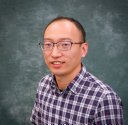
 Xiangming Meng
· 3 previous affiliations
- Zhejiang UniversitySince 2023
- Assistant Professor · Since 2023
- The University of Tokyo2020–2023
- Project Assistant Professor · 2022–2023
- Postdoc · 2020–2022
- RIKEN2019–2020
- Postdoc · 2019–2020
Research Overview
Xiangming Meng focuses on the intersection of machine learning, information theory, and statistical mechanics, with an emphasis on Bayesian inference, graphical models, and learning algorithms. His trajectory spans the theoretical analysis of approximate message passing and high-dimensional sparse recovery to the application of generative priors in complex inverse problems. Currently, his work investigates diffusion models for robust signal reconstruction and active sensing.
Research Trajectory
Meng’s early research established foundational connections between message passing algorithms and Bayesian inference. He introduced an alternative derivation for approximate message passing in An Expectation Propagation Perspective on Approximate Message Passing, utilizing expectation propagation to offer new insights into the algorithm's behavior in the large system limit. Expanding on these inference techniques, he applied variational methods to wireless communications, designing multi-user detection algorithms in Advanced NOMA Receivers From a Unified Variational Inference Perspective. To address the divergence issues of traditional approximate message passing when faced with challenging measurement matrices, his group developed a unitary transformation approach in Unitary Approximate Message Passing for Sparse Bayesian Learning.
Around 2020, Meng expanded his focus to the optimization and landscape analysis of neural networks. He addressed the discrete optimization challenges of binary weights in Training Binary Neural Networks using the Bayesian Learning Rule, contributing to the research direction of Optimization Strategies for Discrete Weight Neural Networks. Continuing his investigation into network properties, he derived analytical expressions for the global minima of deep linear networks in Exact Solutions of a Deep Linear Network. This work demonstrated how weight decay interacts with model architecture to create suboptimal minima at zero, highlighting the limitations of standard initialization methods.
Concurrently, Meng conducted rigorous theoretical analyses of high-dimensional statistics and sparse recovery, particularly focusing on the least absolute shrinkage and selection operator (Lasso). He introduced a statistical mechanics framework to analyze Lasso's performance for Ising model selection in Ising Model Selection Using 𝓁1-Regularized Linear Regression. This analysis was subsequently formalized in On Model Selection Consistency of Lasso for High-Dimensional Ising Models on Tree-like Graphs, where he proved that Lasso achieves model selection consistency with the same sample complexity as $\ell_1$-regularized logistic regression on random regular graphs. This rigorous proof was further detailed in On Model Selection Consistency of Lasso for High-Dimensional Ising Models, advancing the broader areas of Statistical Learning Theory for Dependent Dynamical Systems and Dual Certificates for Exact High-Dimensional Recovery. Extending the non-rigorous replica method from statistical physics, he also evaluated the average-case performance of Lasso in ultra-sparse regimes in Average case analysis of Lasso under ultra sparse conditions.
In recent years, Meng's trajectory has shifted toward integrating score-based generative models and diffusion models into complex inverse problems. To recover high-dimensional signals from severe information loss, he proposed an unsupervised data-driven approach in Quantized Compressed Sensing with Score-Based Generative Models. This method utilizes pre-trained score-based generative models as priors, significantly advancing the research direction of Signal Reconstruction from One-Bit Quantized Measurements. Recognizing the computational bottlenecks of diffusion posterior sampling, he subsequently developed a fast, closed-form posterior sampling solution that avoids time-consuming back-propagation in Diffusion Model Based Posterior Sampling for Noisy Linear Inverse Problems.
This focus on generative priors has continued to evolve across diverse domains. In Generative Bayesian Spectrum Cartography: Unified Reconstruction and Active Sensing via Diffusion Models, he introduced a unified framework using diffusion models to reconstruct high-fidelity radio environment maps from sparse and quantized data. Collaborating on task-agnostic algorithms, he contributed to FIG: Flow with Interpolant Guidance for Linear Inverse Problems, which leverages measurement interpolants to guide image reconstruction in highly ill-posed scenarios. Additionally, his group explored generative image synthesis in SCSA: A Plug-and-Play Semantic Continuous-Sparse Attention for Arbitrary Semantic Style Transfer, designing a modular attention mechanism to resolve semantic inconsistencies and preserve local textures in stylized images.
Current Directions
The most recent papers in the evidence indicate a strong focus on applying advanced generative models—specifically diffusion models and flow matching—to solve complex, noisy linear inverse problems. Recent work investigates closed-form, gradient-free posterior updates to accelerate diffusion posterior sampling, enabling robust reconstruction from sparse or coarsely quantized measurements. This methodology is being applied to diverse domains, ranging from high-fidelity radio environment mapping in wireless communications to task-agnostic image reconstruction tasks such as super-resolution and deblurring. Additionally, current research explores modular attention mechanisms to improve semantic consistency and local texture fidelity in generative image synthesis and style transfer.
Profile updated
Loading new papers…
Other researchers whose papers cluster into the same research directions — a proxy for overlapping technical interests and shared intellectual neighborhoods.
See something wrong? Report a mistake