

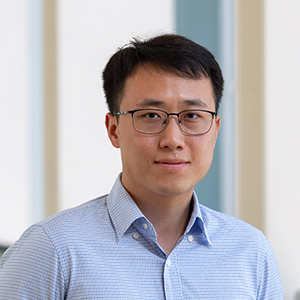
 Kaiyang Zhou
· 1 previous affiliation
- Hong Kong Baptist UniversitySince 2023
- Assistant Professor · Since 2023
Research Overview
Kaiyang Zhou focuses on the intersection of machine learning and computer vision, with specific emphasis on vision-language models (VLMs), domain generalization, and embodied AI. His research addresses the challenges of adapting large-scale foundation models to specialized tasks and dynamic environments, moving from static image recognition to interactive, multi-modal reasoning systems. By developing methods for Efficient Adaptation of Foundation Models for Specialized Tasks, his work seeks to bridge the gap between general-purpose pre-training and the specific requirements of niche or resource-constrained domains.
Research Trajectory
The early phase of Zhou’s research (2017–2019) was primarily concerned with instance-level recognition and feature learning within specific computer vision domains. Initial work addressed human detection in RGB-D data, focusing on depth-encoding schemes to enhance classification performance. This period culminated in the development of the Omni-Scale Network (OSNet), a specialized architecture for person re-identification. OSNet introduced a residual block with multiple convolutional streams to capture features across various spatial scales, establishing a foundation for learning discriminative representations that are robust to scale variations.
Starting in 2020, Zhou’s focus shifted toward the broader problem of out-of-distribution (OOD) generalization. He explored domain generalization (DG), where the objective is to train models on source domains such that they generalize to unseen target domains. His work in this area introduced generative approaches to synthesize data from pseudo-novel domains, using optimal transport to model and maximize distribution divergence. This research trajectory led to a comprehensive synthesis of the field, categorizing methodologies based on domain alignment, meta-learning, and data augmentation. During this time, he also investigated the constraints of deploying these models on hardware, leading to studies on on-device domain generalization for tiny neural networks.
The emergence of large-scale vision-language models like CLIP marked a significant transition in Zhou’s work toward prompt-based learning and multimodal alignment. Recognizing that traditional fine-tuning was often impractical for foundation models, he pioneered "Context Optimization" (CoOp). This method replaced hand-crafted prompts with learnable vectors, significantly reducing the manual effort required for prompt engineering while improving performance on downstream tasks. This shift represented a move away from traditional representation learning toward the alignment of images and text in a shared feature space.
In the most recent phase of his work (2024–2026), Zhou has extended these multimodal capabilities into the realms of embodied AI and real-time video understanding. This includes participation in the development of embodied vision-language programmers that generate executable code from environmental feedback, such as the Octopus system. His current leadership in the field involves the creation of streaming video models that can process continuous, unbounded visual data and the application of reinforcement learning to enhance visual reasoning. These efforts address the "perceptual gap" in multimodal models by focusing on Coordinate Anchored Reasoning for Multimodal Models, ensuring that linguistic logic is grounded in the actual geometry of visual scenes.
Current Directions
Zhou’s current research is increasingly focused on the reliability and reasoning capabilities of large multimodal models. A major theme in his recent work is Granular Verification via Atomic Fact Decomposition, which seeks to mitigate hallucinations by breaking down complex model outputs into verifiable units. This is closely linked to his work on Verifiable Synthetic Data Generation for Large Language Models, where the goal is to use powerful "teacher" models to generate high-quality training data without propagating logical errors.
Furthermore, his recent senior-authored work explores the use of reinforcement learning to enable visual language models to develop reasoning chains without explicit supervision. By prompting models to produce a reasoning process before an answer, this research aims to mitigate the "shortcuts" often taken by models in visual question-answering tasks. His lab is also advancing the state of real-time interactive assistants through streaming video models that autonomously manage the timing of their responses in dynamic environments.
Representative Work
Omni-Scale Feature Learning for Person Re-Identification In this work, Zhou introduced the Omni-Scale Network (OSNet), designed to learn "omni-scale" features that capture both homogeneous and heterogeneous spatial scales. By using a unified aggregation gate to dynamically fuse multi-scale features, the architecture achieved high discriminative power for instance-level recognition tasks like person re-identification while remaining computationally efficient.
Domain Generalization: A Survey This first-author survey provided a systematic overview of the domain generalization field, which addresses the challenge of domain shift when target data distributions differ from source data. The paper categorized a decade of research into a structured taxonomy of methodologies, including domain alignment and meta-learning, and discussed the application of these techniques across various computer vision domains.
Learning to Prompt for Vision-Language Models Zhou introduced Context Optimization (CoOp), a method for adapting pre-trained vision-language models like CLIP to downstream tasks. Instead of manual prompt engineering, CoOp models a prompt’s context words as learnable vectors while keeping the entire pre-trained parameters frozen. This approach demonstrated that a small amount of labeled data could significantly improve transfer performance compared to hand-crafted prompts.
On-Device Domain Generalization Addressing the gap between high-complexity models and edge deployment, this paper investigated domain generalization for tiny neural networks. Zhou found that standard DG methods developed for large models often underperform on smaller architectures. The study proposed knowledge distillation as a more effective strategy for maintaining robustness to domain shift in resource-constrained environments.
Streaming Video Instruction Tuning As the senior author, Zhou led the development of Streamo, a real-time streaming video Large Language Model. Unlike traditional models that process discrete video clips, Streamo is designed for continuous, unbounded video streams. The model incorporates a mechanism to autonomously decide when to respond or remain silent, enabling applications in real-time narration and time-sensitive question answering.
Visionary-R1: Mitigating Shortcuts in Visual Reasoning with Reinforcement Learning In this senior-authored paper, Zhou applied reinforcement learning techniques to train visual language models for complex reasoning. By requiring the model to generate a reasoning chain before providing a final answer, the method aims to reduce the reliance on statistical shortcuts in visual data. The work demonstrates that reasoning capabilities can emerge from simple question-answer pairs without the need for explicit chain-of-thought supervision.
Profile updated
Loading new papers…
Other researchers whose papers cluster into the same research directions — a proxy for overlapping technical interests and shared intellectual neighborhoods.
See something wrong? Report a mistake