

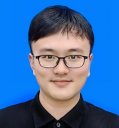
 Kai Wang
· 4 previous affiliations
- Harbin Institute of TechnologySince 2025
- Associate Professor · Since 2025
- Nanyang Technological University2022–2025
- Postdoc · 2022–2025
- Macquarie University2020–2022
- PhD student · 2020–2022
- Dalian University of Technology2011–2022
- PhD student · 2017–2022
- MS student · 2015–2017
- Undergrad student · 2011–2015
18 other authors named Kai Wang: Kai Wang (National University of Singapore · 117 papers), Kai Wang (97 papers), Kai Wang (City University of Hong Kong (Dongguan) · 67 papers), Kai Wang (Georgia Institute of Technology · 56 papers), Kai Wang (Shanghai Jiao Tong University · 28 papers), and 13 more
Research Overview
Kai Wang focuses on knowledge graph representation learning, inductive reasoning on graphs, and the integration of large language models with structural data. His early work emphasized efficient, low-dimensional knowledge graph embeddings and contrastive learning techniques. Recently, he has investigated graph foundation models and graph-based retrieval-augmented generation to improve reasoning across diverse and dynamic graph structures.
Research Trajectory
Wang's research trajectory begins with early collaborative work on sentiment classification, including participation in developing memory networks for the Social Internet of Things in Feature-based Compositing Memory Networks for Aspect-based Sentiment Classification in Social Internet of Things. He subsequently focused on knowledge graph embeddings (KGE), aiming to improve link prediction by integrating diverse information sources. He introduced an end-to-end framework in Enhancing knowledge graph embedding by composite neighbors for link prediction, which gathered composite neighbors from both entity descriptions and local graph structures to overcome feature non-uniformity and redundancy.
A major theme in his subsequent work is the optimization of KGEs for computational efficiency and lower storage requirements. To address the enormous training costs associated with high-dimensional models, he developed MulDE: Multi-teacher Knowledge Distillation for Low-dimensional Knowledge Graph Embeddings. This framework utilized multiple low-dimensional hyperbolic models as teachers and employed an iterative distillation strategy with dual student components, contributing to the broader research direction of Expressive and Efficient Knowledge Graph Embeddings. Continuing this focus on model reliability and geometry, he proposed a causal intervention method to evaluate prediction robustness in Neighborhood Intervention Consistency: Measuring Confidence for Knowledge Graph Link Prediction. He also critically examined the necessity of complex geometries for these tasks, presenting lightweight Euclidean alternatives in Hyperbolic Geometry is Not Necessary: Lightweight Euclidean-Based Models for Low-Dimensional Knowledge Graph Embeddings. To further refine low-dimensional embeddings, he adapted contrastive learning techniques in Swift and Sure: Hardness-aware Contrastive Learning for Low-dimensional Knowledge Graph Embeddings, designing a query-sampling loss function to balance alignment and uniformity without relying on traditional negative sampling.
As his research progressed, Wang expanded his focus to large-scale inductive reasoning and dynamic graph structures. He introduced TIGER: Training Inductive Graph Neural Network for Large-scale Knowledge Graph Reasoning, a framework that significantly accelerates Graph Neural Network (GNN) training on massive knowledge graphs through an efficient "Slice&Cache" procedure and a novel algorithm for optimizing subgraph slicing. He also collaborated on contrastive learning frameworks for evolving networks in Topology-monitorable Contrastive Learning on Dynamic Graphs, and oversaw the development of continuous-action reinforcement learning approaches for recommendation systems in Learn to Walk with Continuous-action for Knowledge-enhanced Recommendation System.
Addressing the challenge of low-resource scenarios in inductive reasoning, Wang explored the integration of Large Language Models (LLMs) with structural data. In LLM as Prompter: Low-resource Inductive Reasoning on Arbitrary Knowledge Graphs, he addressed the scarcity of textual and structural data by utilizing LLMs to generate graph-structural prompts that enhance pre-trained GNNs. His recent work investigates the theoretical underpinnings of graph models, demonstrating how training on knowledge graphs can enable transferability to general graphs in Towards Graph Foundation Models: Training on Knowledge Graphs Enables Transferability to General Graphs. He also analyzed transformation errors and path redundancy in Graph Percolation Embeddings for Efficient Knowledge Graph Inductive Reasoning. By linking query-specific redundant paths to entropy increases, he proposed an efficient message-passing approach that maintains shortest paths to minimize entropy during model training.
Most recently, Wang has synthesized approaches at the intersection of LLMs and graph structures, co-authoring Graph-Based Approaches and Functionalities in Retrieval-Augmented Generation: A Comprehensive Survey. His collaborative efforts have also extended to computer vision, participating in the development of episodic memory frameworks for egocentric visual query localization in EAGLE: Episodic Appearance- and Geometry-aware Memory for Unified 2D-3D Visual Query Localization in Egocentric Vision. This work unified 2D and 3D tasks by mimicking avian memory consolidation through parallel segmentation and tracking branches.
Current Directions
Based on his most recent papers, Wang's current work focuses on the development of graph foundation models and the integration of graph structures with Retrieval-Augmented Generation (RAG) pipelines. Recent work investigates how pre-training on knowledge graphs can yield models that transfer effectively to general, arbitrary graph structures, moving toward unified architectures for graph learning. Additionally, he is exploring how graph topologies can improve database construction, retrieval mechanisms, and prompting strategies to enhance the accuracy and robustness of Large Language Models. His recent collaborations also indicate an ongoing interest in applying structured, episodic memory architectures to multimodal and spatial reasoning tasks, such as egocentric visual query localization in dynamic video environments.
Profile updated
Loading new papers…
Other researchers whose papers cluster into the same research directions — a proxy for overlapping technical interests and shared intellectual neighborhoods.
See something wrong? Report a mistake