

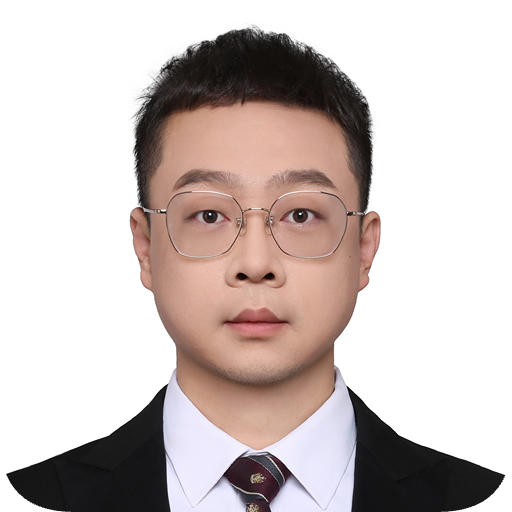
 Kai He
· 2 previous affiliations
- National University of SingaporeSince 2023
- Researcher · Since 2023
- Xi'an Jiaotong University2017–2022
- PhD student · 2017–2022
4 other authors named Kai He: Kai He (Nvidia (United States) · University of Toronto · 16 papers), Kai He (1 paper), Kai He (Alibaba Group (China) · 1 paper), Kai He (0 papers)
Research Overview
Kai He focuses on natural language processing, medical artificial intelligence, and the application of large language models to healthcare. His trajectory spans foundational information extraction and semantic processing to advanced prompt engineering and retrieval-augmented generation. Currently, he investigates the reliable deployment of multimodal models and clinical decision support systems, emphasizing interpretability and robustness in medical contexts.
Research Trajectory
Early work addressed foundational challenges in biomedical information extraction and structured knowledge representation. In 2019, he developed methods for Extracting Kinship from Obituary to Enhance Electronic Health Records for Genetic Research, utilizing joint neural models to identify family relationships from unstructured text to supplement traditional claims databases. This interest in structured knowledge extraction expanded into the broader area of Mitigating Cascading Errors in Sequential Processing Pipelines, as seen in the development of JCBIE: a joint continual learning neural network for biomedical information extraction (2022), which enabled the continuous extraction of entities and relations for large-scale biomedical knowledge graphs. Concurrently, he participated in research on interpretable machine learning, contributing to Learning Interpretable Decision Rule Sets: A Submodular Optimization Approach (2021), which framed rule set learning as a submodular subset selection task to balance accuracy with logical interpretability.
Moving into 2023, the focus broadened to encompass semantic processing and few-shot learning paradigms. He authored A Survey on Semantic Processing Techniques, which bridged classical linguistic theory with modern deep learning, emphasizing the research direction of Integrating Neural Perception with Symbolic Reasoning. These principles were applied to specific natural language processing tasks, including the introduction of Virtual prompt pre-training for prototype-based few-shot relation extraction. Additionally, he addressed aspect-based sentiment analysis in Meta-Based Self-Training and Re-Weighting for Aspect-Based Sentiment Analysis, utilizing a meta-weighter inspired by neuro-symbolic systems to mitigate sub-task learning biases and unbalanced labels.
In 2024, he advanced prompt engineering and language modeling techniques. He introduced Anomalous Language Modeling in MetaPro 2.0: Computational Metaphor Processing on the Effectiveness of Anomalous Language Modeling, training models to detect and correct contextually incongruous word choices to improve end-to-end metaphor interpretation. He also developed Template-Free Prompting for Few-Shot Named Entity Recognition via Semantic-Enhanced Contrastive Learning, which bypassed time-consuming template construction by leveraging external knowledge to initialize semantic anchors for token-level classification.
By 2025, his work increasingly centered on the reliable application of large language models, particularly in healthcare. He provided a comprehensive overview of this domain in A survey of large language models for healthcare: from data, technology, and applications to accountability and ethics. This work synthesized challenges in the areas of Grounding Large Language Models for Clinical Reliability and Understanding Prompt Sensitivity in Language Models, while also examining the broader issue of The Clinical Responsibility Gap for Algorithmic Decision Support. To address hallucinations and static knowledge limitations in generative models, he proposed Epitome-Augmented Generation in External Retrievals or Internal Priors? From RAG to Epitome-Augmented Generation by Fuzzy Selection, which manages the conflict between external retrievals and internal model priors. Additionally, he explored configurable agent behaviors and persona consistency in Crab: A Novel Configurable Role-Playing LLM with Assessing Benchmark.
His most recent work in 2026 emphasizes robust multimodal fusion and clinical prediction. He contributed to the research direction of Fusing Conflicting Evidence with Dempster Shafer Theory through his involvement in DPsurv: Dual-Prototype Evidential Fusion for Uncertainty-Aware and Interpretable Whole Slide Image Survival Prediction, which addresses uncertainty and tissue heterogeneity in gigapixel-scale digital biopsies. He also explored multimodal robustness in Robust multimodal sentiment analysis via double information bottleneck, filtering noise from individual modalities to create compact representations, and continued his work in specialized medical NLP with Multi-granularity semantic extraction and multi-task fusion for Chinese medical entity normalization.
Current Directions
The most recent papers in the evidence indicate a strong focus on multimodal fusion and uncertainty-aware clinical prediction. Recent work investigates how to handle noisy or heterogeneous data streams, employing techniques like double information bottlenecks for sentiment analysis and evidential fusion for whole slide image survival prediction. Additionally, there is an ongoing emphasis on refining medical natural language processing, particularly through multi-granularity semantic extraction for specialized tasks like entity normalization in non-English clinical texts.
Profile updated
Loading new papers…
Other researchers whose papers cluster into the same research directions — a proxy for overlapping technical interests and shared intellectual neighborhoods.
See something wrong? Report a mistake