

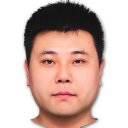
 Junxiao Wang
· 4 previous affiliations
- Guangzhou UniversitySince 2024
- Associate Professor · Since 2024
- Postdoc · 2023–2025
- Hong Kong Polytechnic University2021–2023
- Postdoc · 2021–2023
- Dalian University of Technology2016–2020
- PhD student · 2016–2020
Research Overview
Junxiao Wang focuses on federated learning, human-centered artificial intelligence, and the efficient adaptation of large foundation models. His trajectory spans from early work in network orchestration to privacy-preserving distributed machine learning and prompt tuning. Currently, he investigates multi-agent workflows and multimodal reasoning to align increasingly capable AI systems with complex human environments and educational contexts.
Research Trajectory
Junxiao Wang’s early research addressed the infrastructure and efficiency of the Internet of Things (IoT). In 2018, he introduced PRSFC-IoT: A Performance and Resource Aware Orchestration System of Service Function Chaining for Internet of Things, a framework designed to steer massive traffic through heterogeneous virtual network functions while mitigating resource idleness in virtualized IoT networks.
By 2022, his focus had shifted toward the security, privacy, and flexibility of decentralized machine learning. Addressing vulnerabilities in distributed training, he presented Protect Privacy from Gradient Leakage Attack in Federated Learning, which established that the sensitivity of gradient changes relative to training data is a critical measure of information leakage risk, proposing a novel defense mechanism based on this insight. In parallel, he proposed Federated Unlearning via Class-Discriminative Pruning, a method that allows federated networks to selectively scrub a model of specific categorical information by analyzing the internal influence of feature map channels, avoiding the need to retrain models from scratch or access global data.
As large pre-trained models became central to artificial intelligence, Wang began integrating foundation models with federated learning architectures, primarily through prompt tuning. In 2023, his group developed pFedPrompt: Learning Personalized Prompt for Vision-Language Models in Federated Learning, exploring how to tailor vision-language models to individual client distributions. He subsequently collaborated on PromptFL: Let Federated Participants Cooperatively Learn Prompts Instead of Models – Federated Learning in Age of Foundation Model, a framework that accelerates local training and global aggregation by communicating soft prompts rather than full model weights. This work contributed significantly to the research direction of Federated Low-Rank Adaptation of Foundation Models. Building on these mechanisms, his lab proposed Explore and Cure: Unveiling Sample Effectiveness With Context-Aware Federated Prompt Tuning, which demonstrated that federated prompting is highly data-sensitive and introduced a context-aware approach to optimize sample involvement during the tuning process.
Alongside his work in federated learning, Wang has investigated the security and optimization of large language models (LLMs). He directed research into Investigating Trojan Attacks on Pre-trained Language Model-powered Database Middleware, exposing how maliciously designed pre-trained models can cause unexpected behaviors in natural language query interfaces and entity matching systems. To address the computational bottlenecks of scaling these models, he participated in creating Scalable Zeroth-Order Fine-Tuning for Extremely Large Language Models with Limited GPU Memory. This framework combines zeroth-order optimization with CPU offloading to fine-tune massive models on single consumer-grade GPUs, advancing the broader area of Activation Free Fine Tuning via Zeroth Order Optimization.
In 2025 and 2026, Wang’s scope expanded to encompass complex multi-agent systems and fine-grained multimodal reasoning, particularly for human-centered applications. He oversaw the design of Trustworthy AI Psychotherapy: Multi-Agent LLM Workflow for Counseling and Explainable Mental Disorder Diagnosis, applying LLM pipelines to mental health diagnostics. Similarly, he guided research on Conversational Education at Scale: A Multi-LLM Agent Workflow for Procedural Learning and Pedagogic Quality Assessment, which introduced a multi-agent system simulating teacher-learner dynamics to evaluate pedagogical quality. In the multimodal domain, his team introduced LEGO Co-builder: Exploring Fine-Grained Vision-Language Modeling for Multimodal LEGO Assembly Assistants, a benchmark revealing the limitations of current vision-language models in precise spatial reasoning and state detection during step-by-step physical assembly.
Concurrently, Wang has continued to address fundamental representation and distribution challenges in machine learning. He supervised work on Enhancing inductive knowledge graph completion with contextual relation topology learning, improving how models infer missing links in dynamic knowledge structures. He also contributed to Federated Learning on Heterogeneous and Long-Tailed Data via Disentangled Representation, tackling the performance degradation caused by global long-tail distributions in decentralized networks by focusing on the inherent variations within the data itself.
Current Directions
Wang’s most recent work focuses heavily on the deployment of multi-agent large language model pipelines for specialized, human-centered domains. This includes developing structured workflows for explainable mental health counseling and scalable procedural learning environments, where distinct AI agents take on roles such as teacher, learner, and evaluator to ensure pedagogical quality.
Additionally, his current research addresses the limitations of vision-language models in fine-grained spatial reasoning. By exploring how multimodal systems can better understand and assist with complex, step-by-step physical tasks like assembly, he aims to bridge the gap between high-level semantic understanding and precise physical state detection. He also continues to actively research solutions for data heterogeneity in distributed systems, specifically focusing on disentangled representations to handle long-tailed data distributions in federated learning environments.
Profile updated
Loading new papers…
Other researchers whose papers cluster into the same research directions — a proxy for overlapping technical interests and shared intellectual neighborhoods.
See something wrong? Report a mistake