

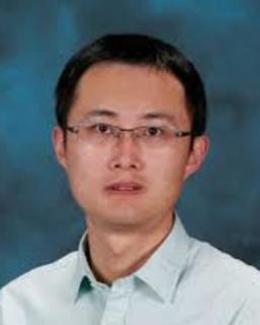
 Junqi Yin
· 1 previous affiliation
- Oak Ridge National LaboratorySince 2017
- Computational Scientist · Since 2017
Research Overview
Junqi Yin focuses on scalable machine learning, the development of scientific foundation models, and high-performance computing for materials science. His trajectory spans from parallelized statistical sampling algorithms to exascale deep learning infrastructure on leadership-class supercomputers. Currently, his work addresses the optimization of large language models for scientific domains and the integration of AI with high-fidelity physics simulations.
Research Trajectory
Yin’s early research established a foundation in high-performance computing and statistical mechanics. In 2012, he explored parallelized statistical sampling with Massively parallel Wang-Landau sampling on multiple GPUs. Over the following years, his focus expanded to the broader challenges of scaling neural networks across high-performance computing (HPC) clusters. He provided a comprehensive review of these strategies in Distributed Training and Optimization Of Neural Networks, addressing the area of Flatness Regularization for Large Batch Training. Continuing this optimization work, he introduced techniques to accelerate convergence in Stable Anderson Acceleration for Deep Learning.
Parallel to his work on optimization, Yin applied neural networks to the physical sciences. In 2021, he published Neural network-based order parameter for phase transitions and its applications in high-entropy alloys. This intersection of AI and materials science deepened in 2022 with his participation in developing self-driving scientific experiments, detailed in Toward an Autonomous Workflow for Single Crystal Neutron Diffraction, which automated traditionally manual neutron scattering research using edge computing and deep learning.
Around the same time, Yin investigated the deployment of generative models and AI surrogates on supercomputers. He developed a divide-and-conquer approach for generative adversarial networks in Stable Parallel Training of Wasserstein Conditional Generative Adversarial Neural Networks, scaling training to thousands of GPUs on the Summit supercomputer to prevent mode collapse. He also evaluated deployment strategies for AI in physics simulations in Strategies for Integrating Deep Learning Surrogate Models with HPC Simulation Applications.
In 2023, Yin’s research increasingly targeted the pre-training of massive foundation models on leadership-class infrastructure. He benchmarked trillion-parameter architectures in Evaluation of pre-training large language models on leadership-class supercomputers, contributing to the research direction of Multi-Dimensional Parallelism for Large Scale Model Training. This infrastructure expertise enabled the creation of domain-specific models, culminating in FORGE: Pre-Training Open Foundation Models for Science, which introduced a suite of models trained on 200 million scientific articles using the Frontier exascale system. Simultaneously, he continued advancing materials discovery. In DeepThermo: Deep Learning Accelerated Parallel Monte Carlo Sampling for Thermodynamics Evaluation of High Entropy Alloys, he combined variational autoencoders with Monte Carlo simulations to navigate astronomical configuration spaces.
Moving into 2024 and 2025, Yin focused on optimizing communication and attention mechanisms for exascale systems. He addressed the area of Topology Aware Parallelism for Distributed Model Training in Optimizing Distributed Training on Frontier for Large Language Models. To handle massive sequence lengths, he contributed to RingX: Scalable Parallel Attention for Long-Context Learning on HPC. This sequence parallelism algorithm was instrumental in Pixel-Resolved Long-Context Learning for Turbulence at Exascale: Resolving Small-scale Eddies Toward the Viscous Limit, which achieved 1.1 exaflops on Frontier to simulate fluid turbulence at unprecedented resolutions, advancing the area of Hardware Aware Kernels for Efficient Sequence Modeling.
His recent work also explores novel training paradigms and evaluation frameworks. He integrated deep learning with the Parareal method to accelerate phase-transition simulations in Parallel-in-Time Solution of Allen-Cahn Equations by Integrating Operator Learning into the Parareal Method. Addressing distributed computing stability, he published Scaling Up Data Parallelism in Decentralized Deep Learning. Finally, recognizing the need for rigorous assessment of scientific AI, he introduced SciTrust 2.0: A Comprehensive Framework for Evaluating Trustworthiness of Large Language Models in Scientific Applications, which systematically evaluates models on truthfulness, robustness, and safety.
Current Directions
The most recent papers in the evidence indicate a dual focus on pushing the boundaries of exascale AI infrastructure and ensuring the reliability of scientific foundation models. Yin is actively investigating long-context learning and sequence parallelism, developing hardware-aware attention mechanisms to process massive scientific datasets—such as pixel-level fluid turbulence—on leadership-class supercomputers. Concurrently, his work addresses the trustworthiness of large language models in specialized domains, building comprehensive evaluation frameworks to assess the adversarial robustness, safety, and logical reasoning capabilities of AI systems deployed for scientific discovery. He also continues to explore decentralized learning topologies and operator learning for accelerating complex physical simulations.
Profile updated
Loading new papers…
Other researchers whose papers cluster into the same research directions — a proxy for overlapping technical interests and shared intellectual neighborhoods.
See something wrong? Report a mistake