

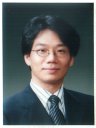
 Junmo Kim
· 4 previous affiliations
- Full Professor · Since 2025
- Associate Professor · 2016–2024
- Assistant Professor · 2009–2016
- Samsung (South Korea)2005–2009
- Researcher · 2005–2009
- PhD student · 2000–2005
- MS student · 1998–2000
- Seoul National University1995–1998
- Undergrad student · 1995–1998
Research Overview
Junmo Kim focuses on deep learning architectures, continual learning, and efficient model adaptation. His early work explored foundational neural network designs and knowledge distillation, gradually shifting toward methods for mitigating catastrophic forgetting in sequential tasks. His current research addresses the optimization of large-scale vision and language models through parameter-efficient fine-tuning, quantization, and robust adversarial generation.
Research Trajectory
Kim's academic trajectory began in signal processing, with early investigations into Spatio-temporal fMRI signal analysis using information theory (2000). As deep learning gained prominence, his focus shifted toward foundational neural network architectures and computer vision. By the mid-2010s, he was actively contributing to the area of Parallel Multi Scale Convolutional Feature Extraction. This period included the development of Deep Saliency with Encoded Low Level Distance Map and High Level Features (2016), which demonstrated that hand-crafted low-level features could provide complementary information to high-level VGG-net representations under a unified framework.
Continuing to refine network architectures, he participated in the design of Deep Pyramidal Residual Networks (2017), an approach that gradually increased feature map channels to distribute the representational burden more evenly than standard ResNets. That same year, he introduced Active Convolution: Learning the Shape of Convolution for Image Classification, proposing a novel layer where the positions of the convolutional synapses are learnable parameters, allowing the network to adapt its receptive field dynamically. He also explored optimization and transfer learning through A Gift from Knowledge Distillation: Fast Optimization, Network Minimization and Transfer Learning (2017), a technique that transferred the mathematical relationship or "flow" of features between layers rather than just raw outputs or intermediate values.
Moving into automated network design, Kim addressed the research direction of Bridging the Discretization Gap in Differentiable Architecture Search. He developed EDAS: Efficient and Differentiable Architecture Search (2019), a method that significantly reduced computational costs by relaxing only a single edge per iteration, thereby mitigating the performance drop between search and evaluation phases.
Subsequently, his research expanded into sequential learning, tackling the challenges of catastrophic forgetting. His work in the broader area of Representation Drift in Continual Learning led to Continual Learning With Extended Kronecker-Factored Approximate Curvature (2020). This method provided a more accurate Hessian approximation for networks using batch normalization, improving knowledge retention. He further advanced this agenda with DLCFT: Deep Linear Continual Fine-Tuning for General Incremental Learning (2022), contributing to the field of Incremental Learning with Frozen Feature Extractors.
In recent years, Kim's portfolio has diversified to include cross-modal applications, efficient transformer architectures, and generative models. In 2024, he investigated the domain of The Statistical Vulnerability of Digital Steganography with Implicit Steganography Beyond the Constraints of Modality, presenting a framework based on Implicit Neural Representations to hide information across incompatible modalities.
Addressing the computational bottlenecks of modern architectures, he co-authored Frequency-Aware Token Reduction for Efficient Vision Transformer (2025), which preserves high-frequency tokens while aggregating low-frequency ones to slash quadratic complexity without sacrificing expressivity. He also tackled open compound domain adaptation in AH-OCDA:Amplitude-based Curriculum Learning and Hopfield Segmentation Model for Open Compound Domain Adaptation (2025), a method that operates without prior knowledge of target domains, intersecting with the research direction of Generative Replay for Continual Learning.
His 2026 publications reflect a strong emphasis on model efficiency, safety, and adaptation. He developed Stable-GFlowNet: Toward Diverse and Robust LLM Red-Teaming via Contrastive Trajectory Balance, utilizing a pairwise contrastive objective to generate a vastly broader spectrum of safety vulnerabilities in large language models. In the realm of model compression, he introduced Inlier-Centric Post-Training Quantization for Object Detection Models. To facilitate rapid adaptation, he proposed IMSE: Intrinsic Mixture of Spectral Experts Fine-tuning for Test-Time Adaptation, which reinterprets linear layers via Singular Value Decomposition to achieve strong performance while updating a fraction of the parameters. Finally, he enhanced generative fidelity with SSG: Scaled Spatial Guidance for Multi-Scale Visual Autoregressive Generation, a training-free technique that forces autoregressive models to focus on novel, high-frequency details during inference.
Current Directions
Recent work investigates the optimization, safety, and real-time adaptation of large-scale foundation models. A primary focus is on parameter-efficient fine-tuning and test-time adaptation, utilizing techniques like singular value decomposition and frequency-aware token reduction to deploy massive vision and language models under strict computational constraints. Additionally, the most recent papers in the evidence address the robustness of generative systems, exploring contrastive objectives for automated LLM red-teaming and spatial guidance mechanisms to improve the diversity and fidelity of visual autoregressive generation.
Profile updated
Loading new papers…
Other researchers whose papers cluster into the same research directions — a proxy for overlapping technical interests and shared intellectual neighborhoods.
See something wrong? Report a mistake